Nile Cruise Guide: How to Choose Your Boat and What You'll See
Cruise ship, dahabiya or Lake Nasser? How long to sail, when to go and the temples you'll visit between Luxor and Aswan – everything you need to plan a Nile cruise.
Some links in this guide are partner links: if you buy through them we may earn a small commission, at no extra cost to you. It never affects what we recommend. How we make money
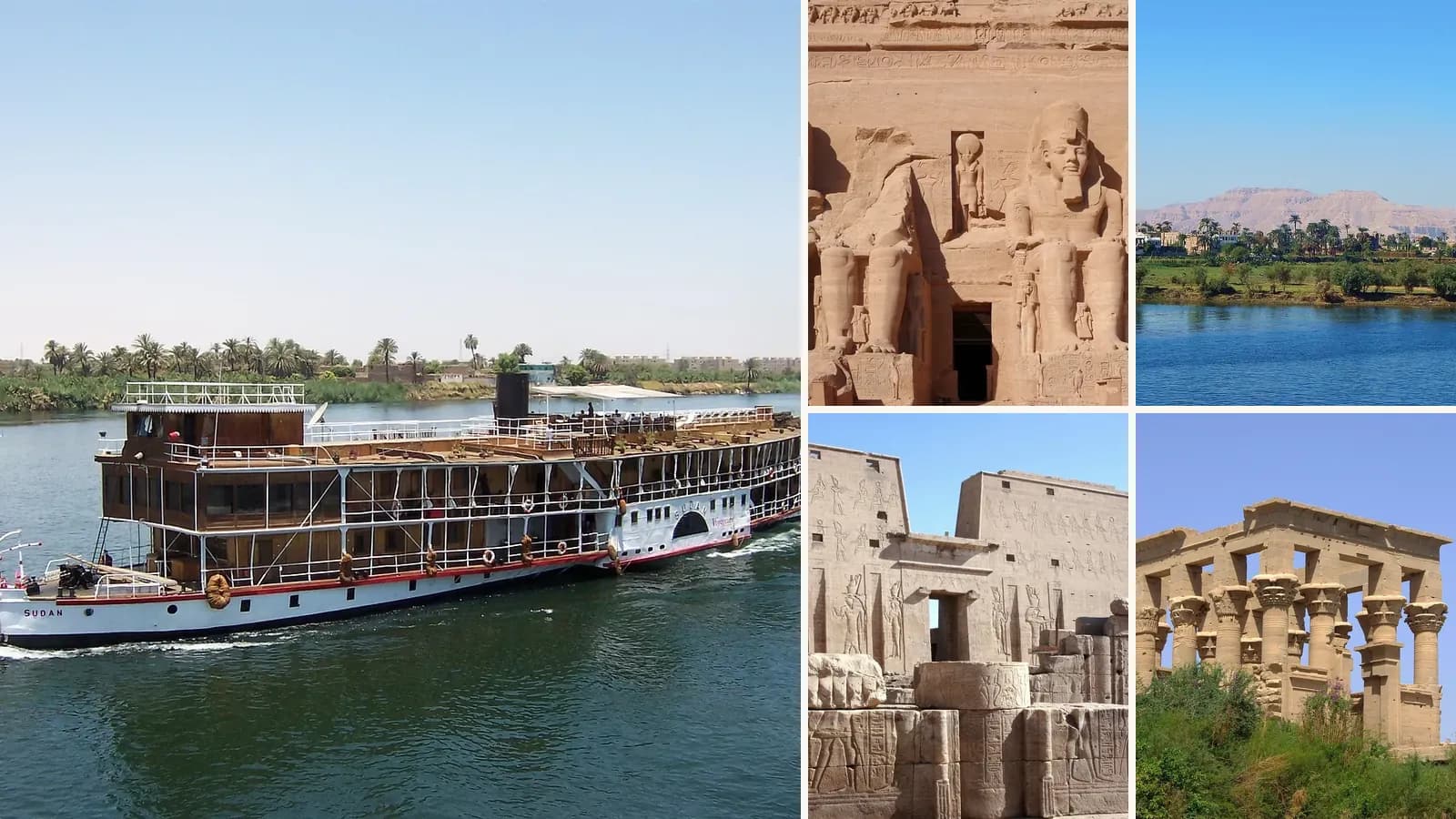
Sailing the Nile between Luxor and Aswan is one of the world's great journeys. Days drift by on the sundeck – palm groves, mud-brick villages, fishermen and desert hills – broken by visits to some of the best-preserved temples in Egypt. Here's how to choose the right boat and what to expect along the way.
Choosing your boat
1. Classic cruise ships
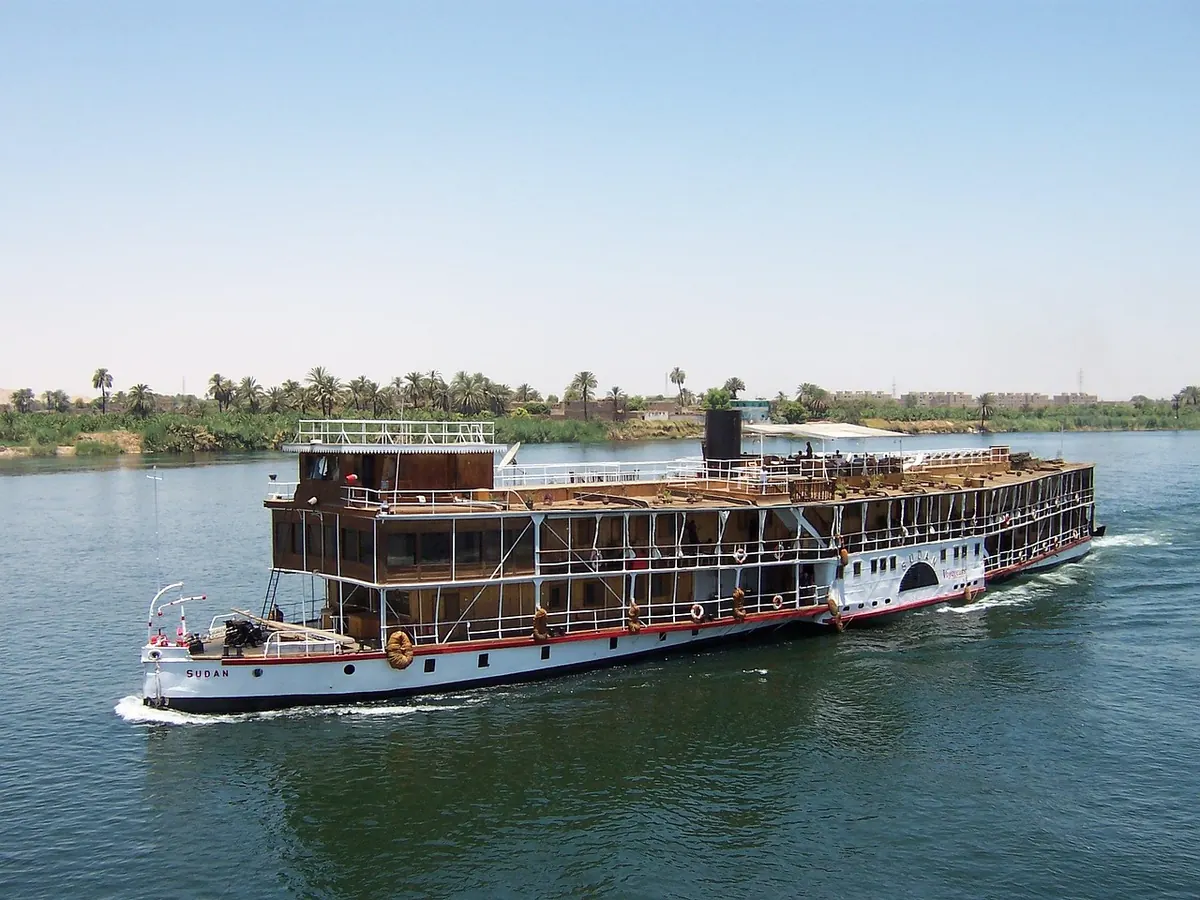
Most Nile cruises are on river ships with 40–80 cabins, a pool on the sundeck and full board. Standards range from simple to genuinely luxurious, so read recent reviews and check what's included – guided tours and entrance fees are often extra.
Evenings on the sun deck are what most people remember: the pool glowing blue, a cold drink in your hand and the riverbank sliding past – palm trees, mud-brick villages, farmers leading donkeys home and boys waving from the shore. Some ships moor several abreast in port, so ask for a cabin on a higher deck if views matter to you.
2. Dahabiyas
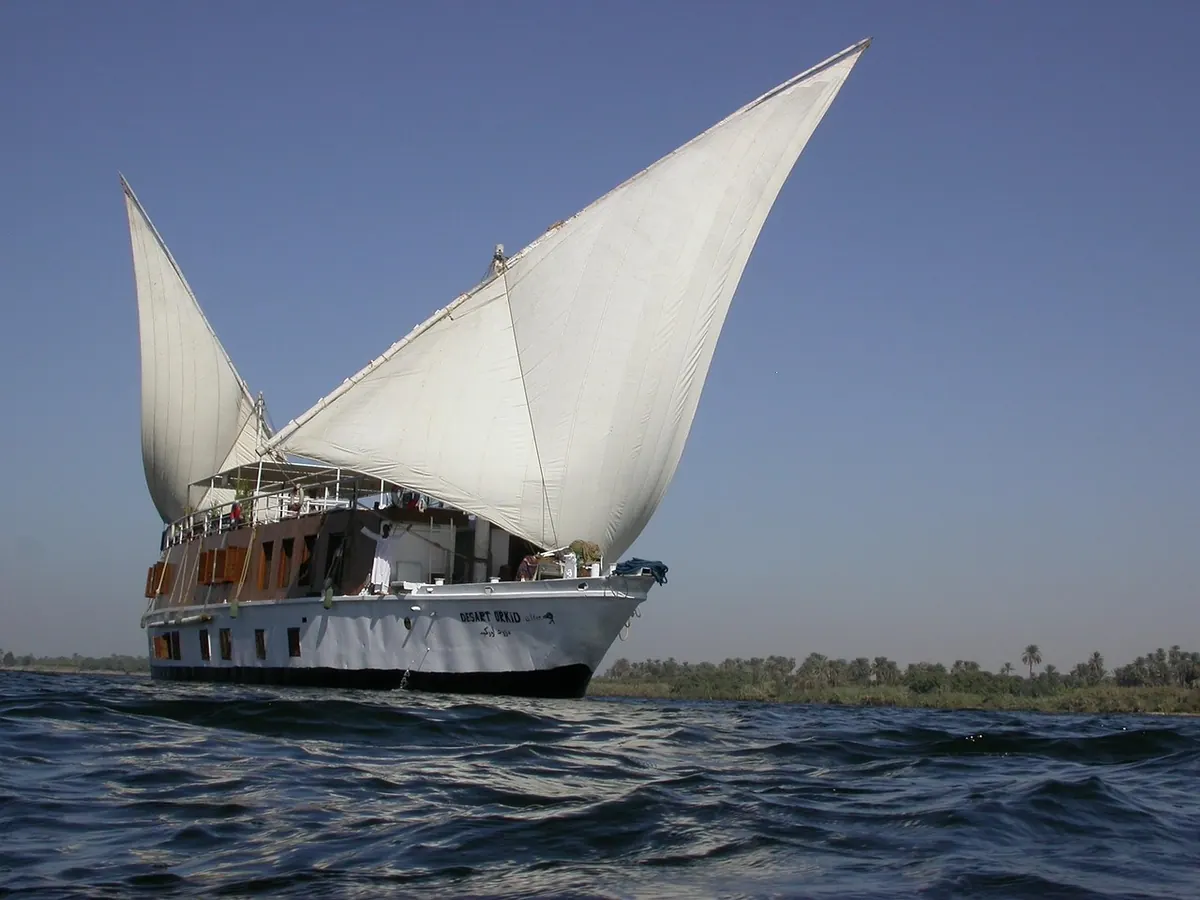
These traditional sailing boats carry around 10–20 guests. They sail rather than motor much of the way, moor at quiet islands and stop at small temples big ships skip. A dahabiya trip usually takes four or five nights, and the experience is far more personal.
Without a big engine, a dahabiya is quiet: you hear the wind in the two great sails, the water against the hull and birdsong from the riverbanks. You moor at small islands and villages the big ships pass by, and dinner on deck under the stars feels like a private house party on the Nile.
3. Lake Nasser cruises
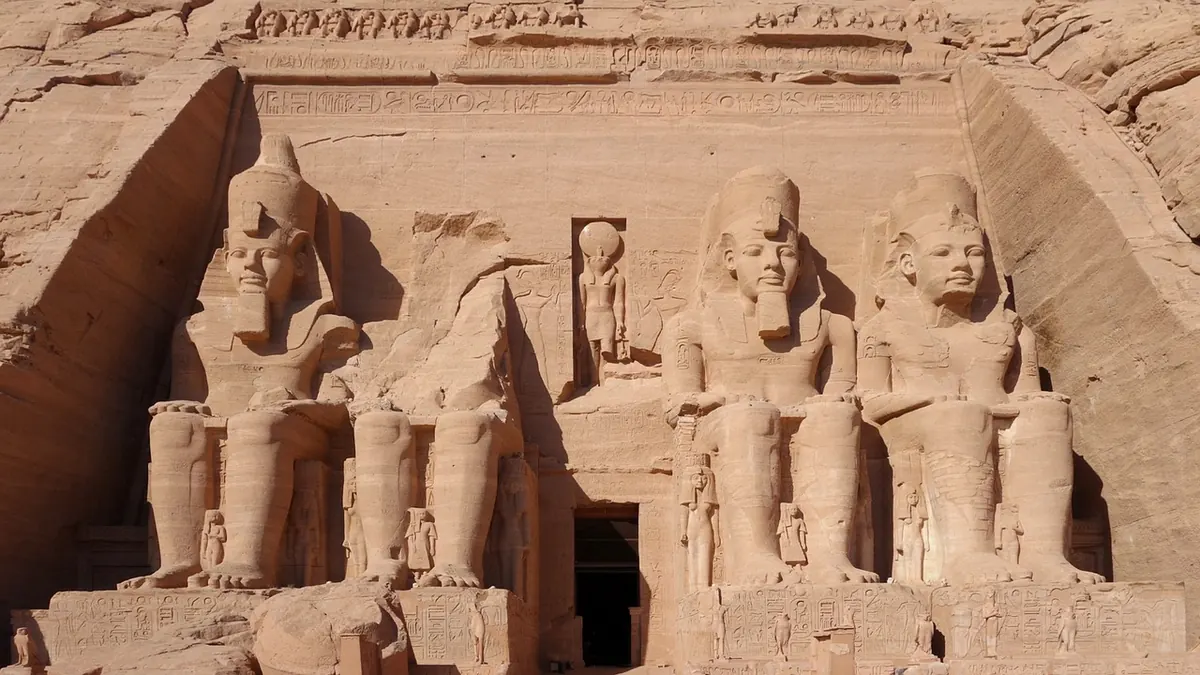
South of the Aswan High Dam, a handful of ships sail Lake Nasser between Aswan and Abu Simbel, visiting remote Nubian temples that can only be reached by water – and arriving at Abu Simbel by night.
The landscape is completely different from the green Nile valley: golden desert and rocky hills dropping straight into deep blue water, with no villages and almost no other boats. The silence is profound, and arriving at Abu Simbel from the water at sunrise is unforgettable.
How long and when to go
Classic cruises between Luxor and Aswan last three to four nights (Aswan to Luxor) or four to five nights (Luxor to Aswan), as ships travel against the current going south. Dahabiya trips usually take five to seven nights for a similar stretch, at a slower pace with more stops.
The best time is October to April, when days are warm and sunny and evenings pleasant. December to February is peak season, with the most comfortable temperatures but higher prices. From May to September, temperatures in Luxor and Aswan often exceed 40°C – fewer boats sail, prices fall and sightseeing is done very early in the morning.
A classic four-night itinerary (Luxor to Aswan)
Day 1 – Luxor: board in the afternoon, visit Karnak and Luxor Temple. Day 2 – West Bank and sailing: early visit to the Valley of the Kings, the Temple of Hatshepsut and the Colossi of Memnon, then sail south through the Esna lock. Day 3 – Edfu and Kom Ombo: morning visit to the Temple of Edfu, afternoon sailing, and Kom Ombo at sunset. Day 4 – Aswan: the High Dam, the Unfinished Obelisk and Philae Temple, with a felucca sail in the afternoon. Day 5 – Abu Simbel and disembarkation: an optional early-morning trip to Abu Simbel, then leave the ship.
What you'll see
4. Luxor
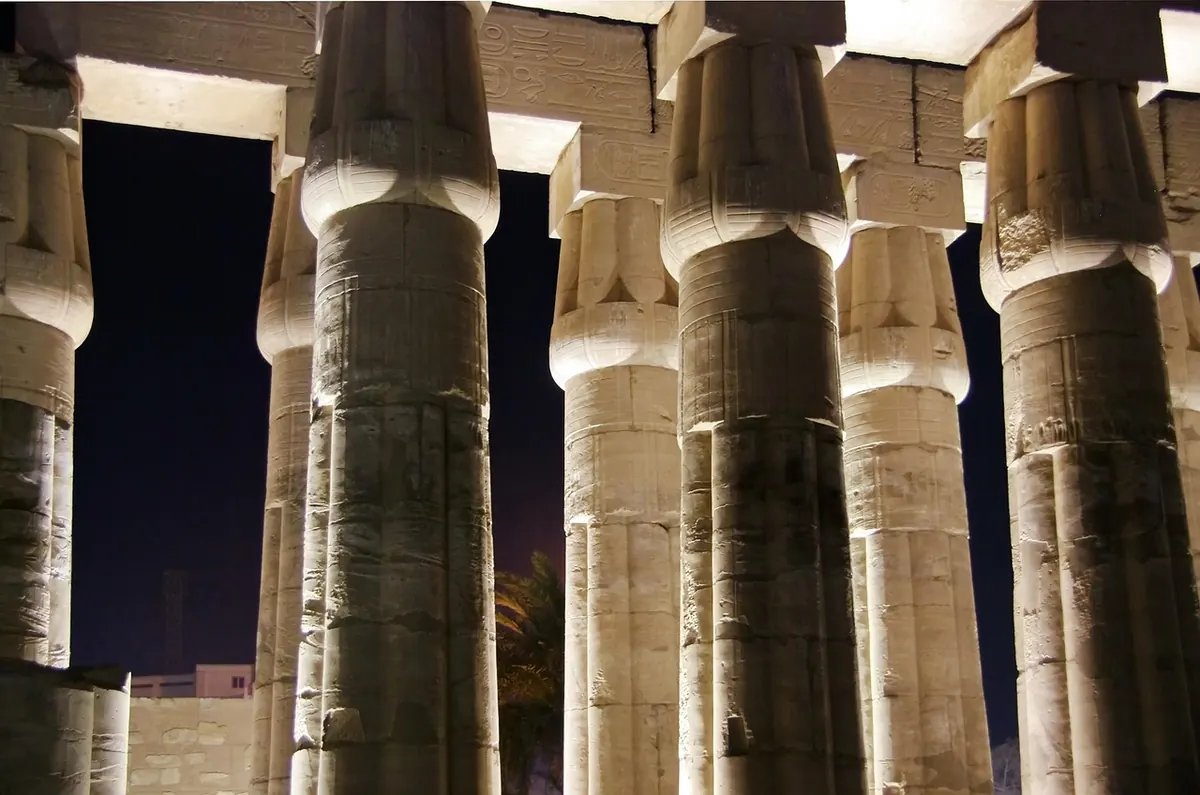
Most cruises start or end in Luxor, with visits to Karnak, Luxor Temple and the West Bank – the Valley of the Kings and the Temple of Hatshepsut.
Most cruises start or end here, with temples on both banks of the river. Wake up early for the West Bank, when the light is soft and the air is still cool, and spend an evening at Luxor Temple, which is beautifully lit after dark.
5. The Esna lock
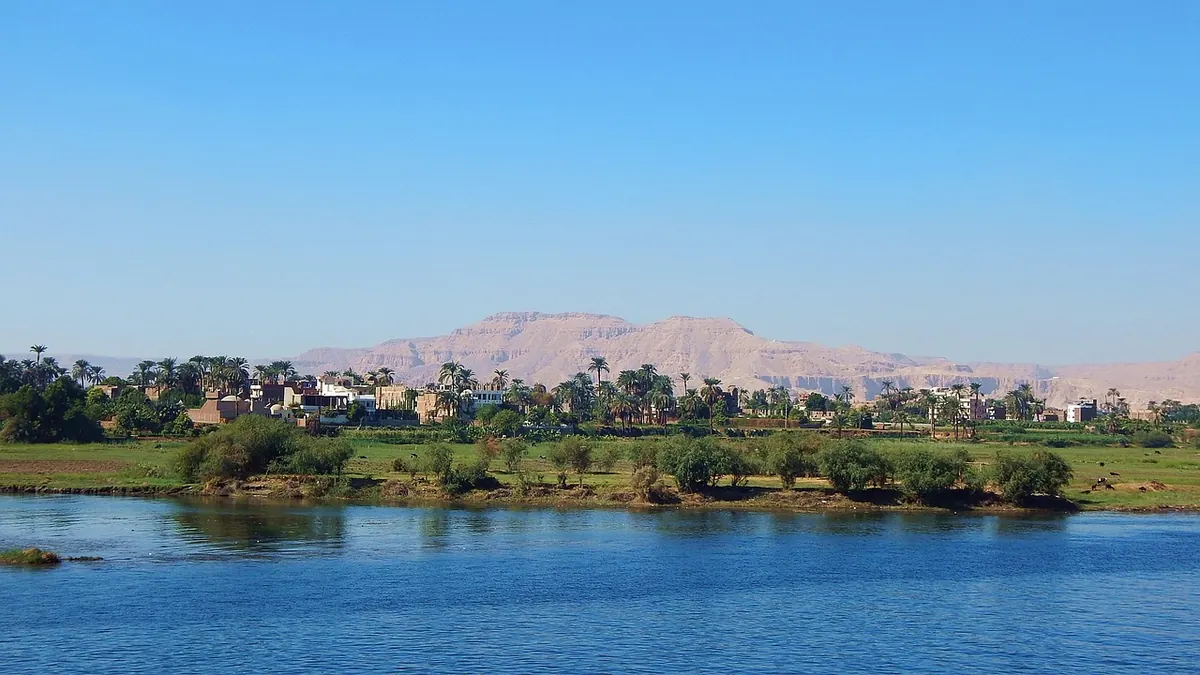
Ships pass through the lock at Esna, a slow, fascinating operation – and a chance to watch traders in small boats selling scarves and tablecloths to the decks above.
Everyone goes up on deck as the ship waits its turn at the lock. Small rowing boats appear alongside and traders throw tablecloths and scarves up onto the deck in plastic bags, shouting prices – a chaotic, funny piece of river theatre. If you don't want to buy, throw the goods back politely.
6. The Temple of Edfu
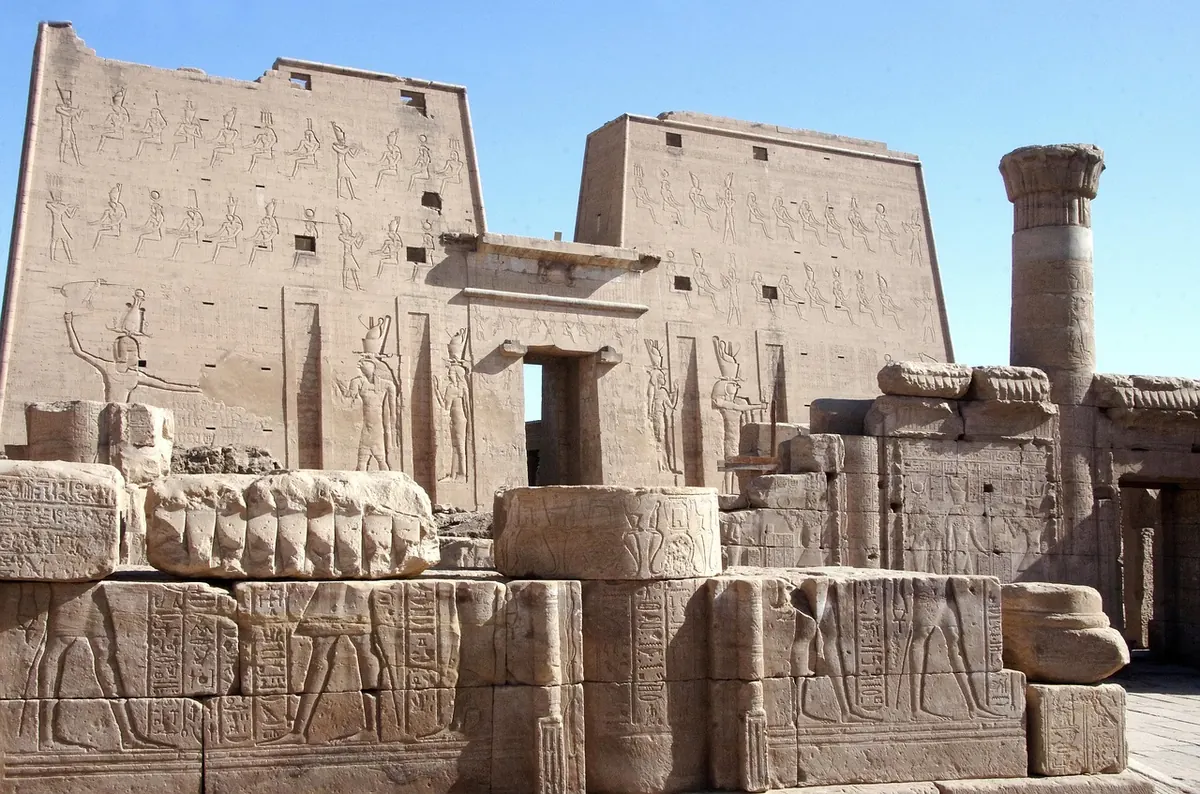
Dedicated to the falcon god Horus, Edfu is the best-preserved temple in Egypt, with its roof, walls and inscriptions largely intact.
Horse-drawn carriages clatter you from the quay to the temple, and then the massive pylon rises in front of you, carved with giant figures of gods and pharaohs. Edfu is one of the most complete temples in Egypt: walk into the dim inner halls and you can almost smell the incense of the old ceremonies. Agree the carriage fare before you climb in.
7. Kom Ombo
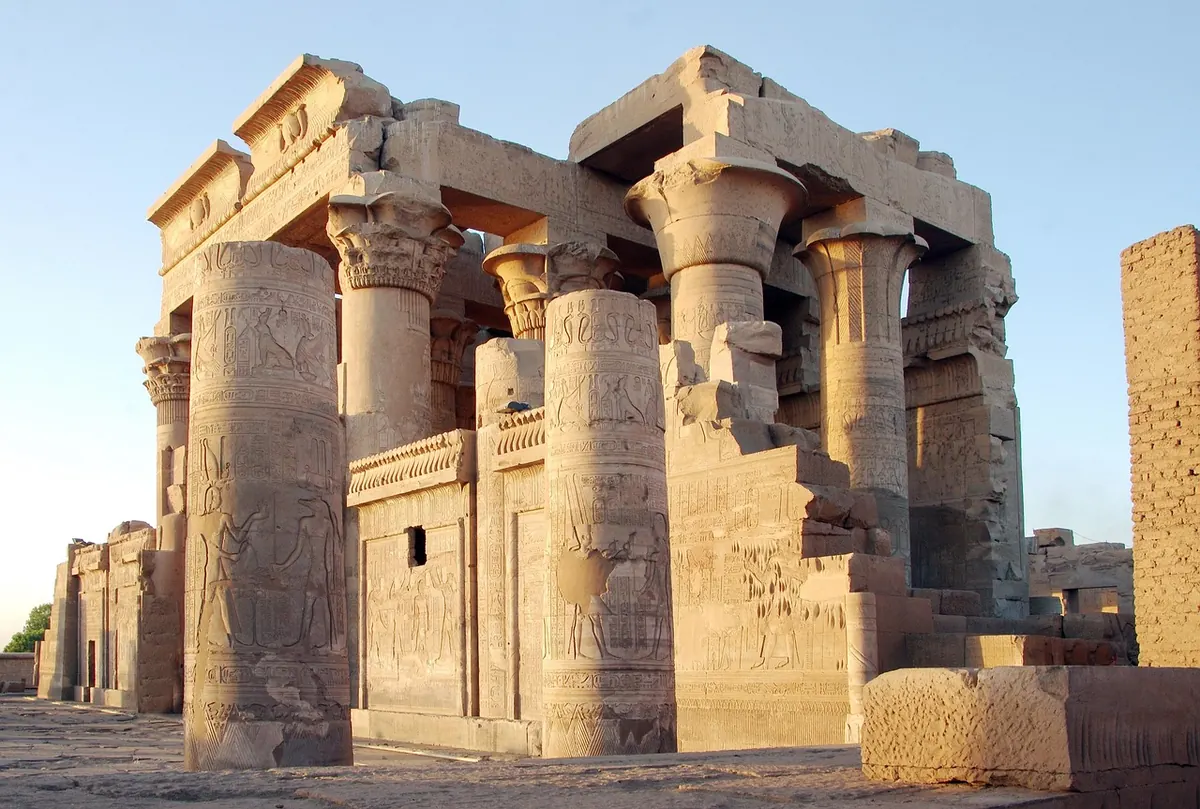
This unusual double temple, shared by the crocodile god Sobek and the falcon god Haroeris, sits right on the riverbank. A small museum next door displays mummified crocodiles.
The temple stands right on the riverbank, glowing gold at sunset and beautifully lit after dark as your ship ties up. Inside, look for the carved calendar and medical instruments on the walls, then visit the small museum of mummified crocodiles next door.
8. Aswan
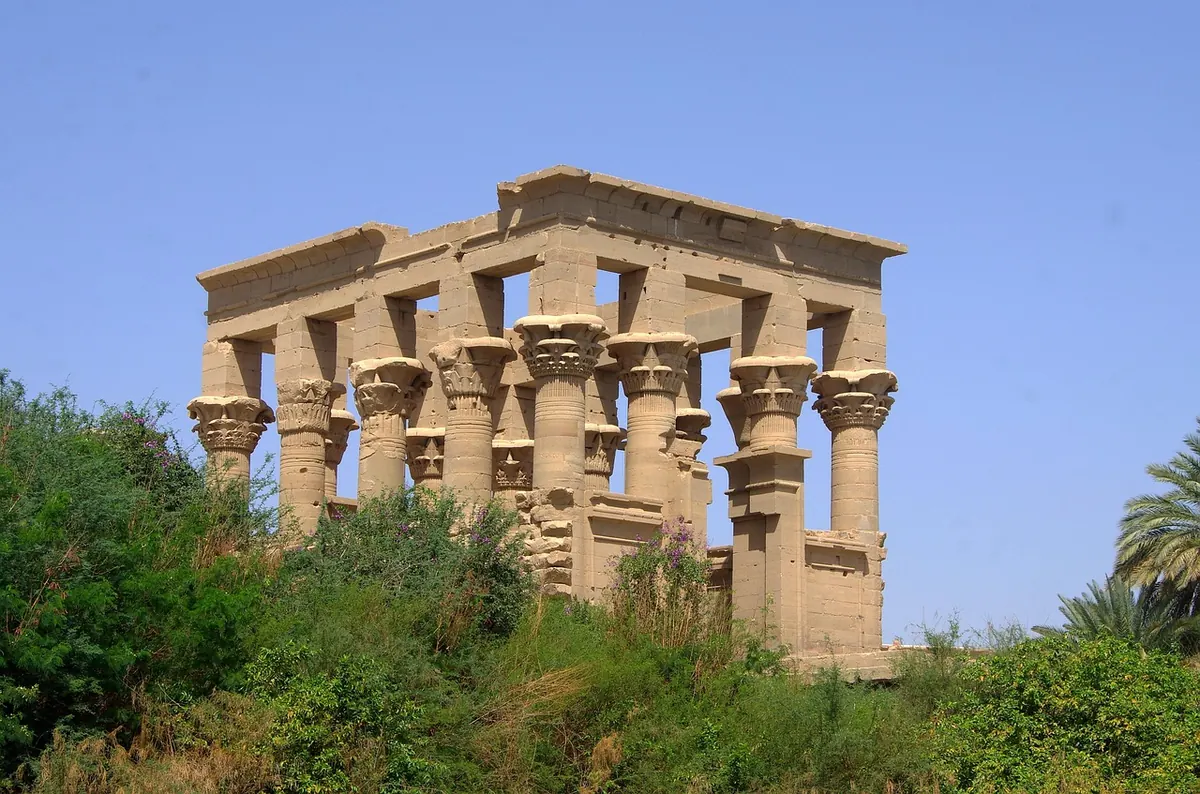
The cruise ends (or begins) in Aswan, with time for Philae, the High Dam, a felucca sail around Elephantine Island and an optional trip to Abu Simbel.
Arriving in Aswan feels different from Luxor: the river widens, granite boulders and green islands appear, white feluccas cross in every direction and the golden dunes of the west bank rise behind. The pace slows, the air feels fresher and many travellers say it's their favourite stop of the cruise.
Abu Simbel
The great temples of Ramesses II and Nefertari at Abu Simbel, near the Sudanese border, are one of the highlights of any trip to Egypt. They were moved, block by block, in the 1960s to save them from the rising waters of Lake Nasser. From Aswan, most visitors go on an early-morning road trip of about three hours each way, or take a short flight. Lake Nasser cruises arrive by water. See our Aswan travel guide.
What's included – and what isn't
Most cruise prices include your cabin, full board (meals on board) and sometimes guided excursions with entrance fees. Check carefully: some cruises sell excursions separately, and drinks, the Tutankhamun tomb and other special tombs, the hot-air balloon in Luxor, Abu Simbel and tips are usually extra. Transfers from the airport or from the Red Sea are often not included.
Combining a cruise with the Red Sea
Many travellers combine a Nile cruise with a week on the beach. From Hurghada, Luxor is about four hours by road; from Marsa Alam, Edfu or Luxor can be reached overland. A popular plan is a cruise followed by a few days of snorkelling and relaxing in Hurghada or Marsa Alam. Pre-book a private transfer between the Nile and the coast for a comfortable journey.
Tips for your cruise
- Choose your direction: cruises from Aswan to Luxor are usually a night shorter.
- Book a cabin on the upper decks for better views – lower-deck windows can be at water level.
- Pack layers: days are warm, but nights on deck can be cool in winter.
- Budget for tips: crew tips are customary and usually collected at the end of the cruise.
- Use a licensed Egyptologist guide – the good ones make the temples come alive.
Combine your cruise with Cairo and Abu Simbel using our 10-day Egypt itinerary, and if you're new to cruising, read our beginner's guide to picking a cruise line.
Frequently asked questions
How long is a Nile cruise?
The classic cruise between Luxor and Aswan takes three nights going upstream from Aswan to Luxor or four nights the other way. Many international river cruise lines combine a cruise with several nights in Cairo for a 10–12 day trip.
What is the best time for a Nile cruise?
October to April has pleasant daytime temperatures. December and January are the busiest and most expensive; summer cruises are cheaper but extremely hot.
What is a dahabiya?
A dahabiya is a traditional two-masted sailing boat with a handful of cabins. It's slower and more intimate than a cruise ship and can stop at small sites and sandbanks that big ships can't.
How long is a Nile cruise?
Usually three to five nights between Luxor and Aswan on a cruise ship, or five to seven nights on a dahabiya.
Can you do a Nile cruise from Hurghada?
Yes. Cruises start in Luxor, about four hours from Hurghada by road, so you can easily combine a cruise with a beach holiday on the Red Sea.
Keep reading
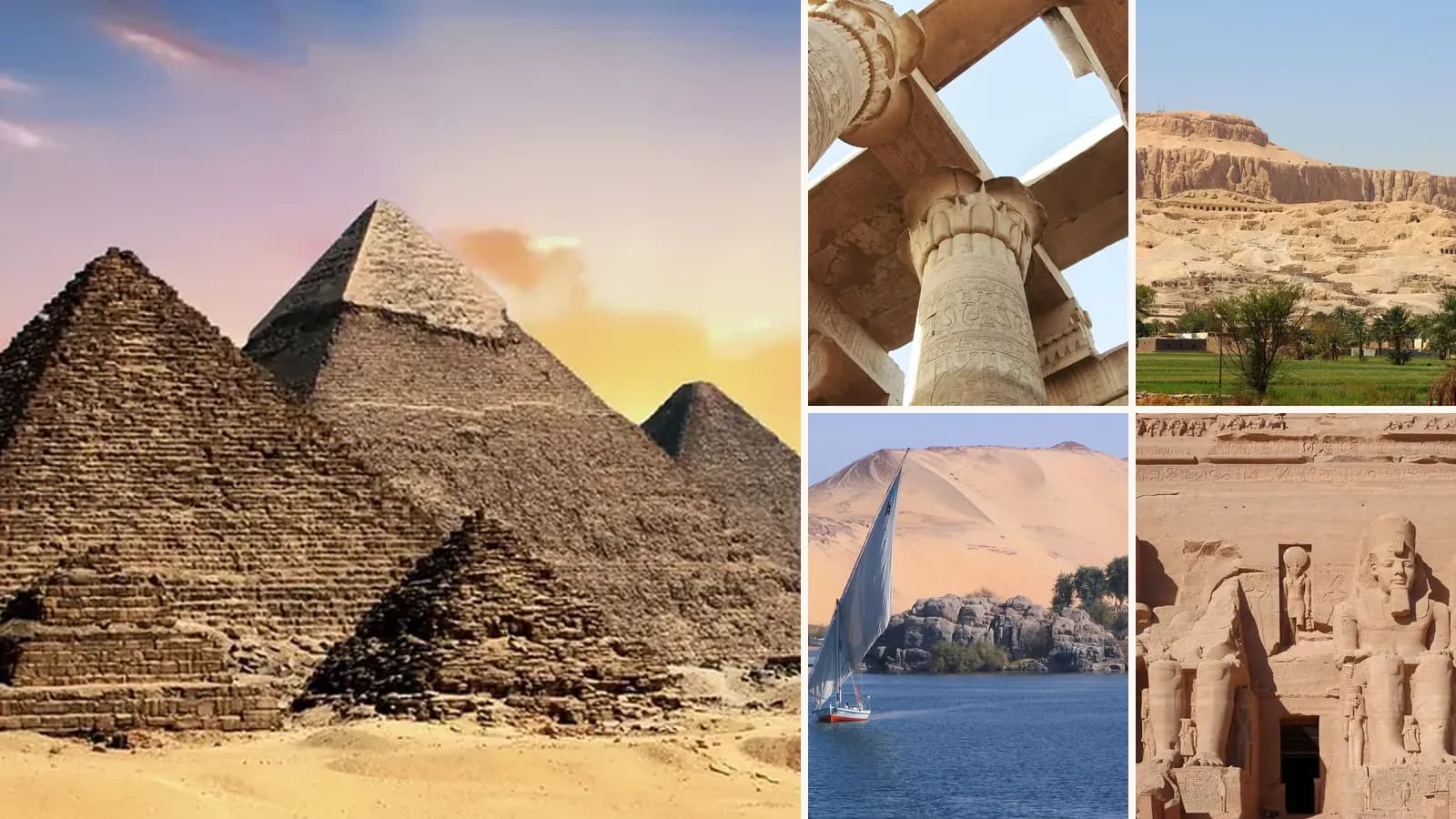
Egypt in 10 Days: A Classic Itinerary from Cairo to Abu Simbel
A day-by-day 10-day Egypt itinerary: the Pyramids and Grand Egyptian Museum, Luxor's temples and tombs, a Nile cruise, Aswan and Abu Simbel – plus how to add the Red Sea.
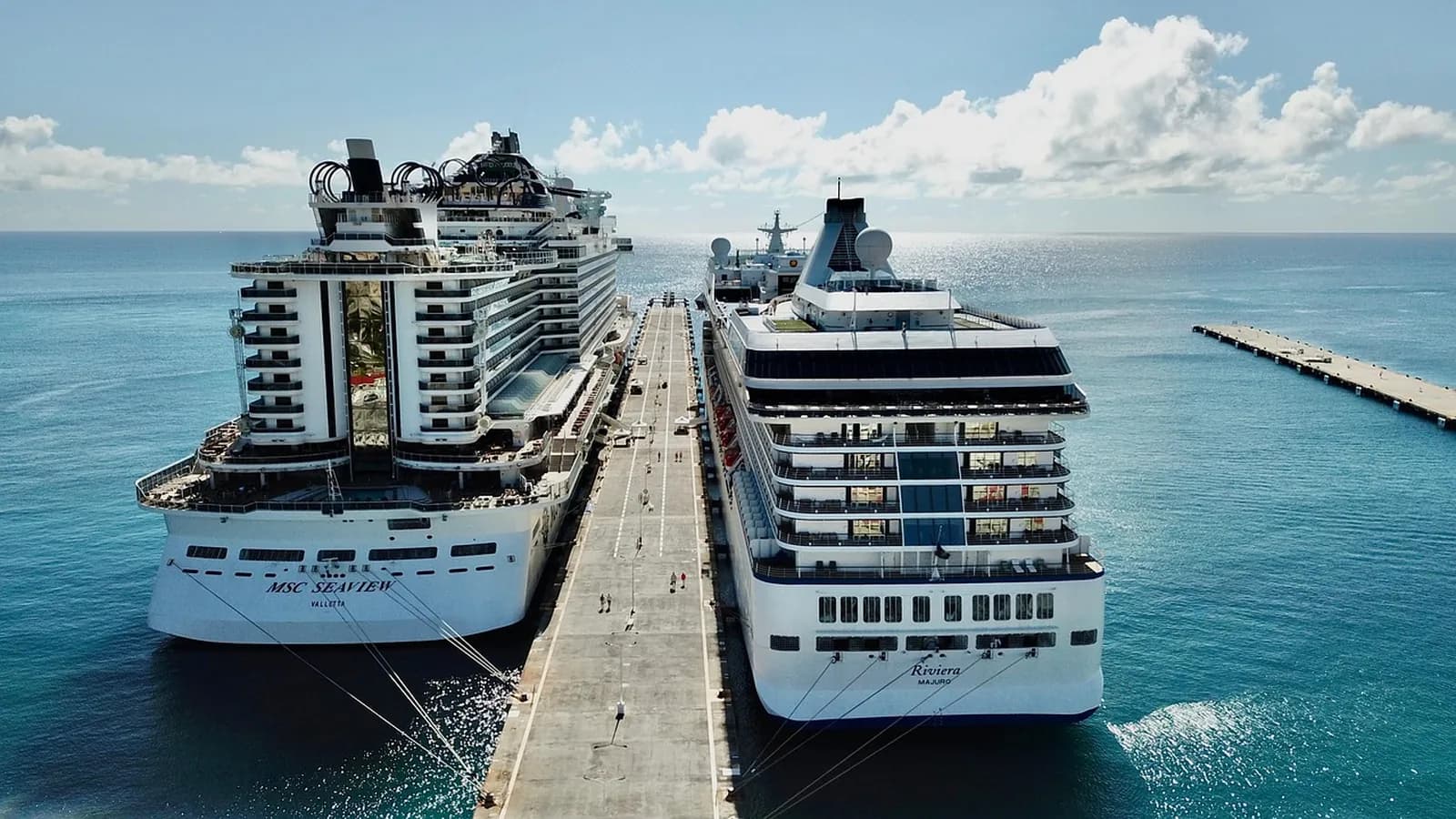
A Beginner's Guide to Picking a Cruise Line
Mega-ship, premium, luxury, adults-only, expedition or river? The main types of cruise line and how to choose the right one for you.
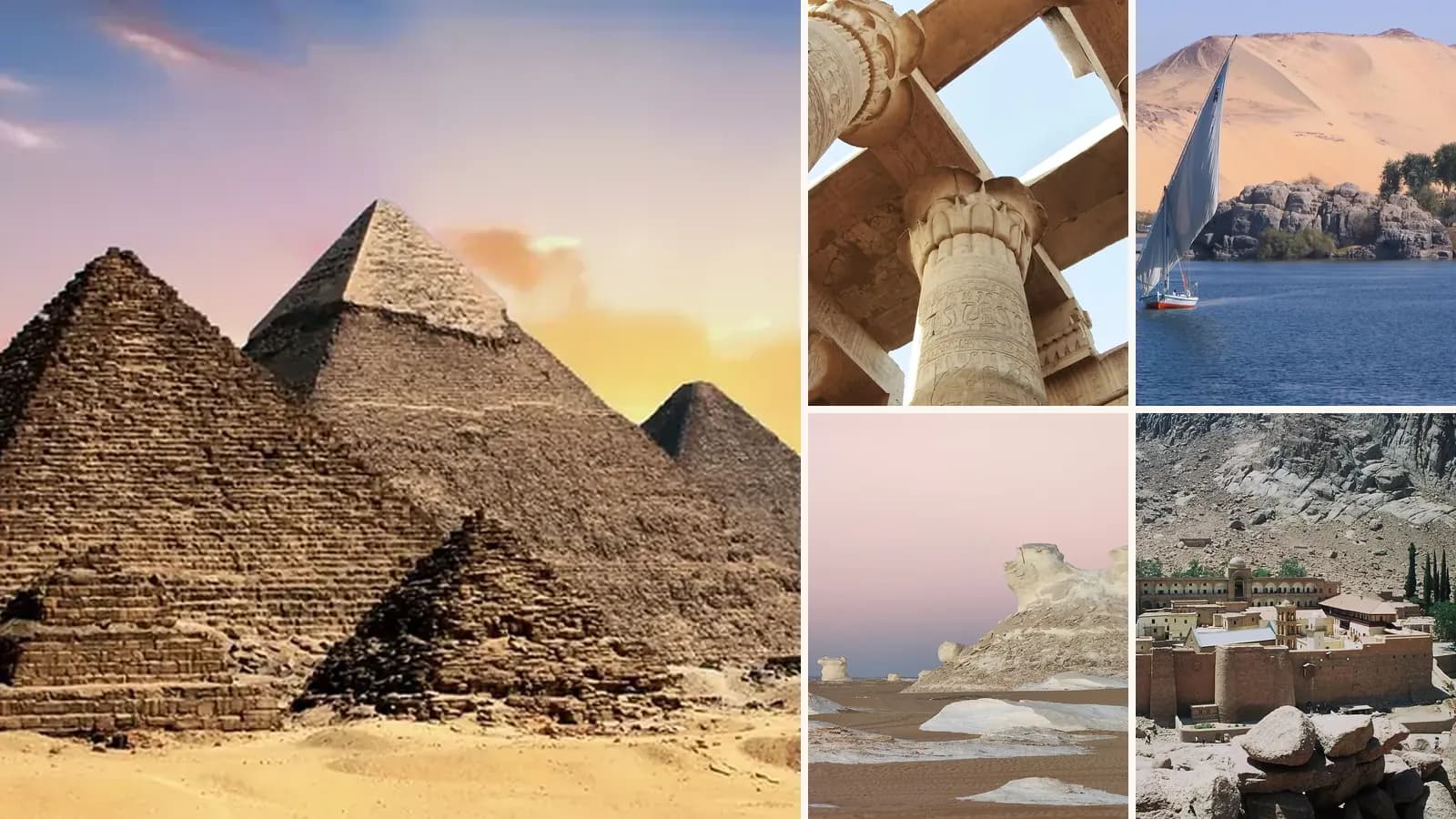
15 Best Places to Visit in Egypt
The Pyramids and the Grand Egyptian Museum, Luxor, Aswan, Abu Simbel, a Nile cruise, the Red Sea and the desert oases – the best places to visit in Egypt, with tips.
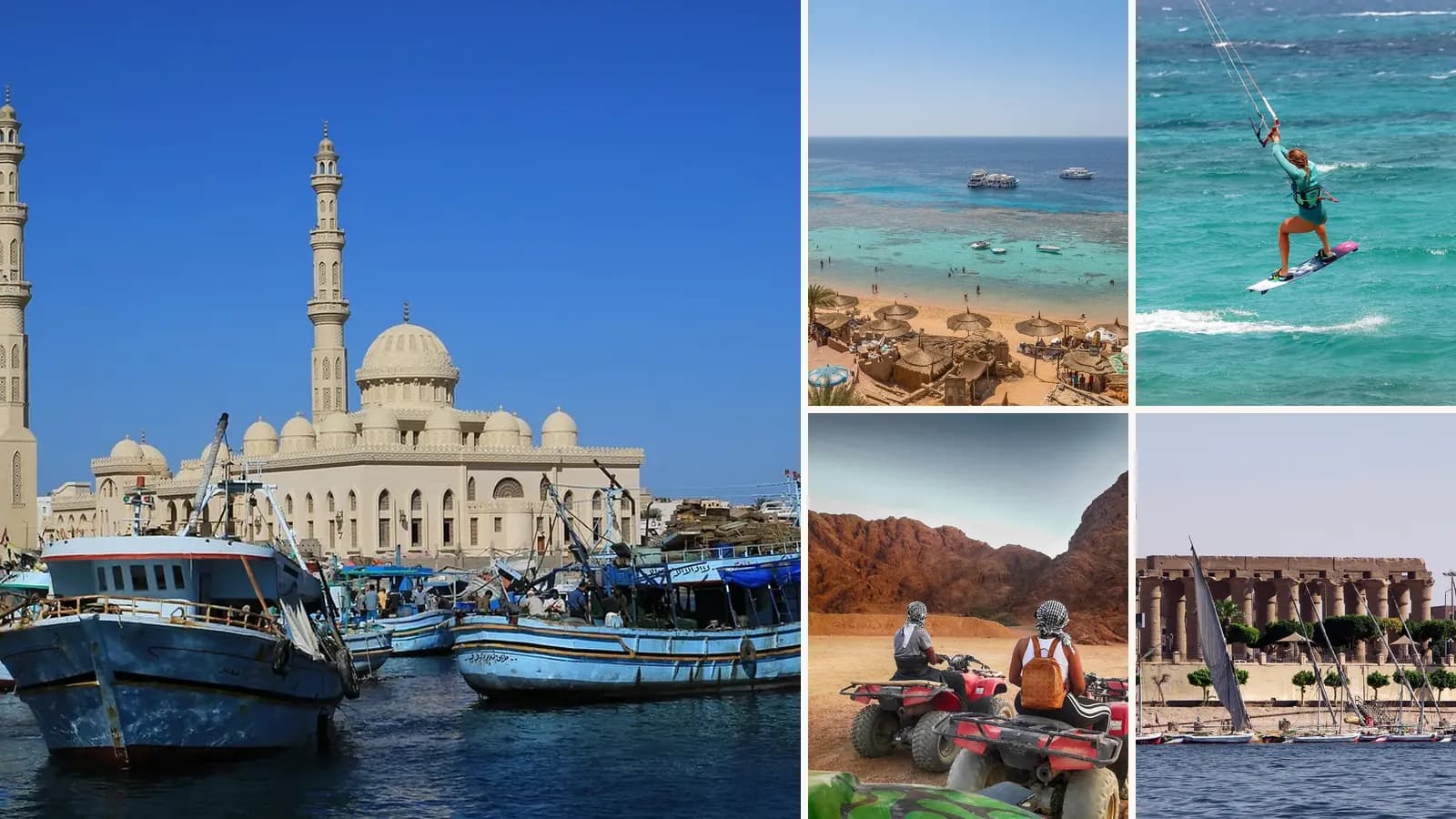
Red Sea Family Holidays in Egypt: Hurghada, El Gouna & the Best Resort Areas
Hurghada, El Gouna, Makadi Bay, Sahl Hasheesh and Soma Bay compared for families – plus the best boat trips, snorkelling, desert safaris and tips for kids.