10 Tips to Help You Overcome a Fear of Flying
Practical ways to manage a fear of flying: understanding turbulence, breathing techniques, choosing the right seat, talking to the crew and taking a confidence course.
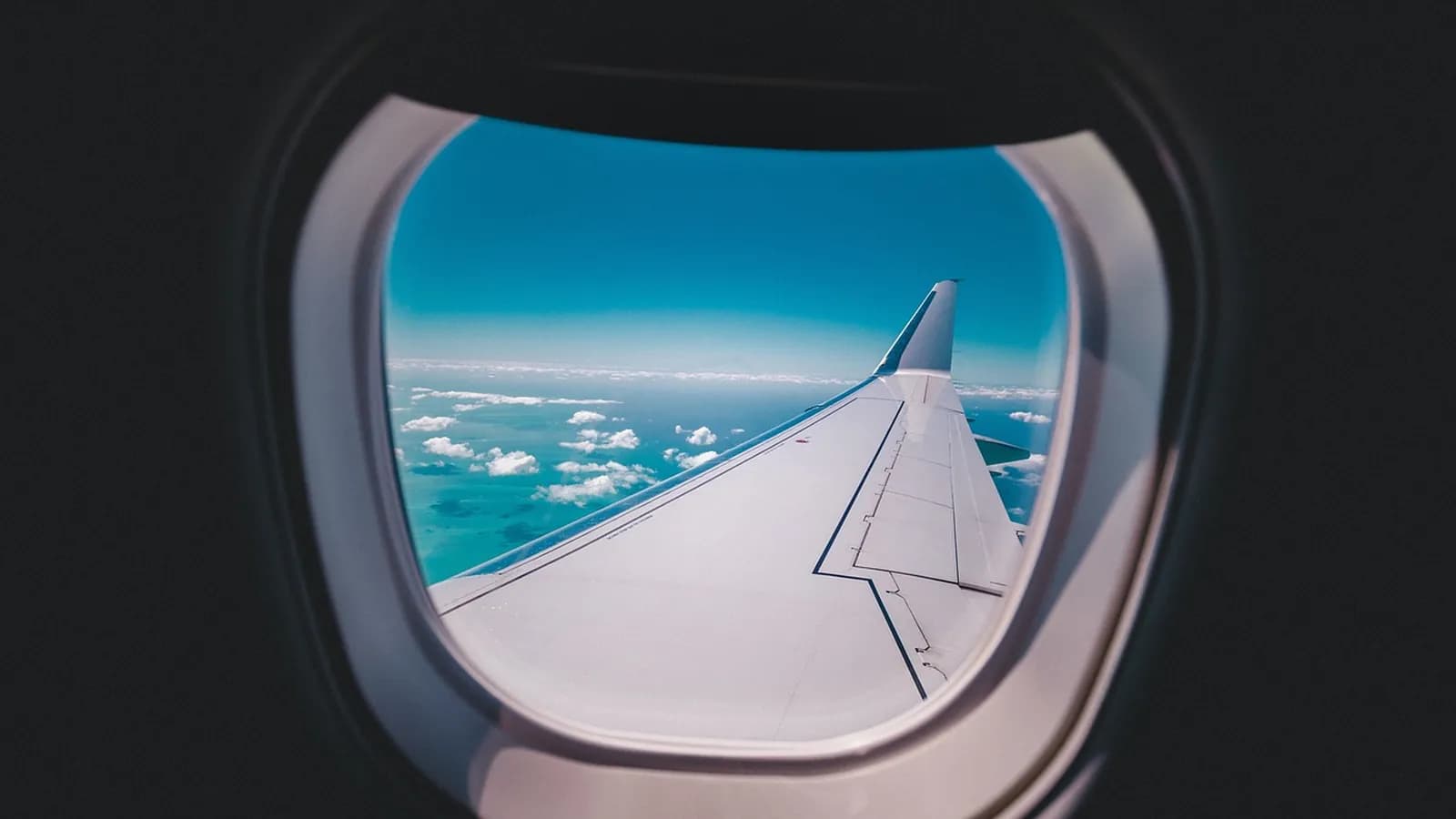
A fear of flying is extremely common, and it affects frequent travelers as well as first-timers. The good news is that it usually responds well to practical techniques. You don't have to love flying – you just need enough tools to get to your destination in reasonable comfort.
1. Learn how a plane actually flies
Fear grows in the gaps in our knowledge. Understanding how lift works, why engines are designed with huge safety margins and how many systems are duplicated on a modern aircraft makes the strange noises and sensations of a flight much less frightening. Many airlines and pilots publish short explainers and videos online.
2. Understand turbulence
Turbulence is simply uneven air, a bit like a car driving over a bumpy road. Planes are designed for it, pilots expect it, and the crew will tell you when to sit down and fasten your seatbelt. Keep your belt loosely fastened throughout the flight and turbulence becomes a nuisance rather than a risk.
3. Trust the people at the front
Commercial pilots train for years, practise emergencies regularly in simulators and fly with a second qualified pilot. Air traffic controllers, engineers and dispatchers work behind the scenes on every flight. You are surrounded by professionals whose job is to get you there safely.
4. Choose your seat carefully
A seat over the wing gives the smoothest ride. An aisle seat helps if you feel trapped, while a window lets you see that everything outside is normal. Our guide to choosing the perfect airplane seat explains how to get the one you want.
5. Use slow breathing
When anxiety rises, breathing becomes fast and shallow, which makes the panic feel worse. Try breathing in slowly through your nose for a count of four, holding briefly, then breathing out through your mouth for a count of six to eight. Repeat for a few minutes. Practise at home so it feels natural on the plane.
6. Challenge the "what if" thoughts
Anxious thoughts tend to jump to the worst outcome. When you notice one, name it ("this is a worry, not a fact"), then replace it with something realistic: "This is a normal noise. The crew is calm. Planes fly through this every day."
7. Keep your mind busy
Download films, podcasts, an audiobook or a game before you board. Puzzles that need concentration, such as crosswords or sudoku, are especially good at breaking the anxiety loop.
8. Tell the cabin crew
Let a flight attendant know you're a nervous flyer when you board. They're used to it, they won't make a fuss, and they can explain noises, check in on you and reassure you during the flight.
9. Start small
If you can, build confidence with a short flight before a long-haul trip. Each successful flight is evidence for your brain that flying is safe.
10. Take a fear-of-flying course
Several airlines and specialist organisations run courses led by pilots and psychologists, often finishing with a short flight. Many participants say it changed how they feel about flying for good. If your fear is severe, a therapist trained in cognitive behavioural therapy (CBT) can also help.
Make the airport part easier too
Stress before boarding makes in-flight anxiety worse. Arrive early, and use our tips to get through airport security faster so you reach the gate calm.
Frequently asked questions
Is turbulence dangerous?
For a passenger wearing a seatbelt, turbulence is uncomfortable rather than dangerous. Commercial aircraft are built to handle far stronger forces than normal turbulence, and pilots routinely change altitude to find smoother air. The main safety rule is simple: keep your seatbelt fastened whenever you're seated.
Where is the smoothest place to sit on a plane?
Seats over the wings are usually the most stable, because they're close to the aircraft's centre of gravity. Seats at the very back tend to feel bumps the most.
Should I take medication for fear of flying?
Talk to your doctor before you travel. They can discuss whether medication is appropriate for you and how it might interact with alcohol, sleep and long flights. Many people find that courses and breathing techniques work well on their own.
Keep reading
6 Tips for Picking the Perfect Airplane Seat Every Time
Window, aisle, exit row or bulkhead? How to choose the best seat on the plane for sleep, legroom, a smooth ride or a quick exit – and how to get it without overpaying.
10 Ways to Get Through Airport Security Faster
Skip the stress at the checkpoint: trusted traveler programs, smart packing, the right time to arrive and the small habits that get you through security in minutes.

Best eSIM for Travel: 7 Providers Compared and How to Choose
Airalo, Saily, Holafly, Ubigi and more compared: data packs vs unlimited, hotspot rules, phone numbers and which travel eSIM suits your trip.
11 Tips on Packing Light for Winter Travel
Bulky coats don't need a huge suitcase. Eleven practical tips for packing light for a winter trip, from layering and fabrics to what to wear.