How to Take the Ultimate Trip to Baku
The Old City, Flame Towers, Heydar Aliyev Center, fire temples, mud volcanoes and Gobustan's rock art – the best things to do in Baku, Azerbaijan, with practical tips.

Some links in this guide are partner links: if you buy through them we may earn a small commission, at no extra cost to you. It never affects what we recommend. How we make money
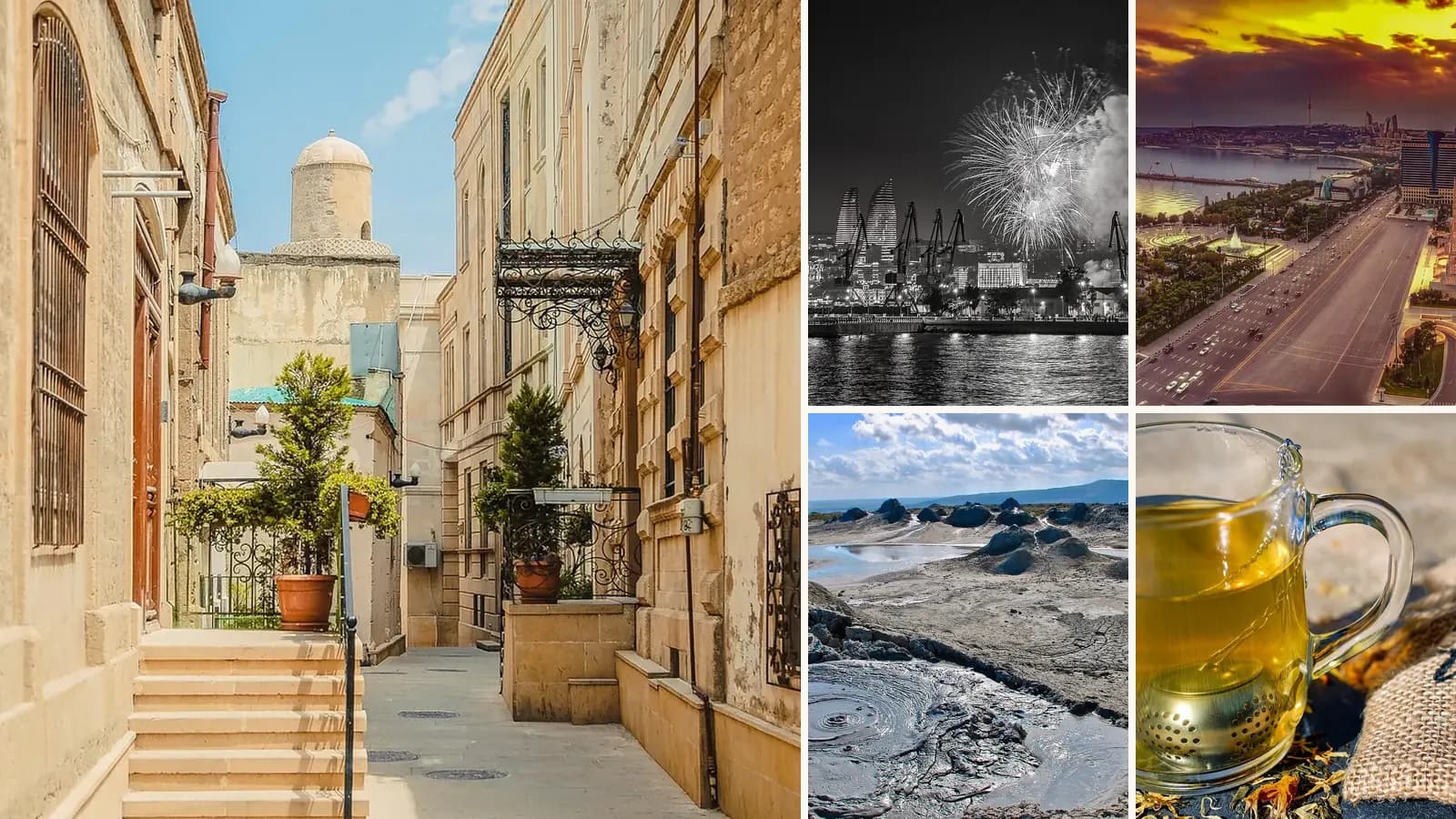
On the shores of the Caspian Sea, Baku is a city of striking contrasts: a walled medieval old town, grand oil-boom mansions from the early 20th century and some of the most daring modern architecture in the world. Add fire temples, bubbling mud volcanoes and a warm, generous food culture, and it makes a fascinating city break.
In the city
1. Explore the Old City (İçərişəhər)
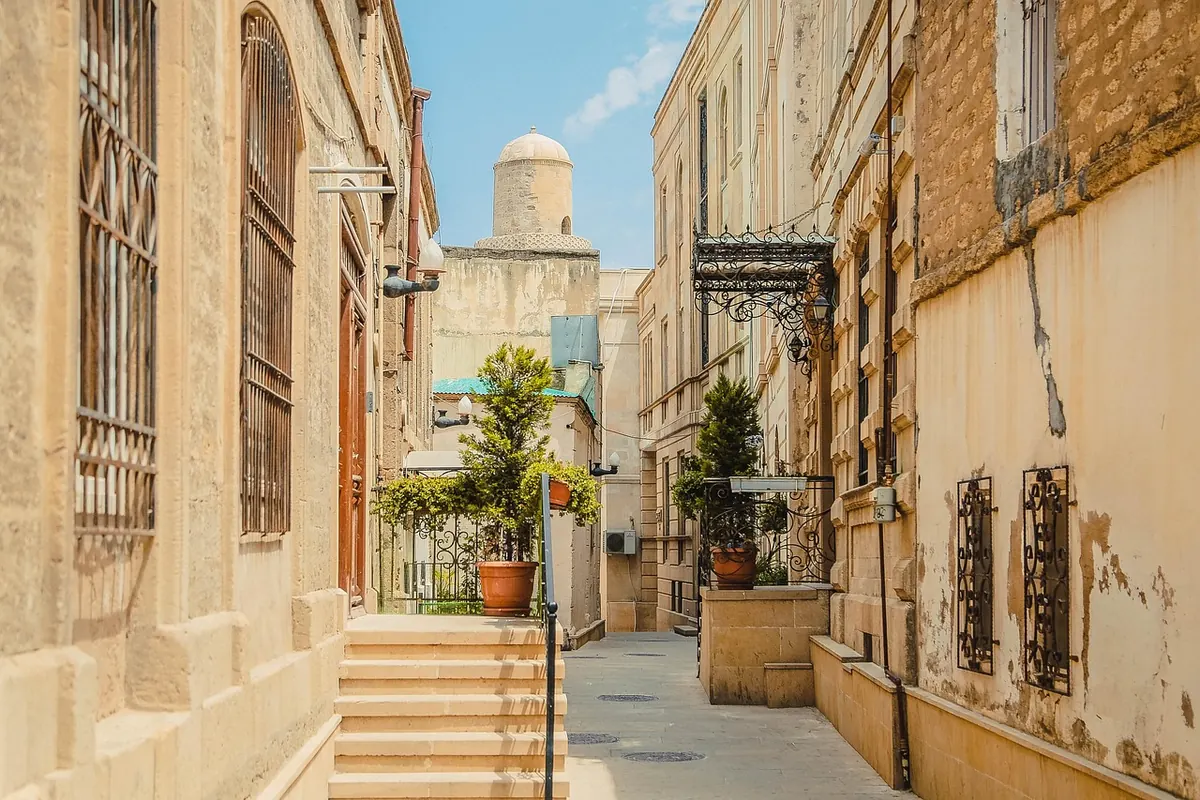
Baku's walled old town is a UNESCO World Heritage Site of narrow lanes, caravanserais, mosques and carpet shops. Wander without a plan, and stop for tea in one of the courtyard cafés.
Behind the thick stone walls, the lanes wind uphill past caravanserais, carpet shops spilling rugs onto the pavement and tiny tea houses. The modern towers of Baku glint above the rooftops – a striking contrast at every corner.
2. Climb the Maiden Tower
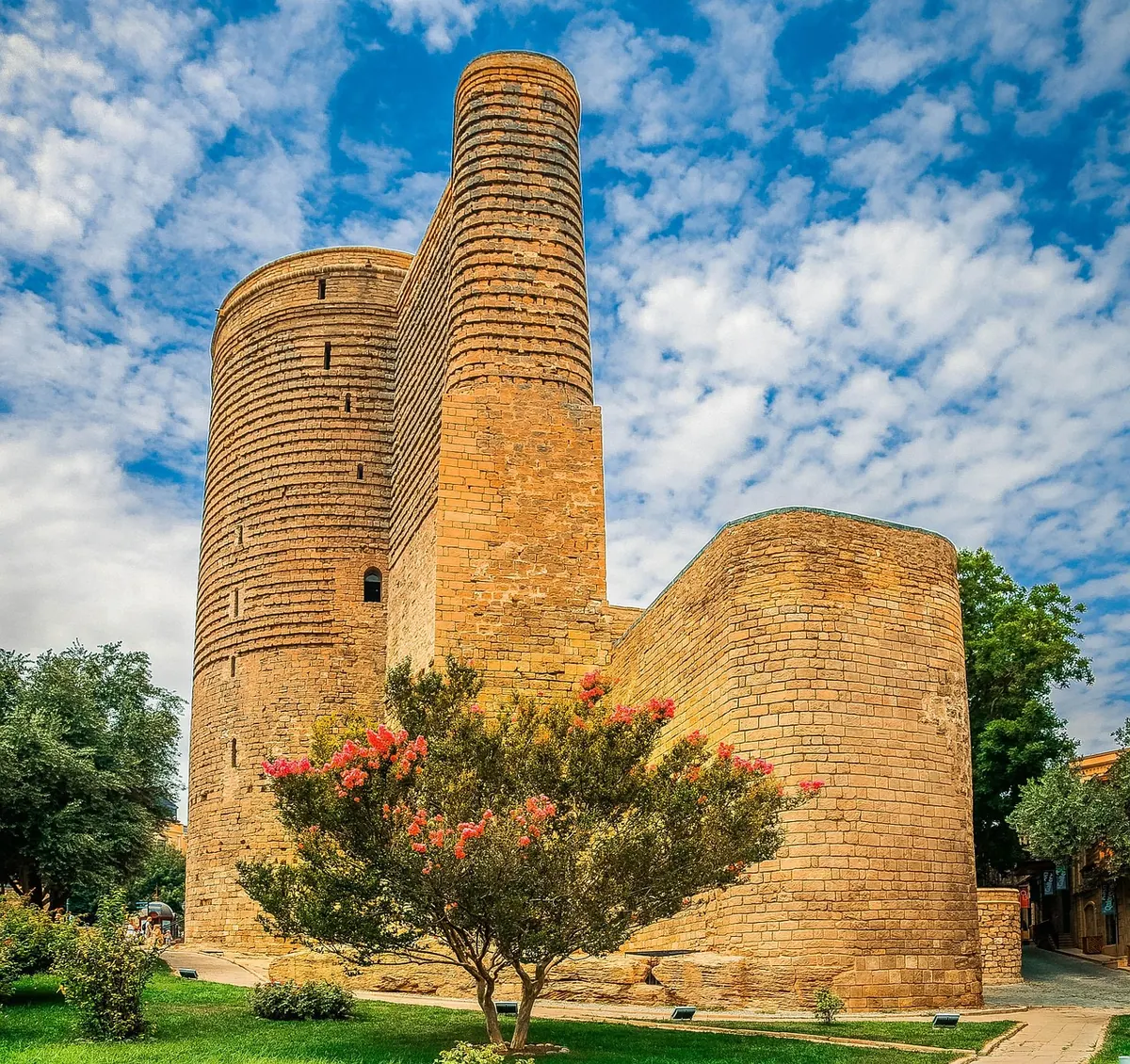
The mysterious 12th-century Maiden Tower is the symbol of Baku. Climb to the top for views over the Old City and the bay; inside, a museum explores the legends surrounding it.
The stairs spiral up inside the thick stone walls, past small exhibits on the tower's legends, and at the top the wind off the Caspian hits you, with the Old City, the boulevard and the Flame Towers spread out around you.
3. Visit the Palace of the Shirvanshahs
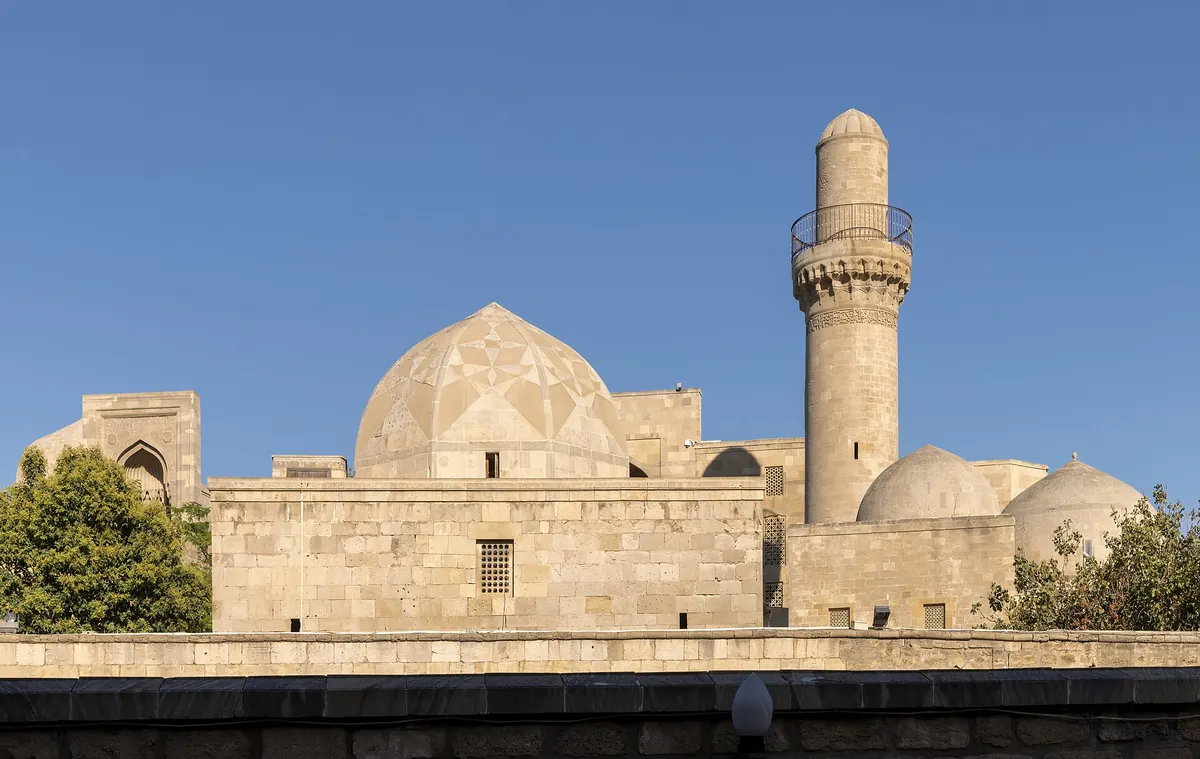
The 15th-century palace complex of the Shirvan rulers includes a mosque, a mausoleum and a bathhouse, all built in golden limestone.
Sandstone domes and courtyards step down the hillside, quiet and cool after the busy lanes, with carved doorways, a small mosque with a slender minaret and the bathhouse ruins below. It feels peaceful, almost secret.
4. Marvel at the Heydar Aliyev Center
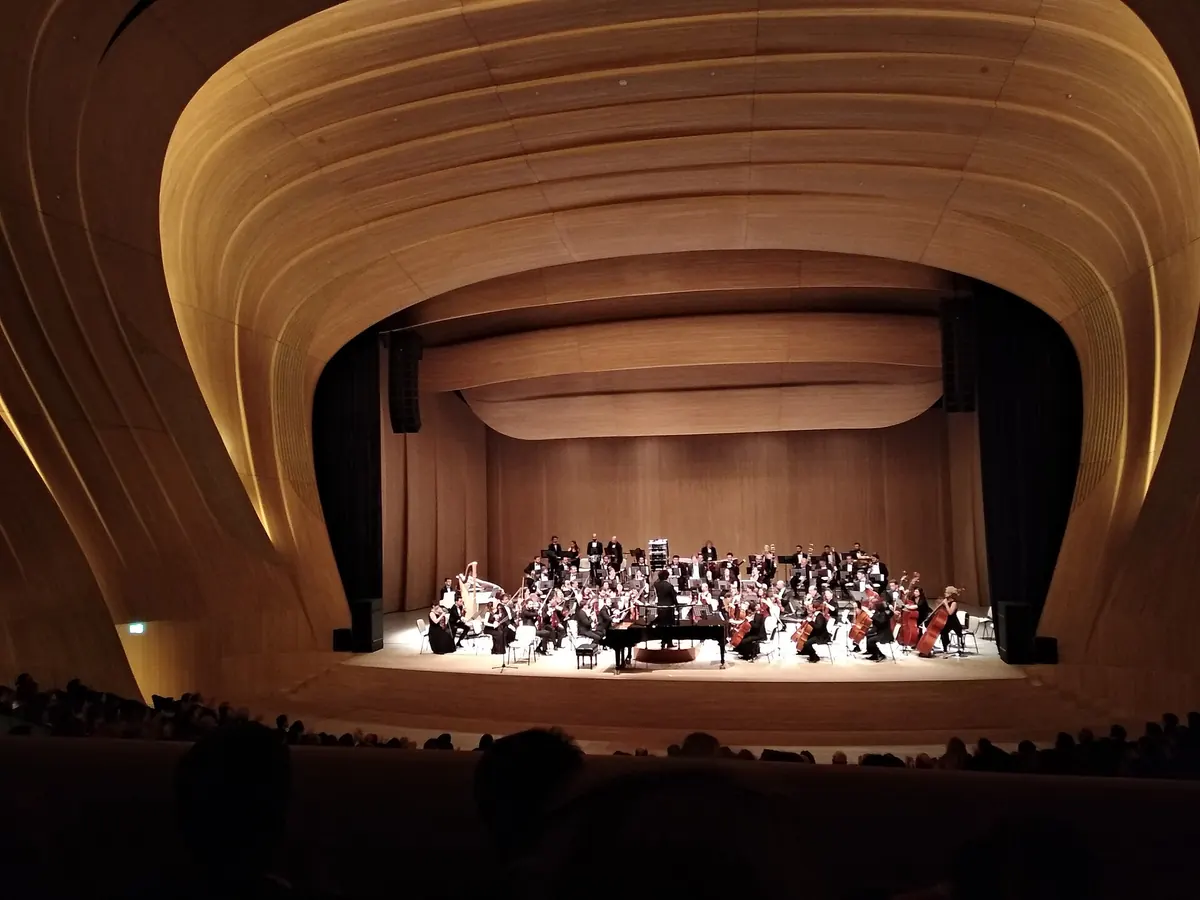
Designed by Zaha Hadid, this flowing white building has no straight lines – one of the most remarkable pieces of modern architecture anywhere. Inside are exhibitions on Azerbaijani culture.
The white building flows like a wave or a piece of fabric caught in the wind, with no straight lines anywhere. Walk around it on the lawns at sunset, when the curves glow pink and gold – inside, the spaces are just as fluid.
5. See the Flame Towers light up
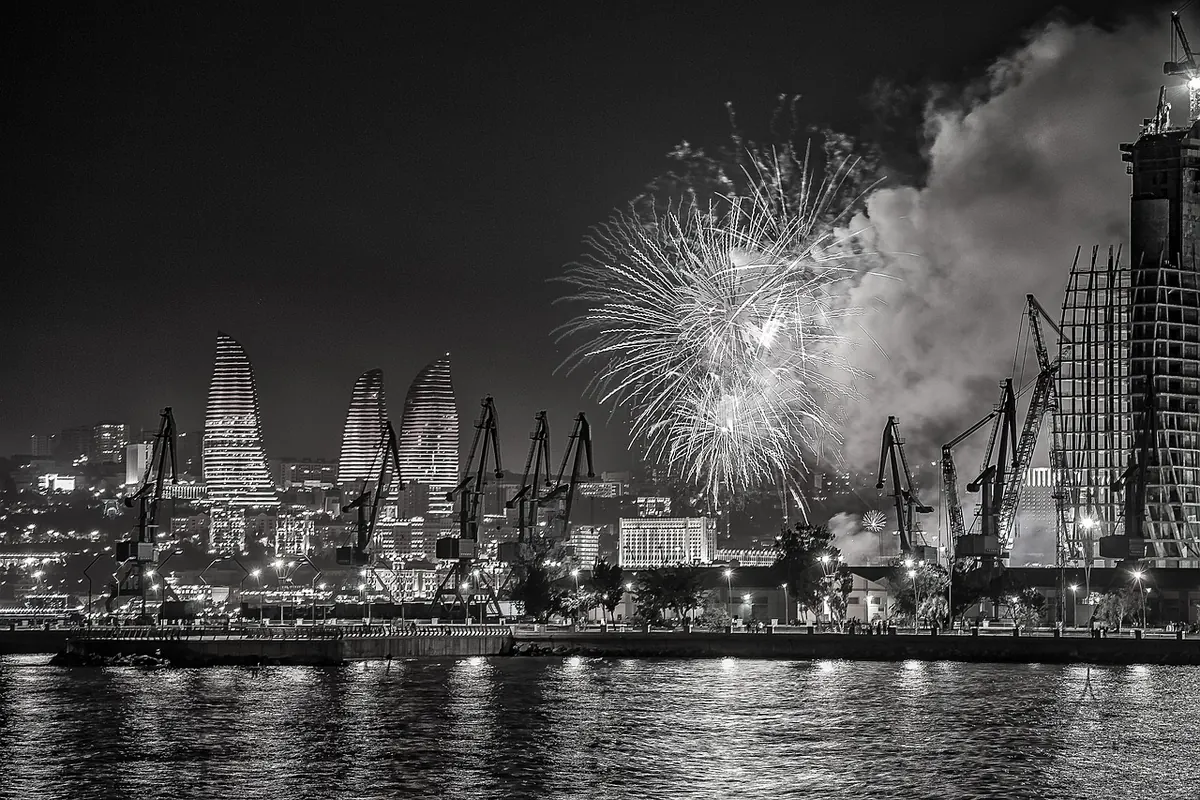
The three glass Flame Towers dominate the skyline. After dark, their LED screens show giant moving flames visible across the city.
After dark, the three glass towers on the hill come alive with LED flames that flicker and rise, then switch to the colours of the Azerbaijani flag – watch from the boulevard or from Highland Park.
6. Walk Baku Boulevard
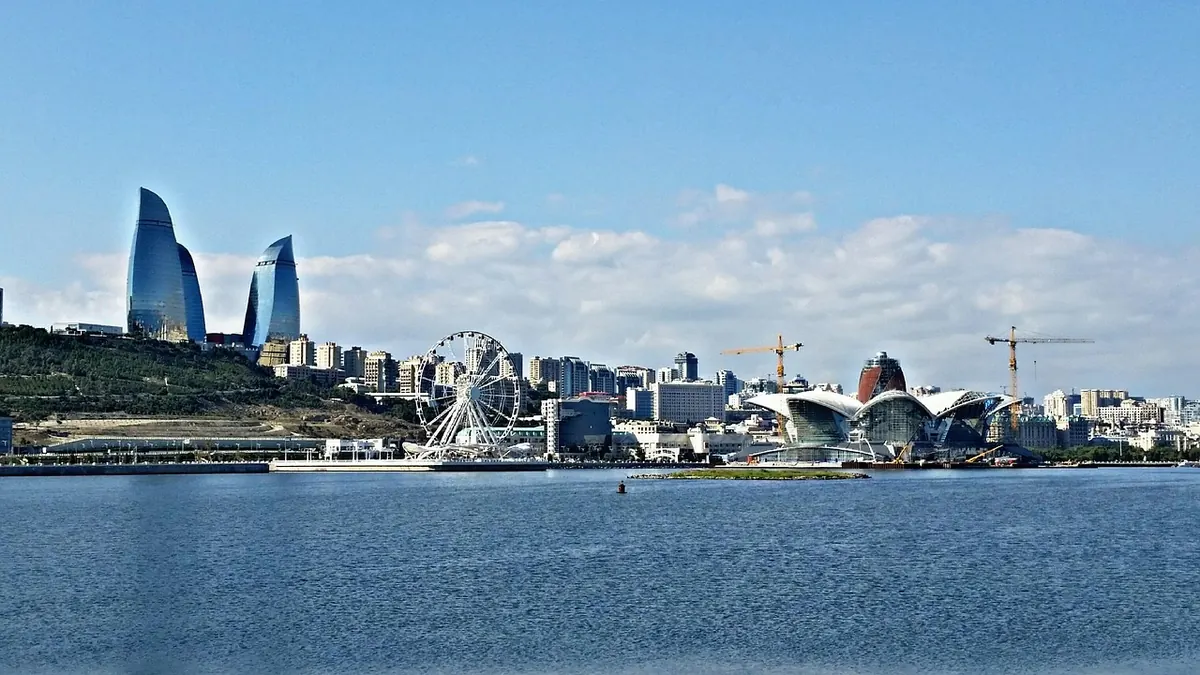
The seaside promenade stretches for kilometres along the Caspian, with parks, cafés, the Baku Eye Ferris wheel and the Carpet Museum, shaped like a rolled-up carpet.
The promenade runs for kilometres along the Caspian, with families strolling, children on bikes and the smell of the sea. In the evening, cafés fill up and the lights of the city reflect in the water.
7. Discover the Azerbaijan Carpet Museum
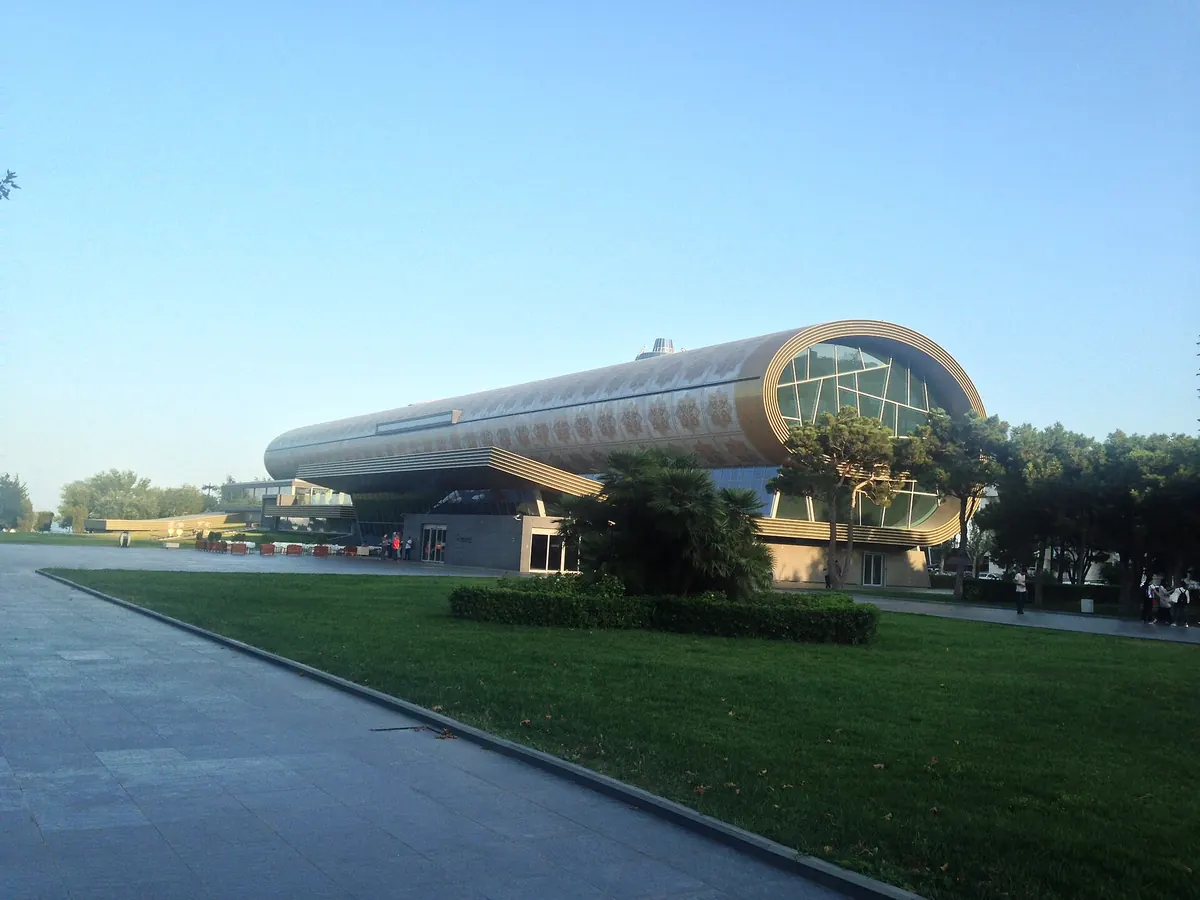
Carpet weaving is central to Azerbaijani culture, and this museum displays centuries of beautiful rugs from every region of the country.
The building really looks like a rolled-up carpet, and inside, centuries of rugs glow in deep reds and blues, each pattern telling the story of its region.
8. Ride the funicular to Highland Park
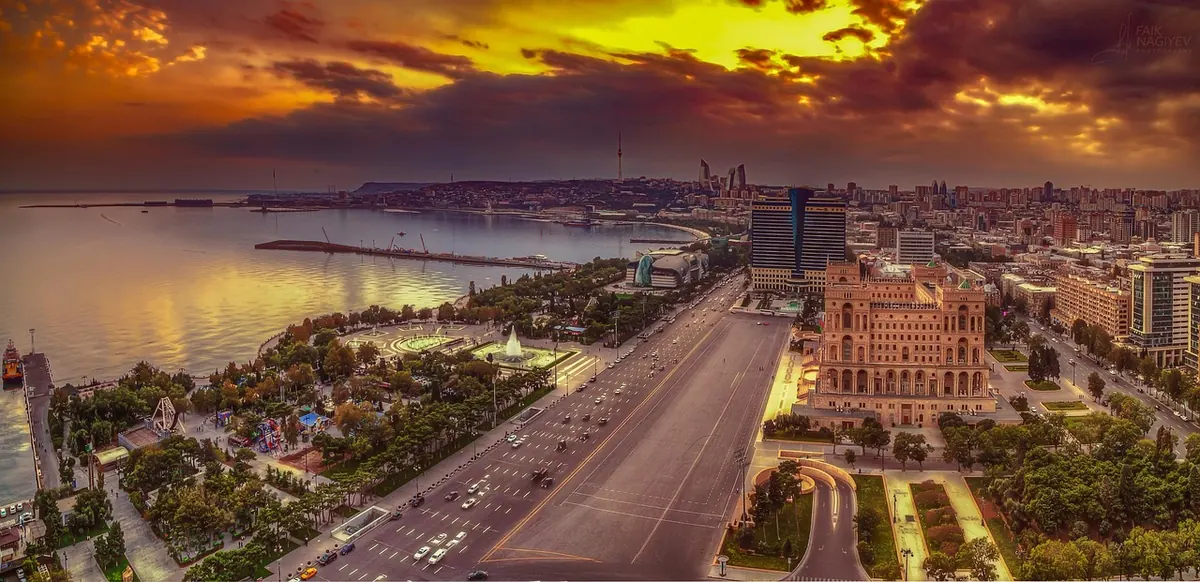
Take the funicular up to Highland Park (Dagüstü Park) for the best panorama of the city and the bay – especially at sunset, when the Flame Towers light up behind you.
The little funicular climbs the hill in a few minutes, and at the top the whole bay curves below you – the Old City, the boulevard and the sea. Come at sunset and stay until the Flame Towers light up.
9. Stroll Nizami Street and Fountain Square
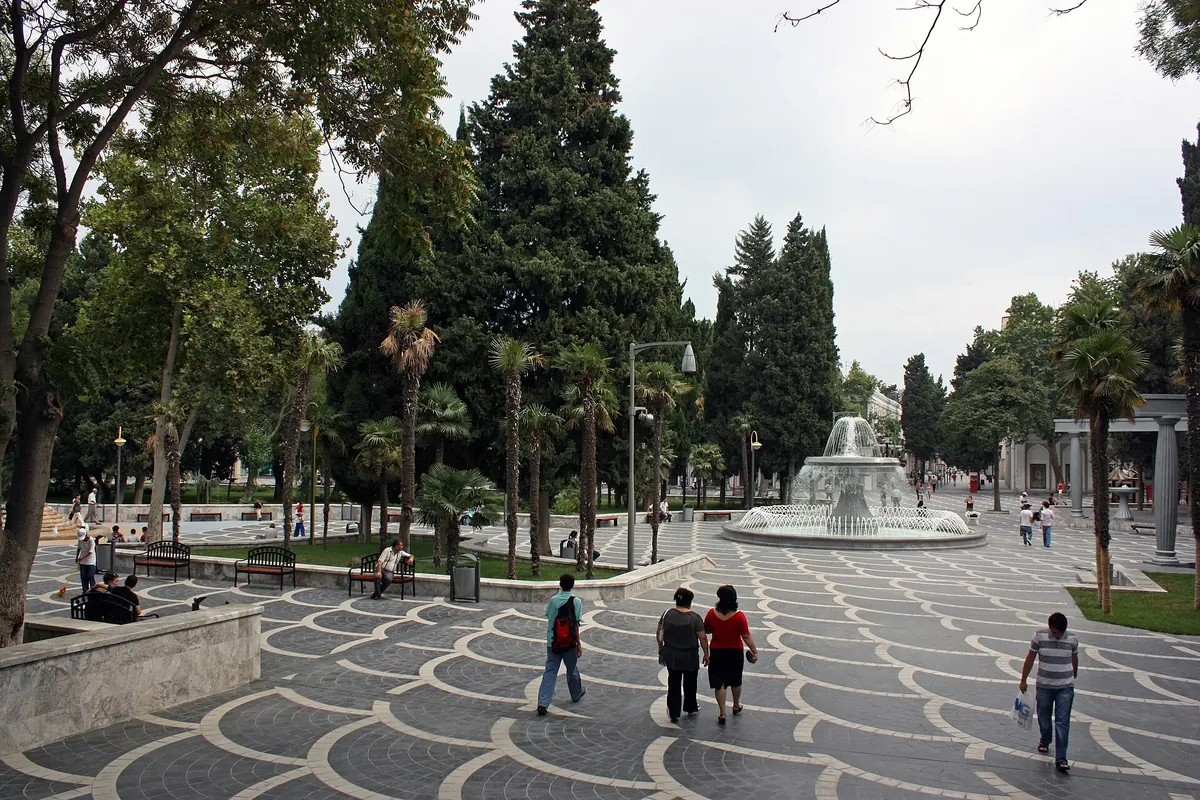
Baku's main pedestrian street is lined with grand oil-boom buildings, shops and cafés, and leads to the lively Fountain Square.
Shop windows glow beneath grand 19th-century facades, fountains splash in the square and the evening crowds stroll arm in arm – the liveliest part of the city after dark.
Beyond the city
10. Visit the Ateshgah Fire Temple
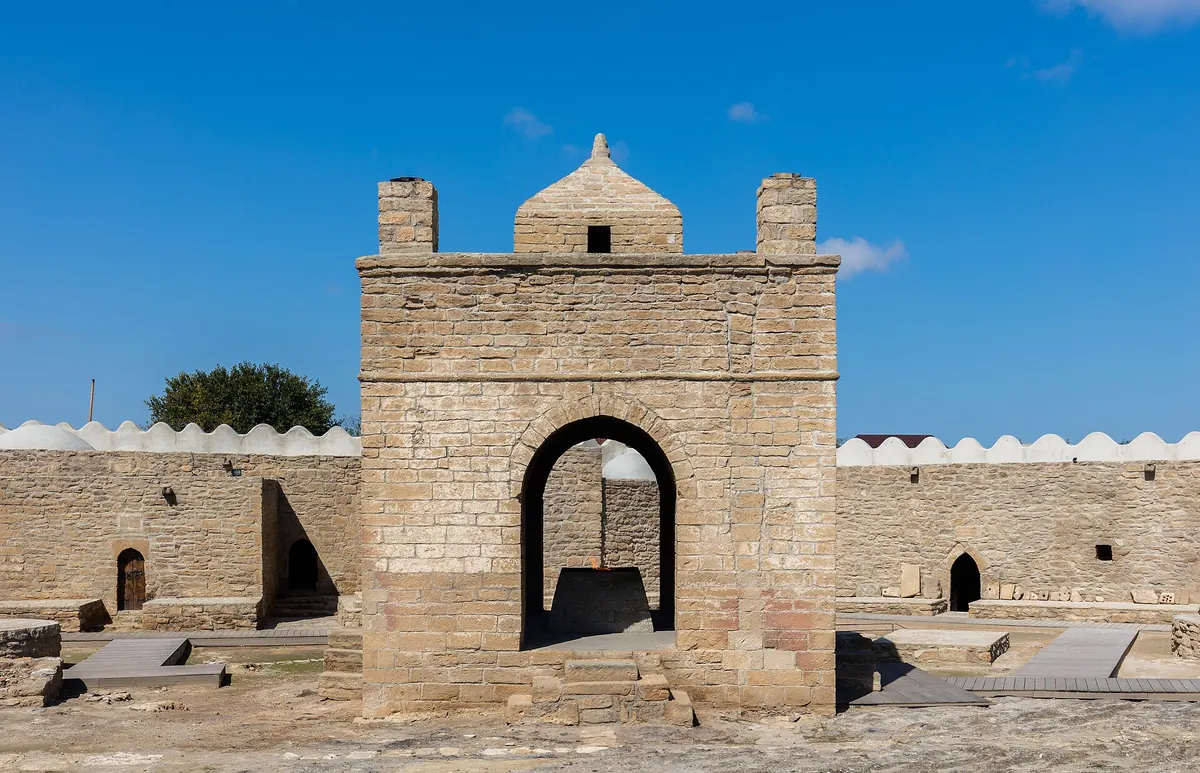
On the Absheron Peninsula, this fortified temple was used by Hindu, Sikh and Zoroastrian worshippers who came to pray at the natural gas flames that once burned here.
Inside the pentagonal walls, a flame burns in the central altar, and the small cells around the courtyard tell the story of the fire-worshippers and traders who came here centuries ago.
11. Watch the hillside burn at Yanar Dag
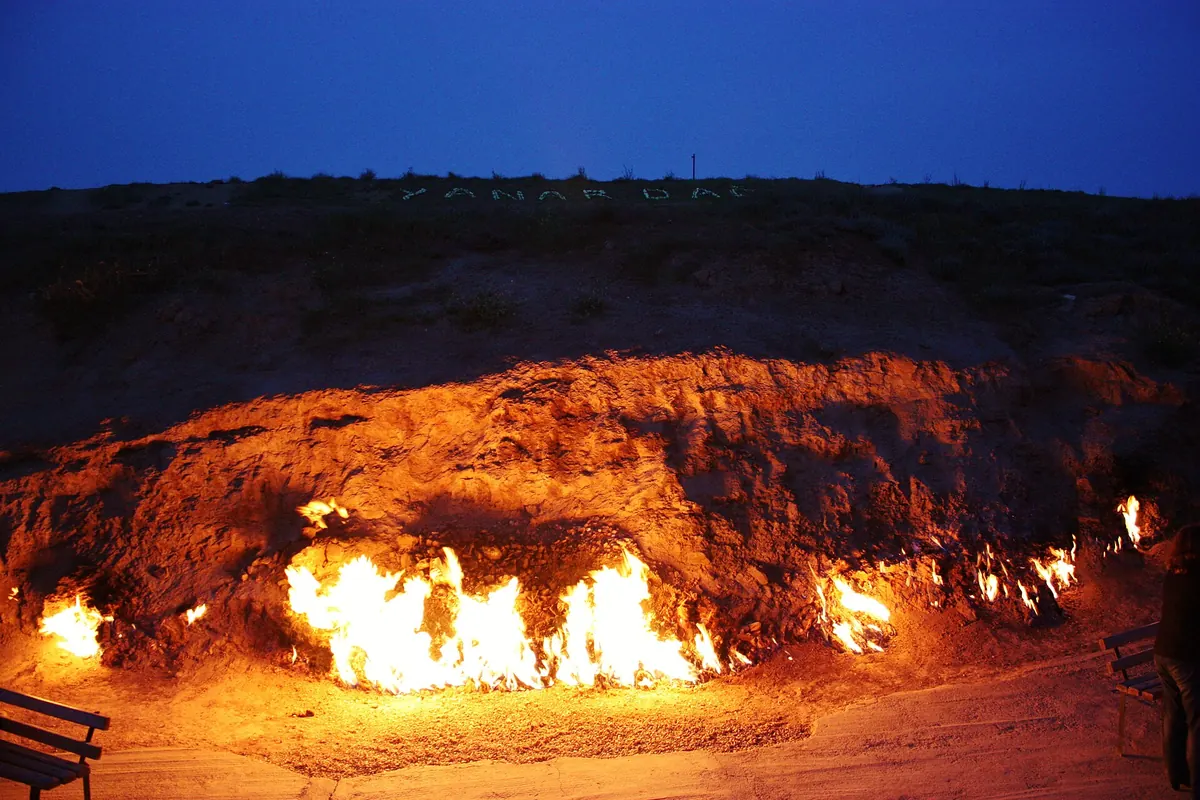
At Yanar Dag – "Burning Mountain" – natural gas seeping from the hillside has been burning for decades. Visit after dark for the most dramatic effect.
Flames dance along the base of the hillside, fed by natural gas from the ground – you feel the heat on your face, even several metres away. It's most impressive after dark or on a cold, windy evening.
12. See the rock art at Gobustan
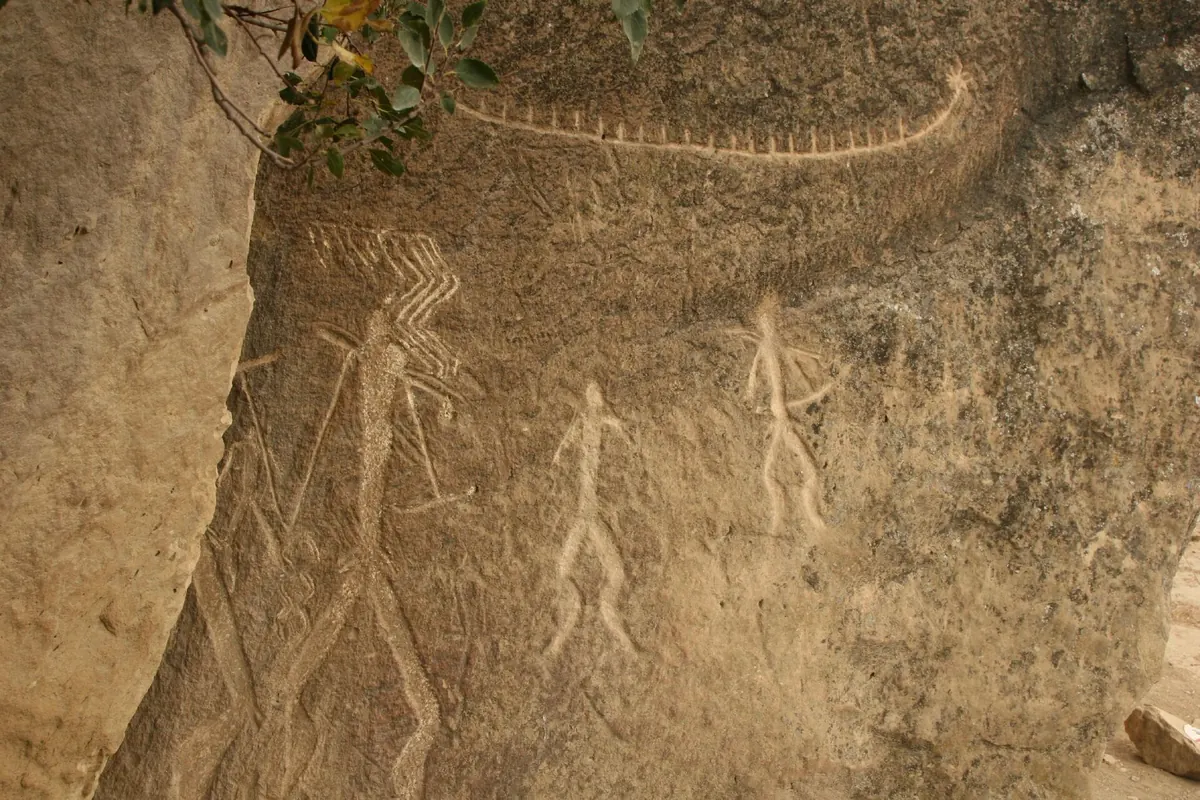
About an hour south of Baku, Gobustan National Park protects thousands of rock carvings, some made over 10,000 years ago. The modern museum explains their meaning.
In the windswept rocky landscape, thousands of carvings – hunters, boats, dancers and animals – cover the rocks, some 10,000 years old. The museum explains what you're looking at before you walk the trails.
13. Find the mud volcanoes
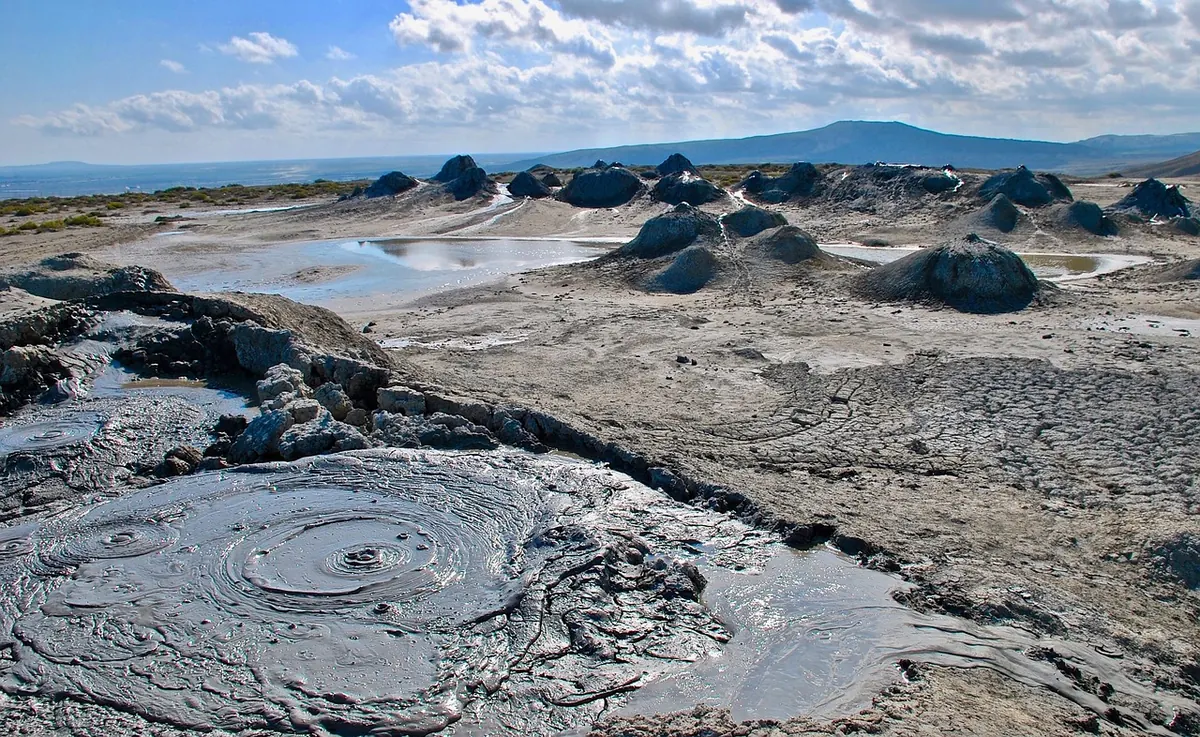
Near Gobustan, small mud volcanoes bubble and gurgle on a bare hilltop. Azerbaijan has more mud volcanoes than any other country. Tours usually combine them with Gobustan.
Small grey cones bubble and gurgle on a bare hillside, cold mud spilling down their sides with a soft plop – strange, slightly comical and like nowhere else. The track is rough, so go with a local driver.
Food and drink
14. Feast on Azerbaijani food

Try plov (saffron rice with meat and dried fruit), qutab (thin stuffed flatbreads), dolma and lamb kebabs, finished with sweet pakhlava.
Plov fragrant with saffron, dried fruit and chestnuts, juicy lamb kebabs, dolma and qutab flatbreads – Azerbaijani tables are generous, and meals are long and unhurried.
15. Drink tea the local way

Tea is served in pear-shaped glasses with jam, sugar cubes and sweets. Spend an afternoon in a traditional tea house – it's the heart of Azerbaijani hospitality.
Black tea arrives in pear-shaped glasses with jams, lemon and sweets – take a sugar cube, put it in your mouth and sip the tea through it, like the locals.
Practical tips
- Visa: apply online through the official ASAN e-visa portal if your nationality needs one.
- Money: the currency is the Azerbaijani manat (AZN). Cards are widely accepted in the city, but carry cash for small shops and markets.
- Getting around: Baku has a metro and buses; buy a BakuCard for both. Taxis are booked easily with ride-hailing apps.
- Dress: Baku is relaxed and modern, but cover shoulders and knees when visiting mosques.
Planning a wider trip? Compare Baku with our four-day guide to Dubai, or sort your mobile data before you go with our guide to the best eSIMs for travel.
Thinking of a road trip further south? Read our tips for driving in Iran first.
Frequently asked questions
Do I need a visa for Azerbaijan?
Many nationalities can get an electronic visa online through the official ASAN e-visa portal before travelling; some can enter visa-free. Always check the current rules for your passport on the official government website.
How many days do you need in Baku?
Three days is enough for the Old City, the modern landmarks and a day trip to Gobustan and the fire sites on the Absheron Peninsula.
What is the best time to visit Baku?
Spring (April to June) and autumn (September to October) are the most pleasant. Summers are hot, and Baku – the 'City of Winds' – can be cold and very windy in winter.
Keep reading
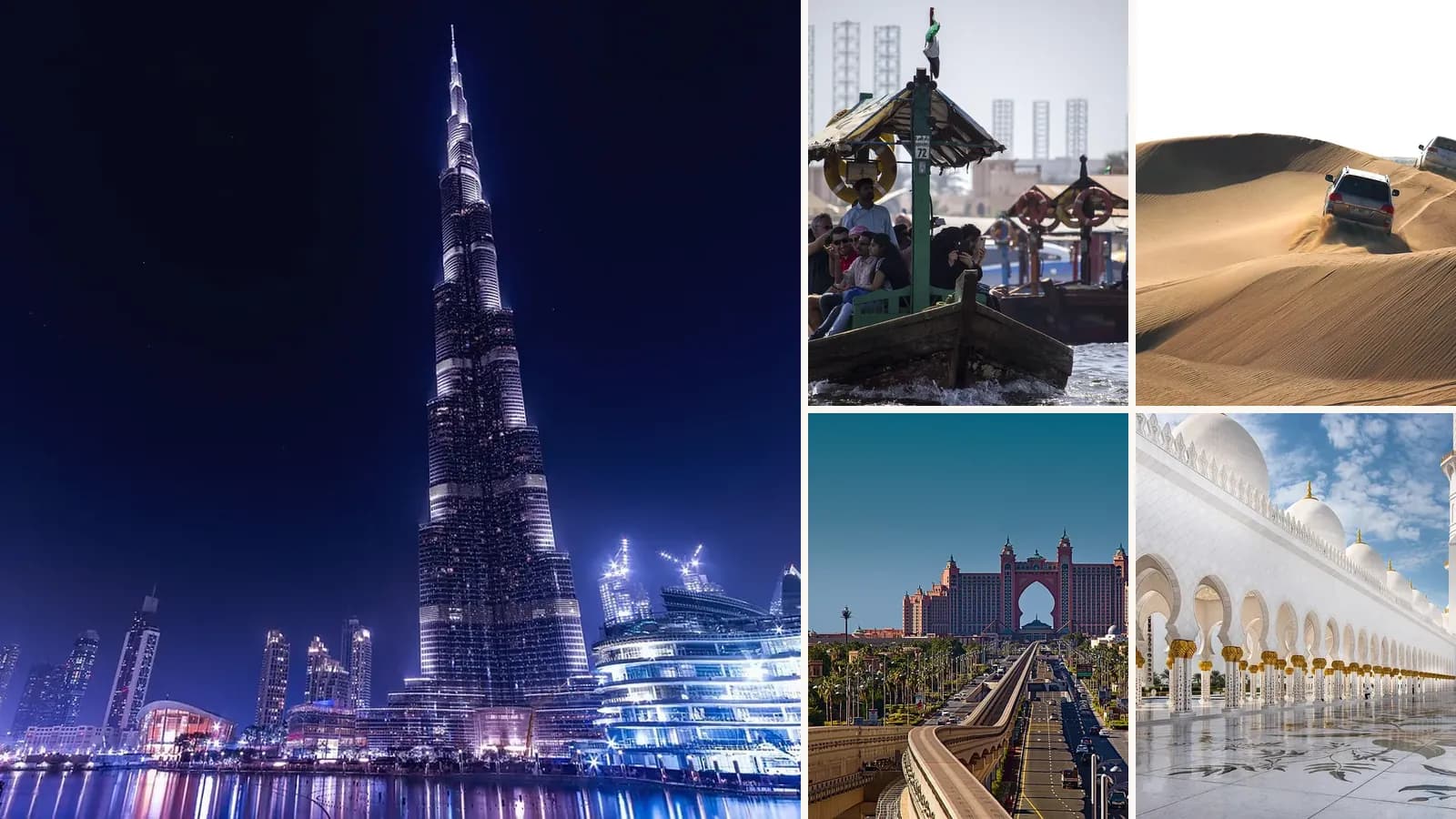
Visit Dubai: The Ultimate Travel Guide to Spending 4 Days in Dubai
A 4-day Dubai itinerary: Burj Khalifa, Old Dubai's souks and creek, the desert, beaches and the Palm – plus where to stay and getting around.
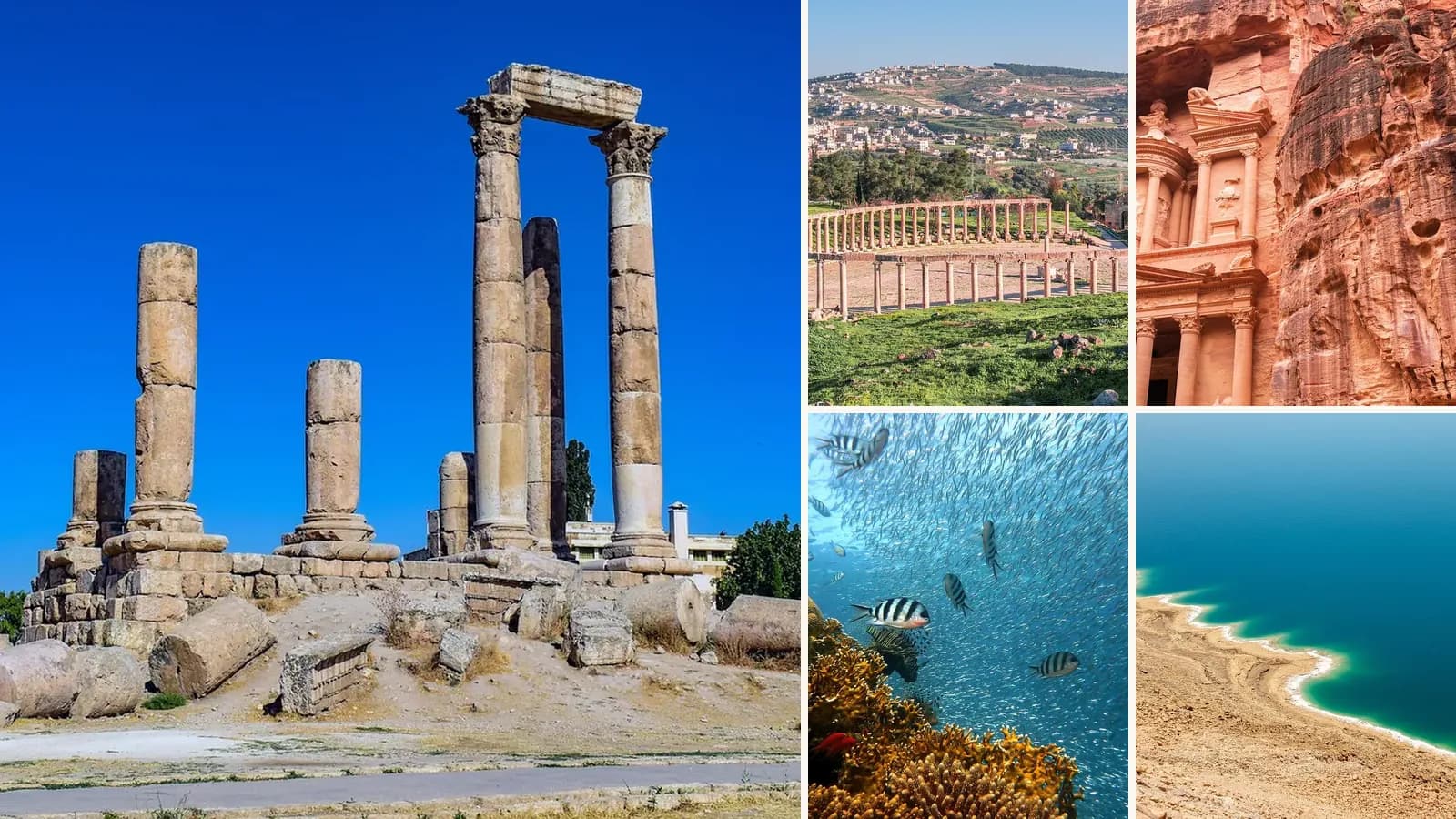
How to Take the Ultimate Whirlwind Trip to Jordan
A one-week Jordan itinerary covering Amman, Jerash, Petra, Wadi Rum, Aqaba and the Dead Sea – with tips on the Jordan Pass, getting around and the best time to go.

Best eSIM for Travel: 7 Providers Compared and How to Choose
Airalo, Saily, Holafly, Ubigi and more compared: data packs vs unlimited, hotspot rules, phone numbers and which travel eSIM suits your trip.
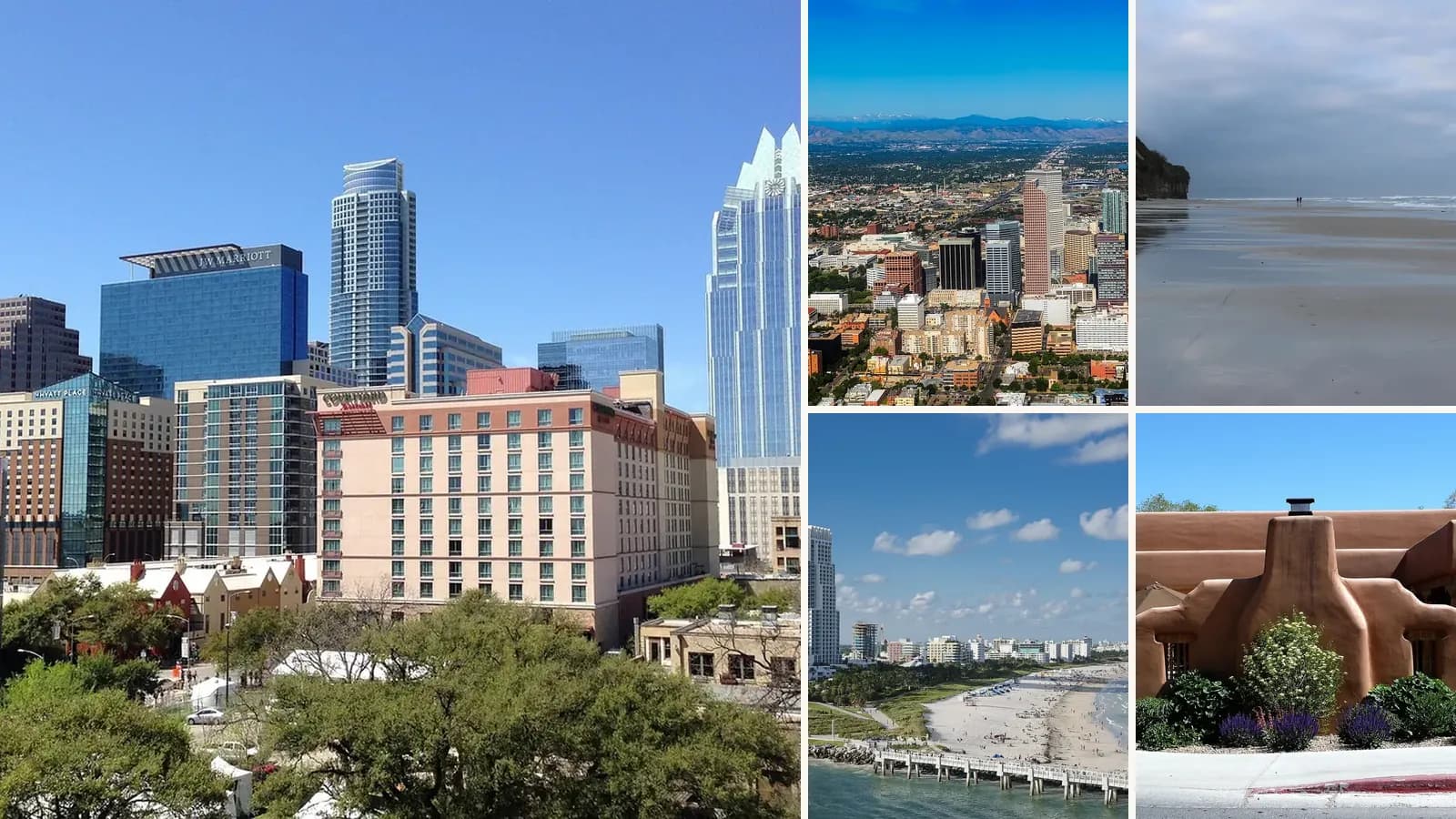
8 Best U.S. Cities for a Workcation
The best US cities for a workcation – Austin, Denver, San Diego, Asheville, Portland (Maine), Miami, Chicago and Santa Fe – with Wi-Fi, coworking and weekend ideas.