Antalya Travel Guide: Old Town, Beaches and the Best Day Trips
Kaleiçi old town, Konyaaltı and Lara beaches, Düden Waterfalls, Aspendos, Perge, Side and Belek – the best things to do in and around Antalya, plus where to stay.

Some links in this guide are partner links: if you buy through them we may earn a small commission, at no extra cost to you. It never affects what we recommend. How we make money
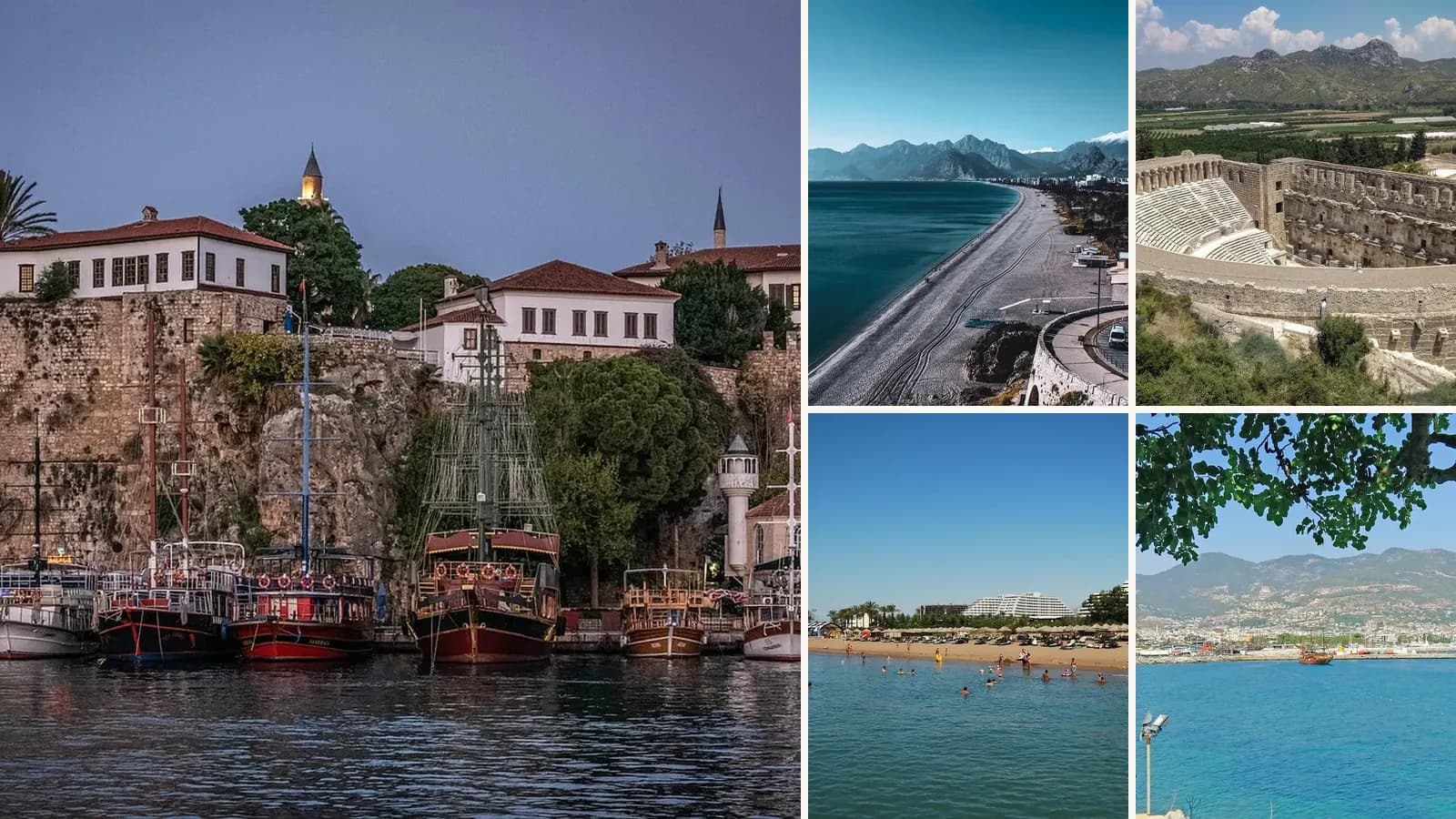
Antalya is the gateway to the Turkish Riviera – a lively city of more than a million people with a beautiful walled old town, long beaches on both sides and the Taurus Mountains rising straight behind. Within an hour's drive are some of the best-preserved ancient cities in the Mediterranean, family resorts, golf courses, waterfalls and canyons.
Many visitors only pass through Antalya on the way from the airport to their resort, but the city deserves at least a couple of days. This guide covers the best things to do in the city and on day trips, plus when to go, where to stay along the coast and how to get around.
Antalya at a glance
| Quick facts | |
|---|---|
| Best time to visit | April–June and September–October; winters are mild and good for sightseeing |
| How long to stay | 2–3 days in the city; a week or more combined with a beach resort |
| Airport | Antalya (AYT), about 15–20 minutes from the city centre |
| Getting around | Trams, buses, taxis and dolmuş minibuses; tours or a hire car for day trips |
| Best for | History, beaches, families, golf, all-inclusive holidays |
In the city
1. Wander Kaleiçi
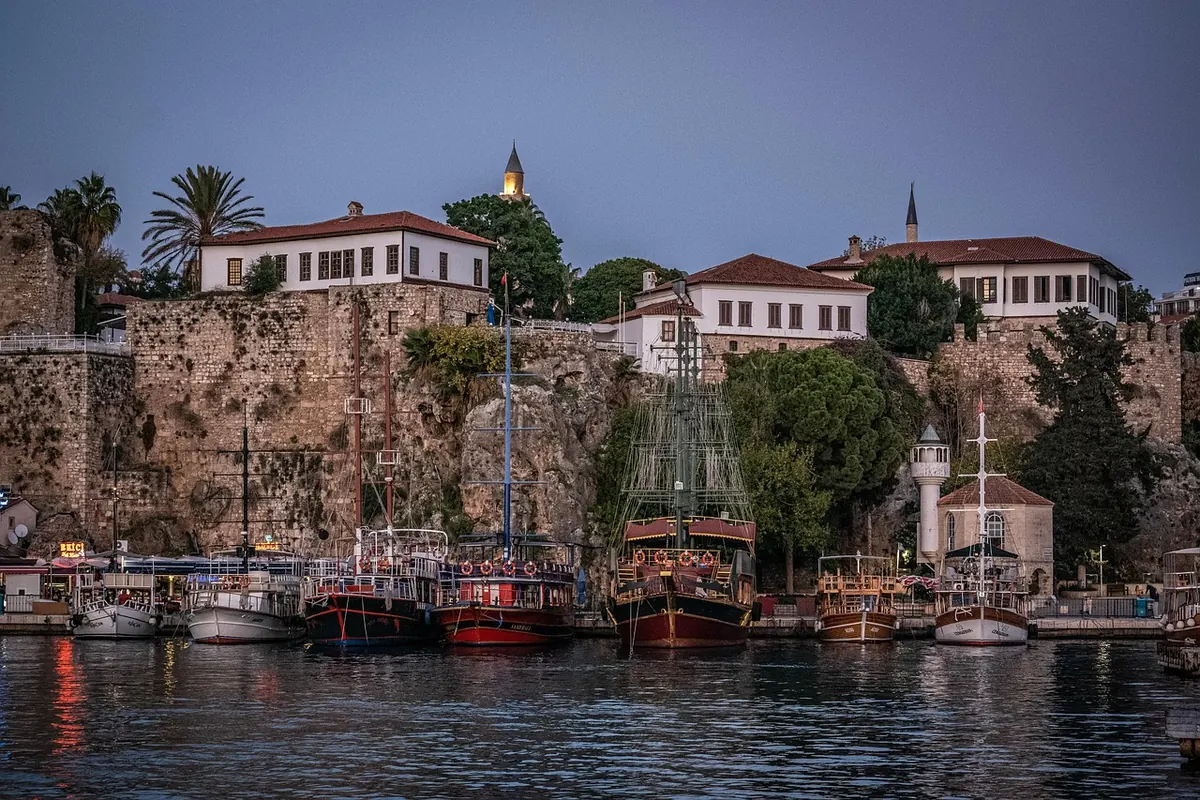
Kaleiçi, Antalya's old town, is a maze of narrow lanes, restored Ottoman houses with wooden balconies, boutique hotels, cafés and craft shops, enclosed by Roman and Seljuk walls. It slopes down to a picturesque old harbour where fishing boats and tourist boats tie up below the cliffs.
Spend a morning getting lost in the lanes, then take a boat from the harbour along the coast to see the Lower Düden Waterfall from the sea. In the evening, the harbour restaurants and rooftop terraces are perfect for sunset. Look out for the Hıdırlık Tower, a Roman tower at the edge of the old town with views over the sea.
Kaleiçi's lanes twist downhill between Ottoman houses with wooden bay windows, bougainvillea tumbling over the walls and cats asleep on doorsteps. The smell of grilled meat and fresh simit drifts from tiny restaurants, carpet sellers call out "Just looking, my friend?" and, at the bottom, the old harbour opens up with its boats and the cliffs beyond. The streets are steep and cobbled – wear good shoes – and evenings, when the lanterns come on, are the loveliest time.
2. Walk through Hadrian's Gate
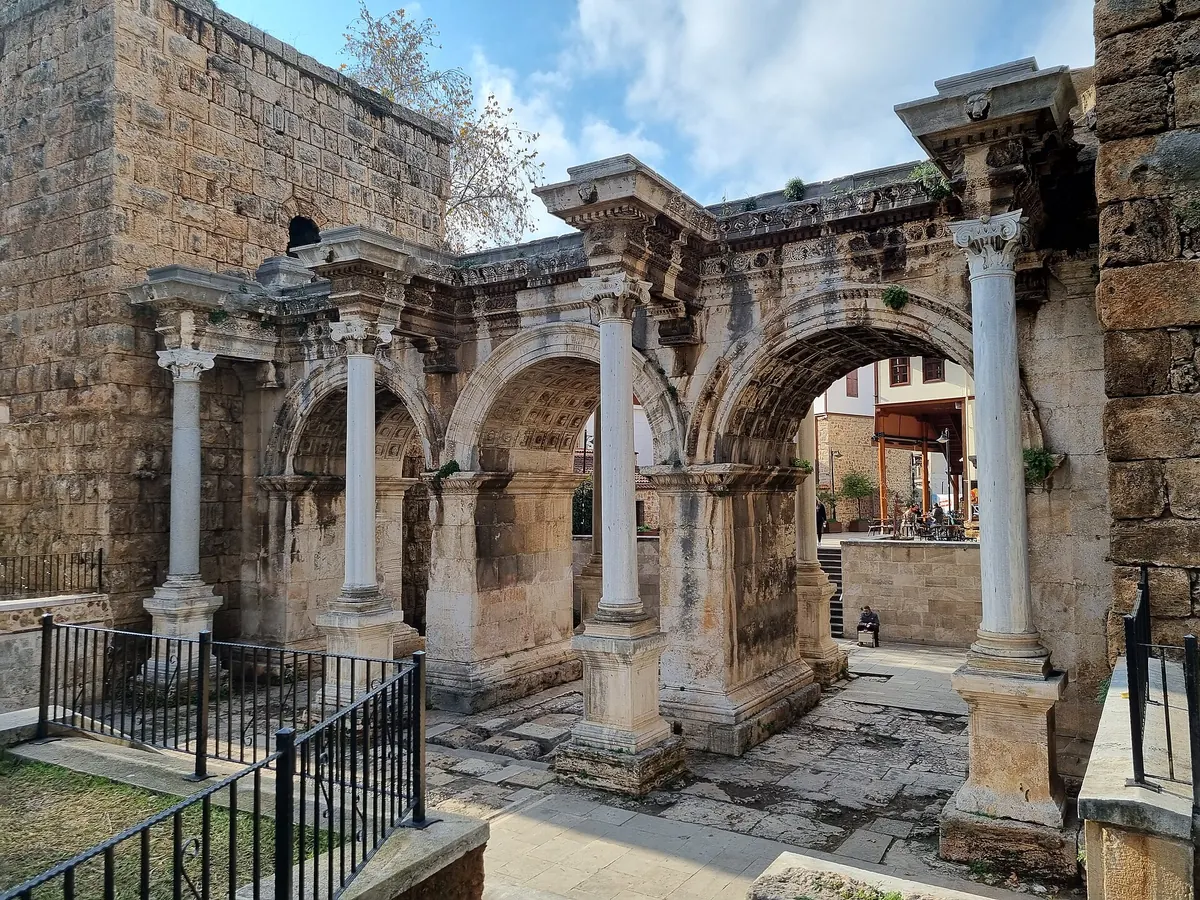
This triple-arched marble gate was built in AD 130 to honour a visit by the Roman emperor Hadrian. It's the grand entrance to Kaleiçi from the modern city, and you can still see the ruts left by ancient carts in the stone below. It's free to walk through and lovely when lit up at night.
Step under the three marble arches and your feet follow the grooves worn into the stone by Roman carts nearly 2,000 years ago. Traffic rushes past on the boulevard outside, but in the gateway the stone feels cool and old – a perfect start to a walk into Kaleiçi.
3. See the Yivli Minaret
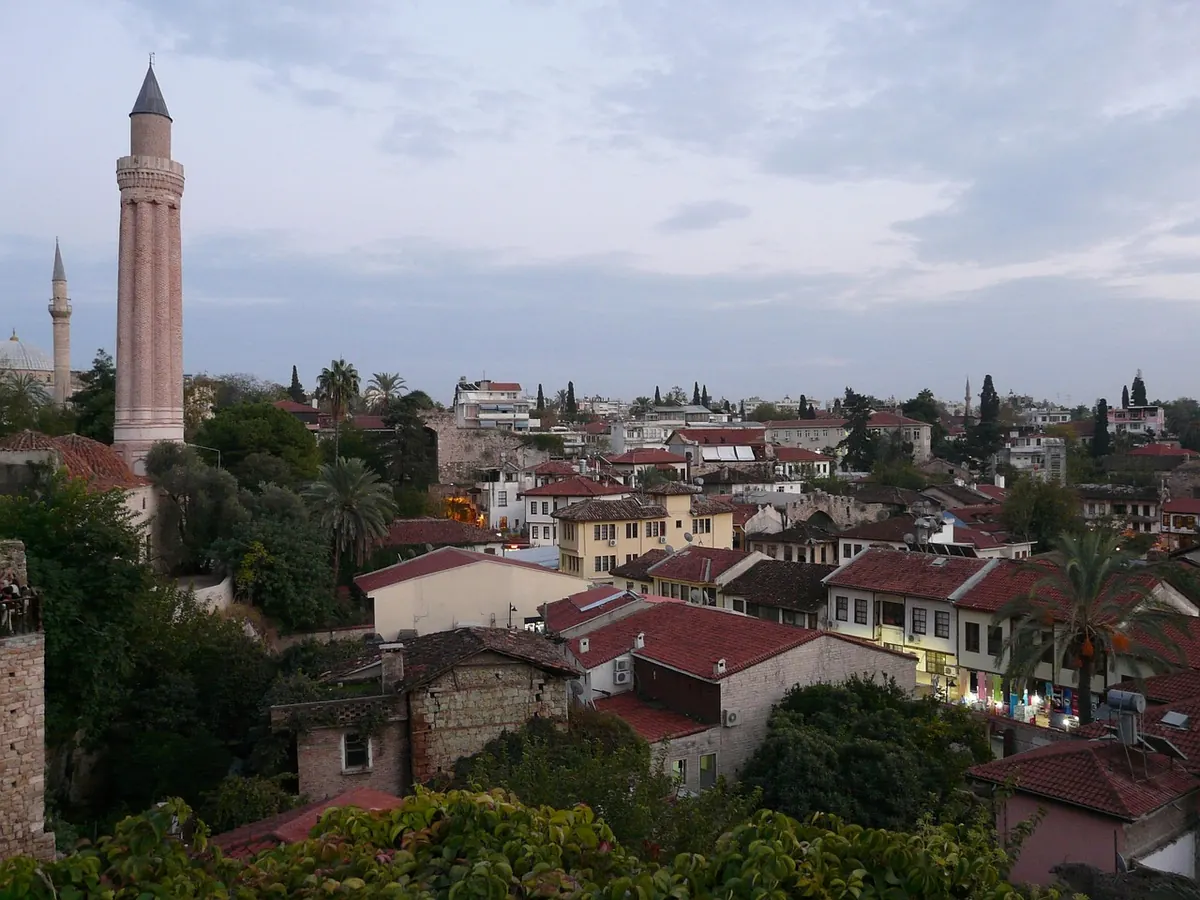
The fluted brick minaret, built in the 13th century under the Seljuks, is the symbol of Antalya and stands near the top of the old town. The surrounding complex includes a mosque and a former dervish lodge. The nearby Republic Square (Cumhuriyet Meydanı) has a great view over the harbour and the mountains.
The fluted brick minaret rises above the rooftops like a giant column, its turquoise tiles catching the light, and you'll use it to find your bearings again and again as you wander. The square below is a good place to stop for çay and watch the evening crowds.
4. Visit the Antalya Museum
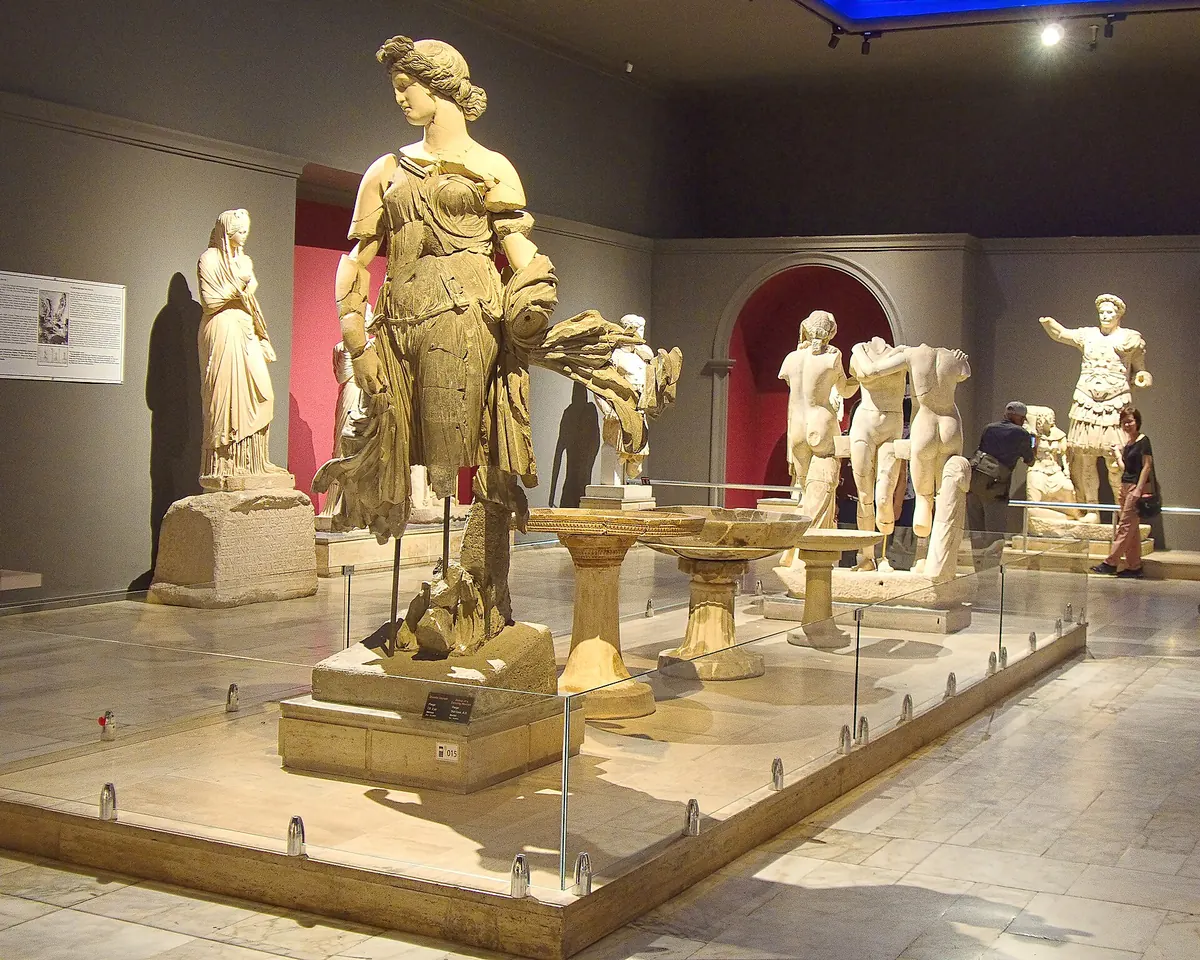
One of Turkey's best archaeological museums. Its highlights include superb marble statues of gods and emperors from nearby Perge, finely carved Roman sarcophagi and finds from the region's prehistoric caves. Allow at least two hours. It's on the way to Konyaaltı Beach, so it's easy to combine a visit with an afternoon by the sea. Check opening hours and tickets on the official Turkish museums website.
The Hall of the Gods is the highlight: rows of marble statues of Zeus, Aphrodite, Apollo and the rest, gleaming and almost life-like, many found at nearby Perge. Inside it's cool and calm – a perfect escape from the midday heat. Allow at least two hours.
5. Relax on Konyaaltı Beach
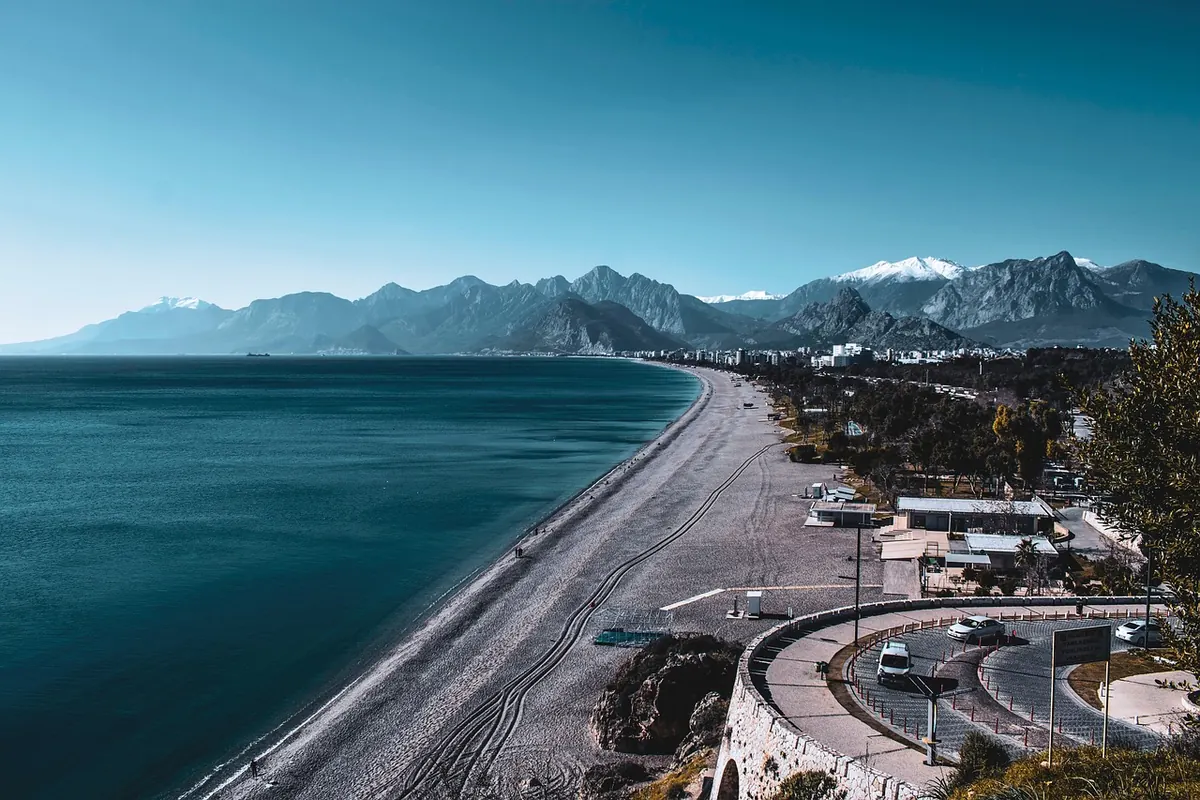
A long pebble beach stretching west from the city centre, backed by the dramatic Taurus Mountains. A seafront park with cycle paths, cafés, playgrounds and beach clubs runs behind it. The pebbles mean the water is very clear; bring water shoes. It's easily reached by tram or taxi from the centre.
The long curve of pebbles stretches west beneath the steep blue Taurus Mountains, the water is clear and quickly deep, and the promenade behind is busy with cyclists, joggers and families. The pebbles are hard on bare feet and hot by midday, so bring water shoes and a beach mat.
6. Swim at Lara Beach
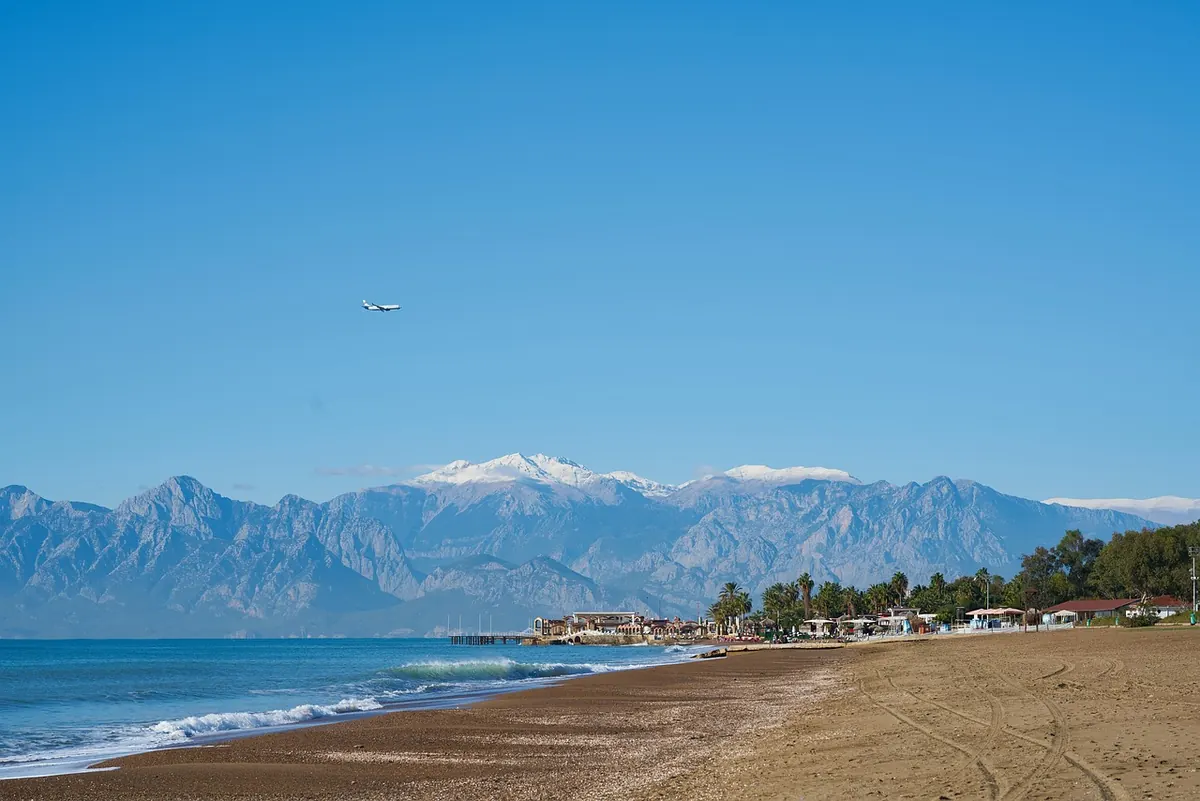
East of the city, Lara has fine golden sand, shallow water and a strip of large resort hotels, some built in eye-catching themed designs. Public beach areas sit between the hotels. Lara is close to the airport, so it's a convenient choice for a short beach break.
Lara is soft, golden sand and gently shelving water – easy for children, warm in summer and lined with huge themed hotels. Public sections can get busy at weekends; come early for a good spot.
7. See the Düden Waterfalls
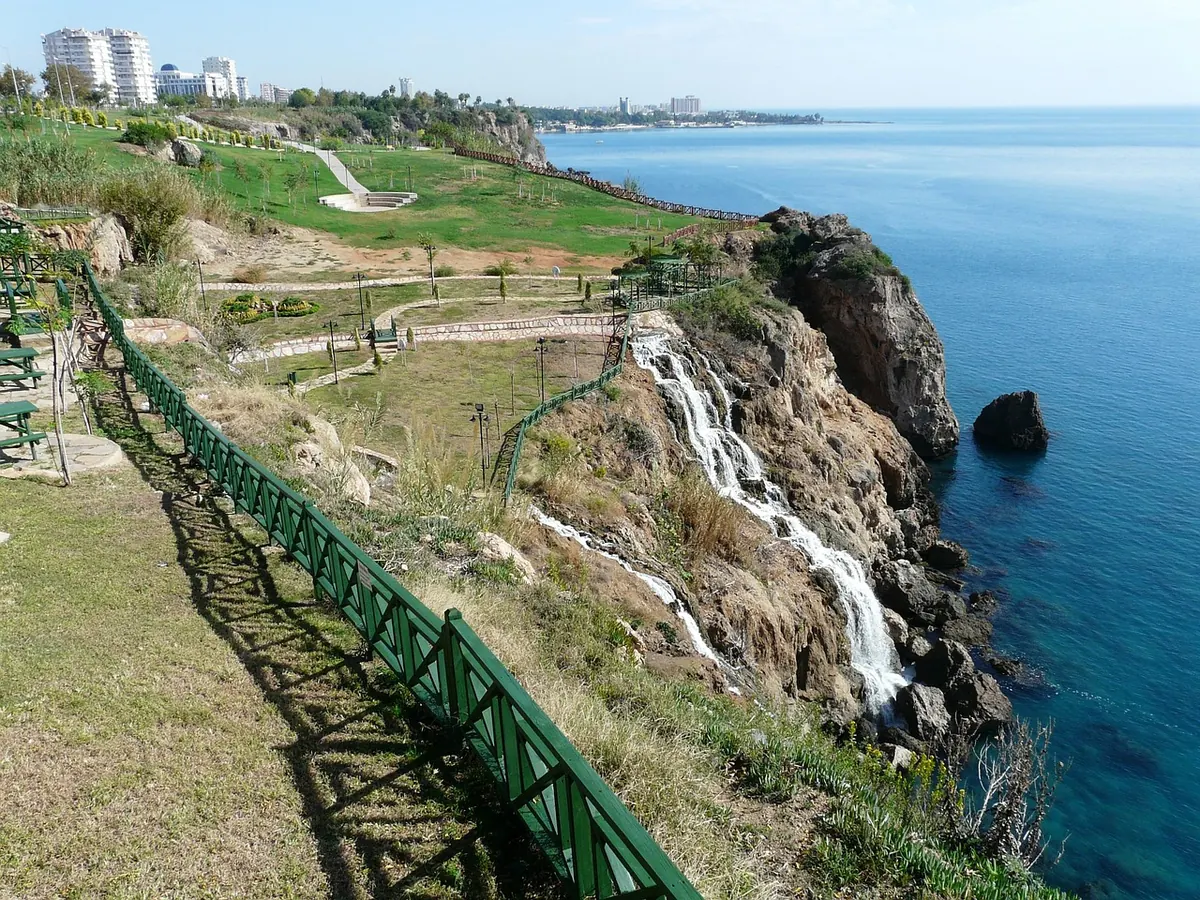
The Düden River reaches the sea in spectacular fashion: the Lower Düden Waterfall plunges straight off a cliff into the Mediterranean near Lara. Watch from the clifftop park or, for the best view, from a boat trip from the old harbour. The Upper Düden Waterfall, north of the city, is set in a shady park where you can walk behind the falls – a cool escape on a hot day.
At Lower Düden, the river plunges straight off the cliff into the sea in a roar of white water, with spray drifting over the viewpoints. At Upper Düden you can walk behind the falls through a damp, cool cave. Both get crowded with tour groups in the middle of the day – go early or late.
Day trips
8. Aspendos
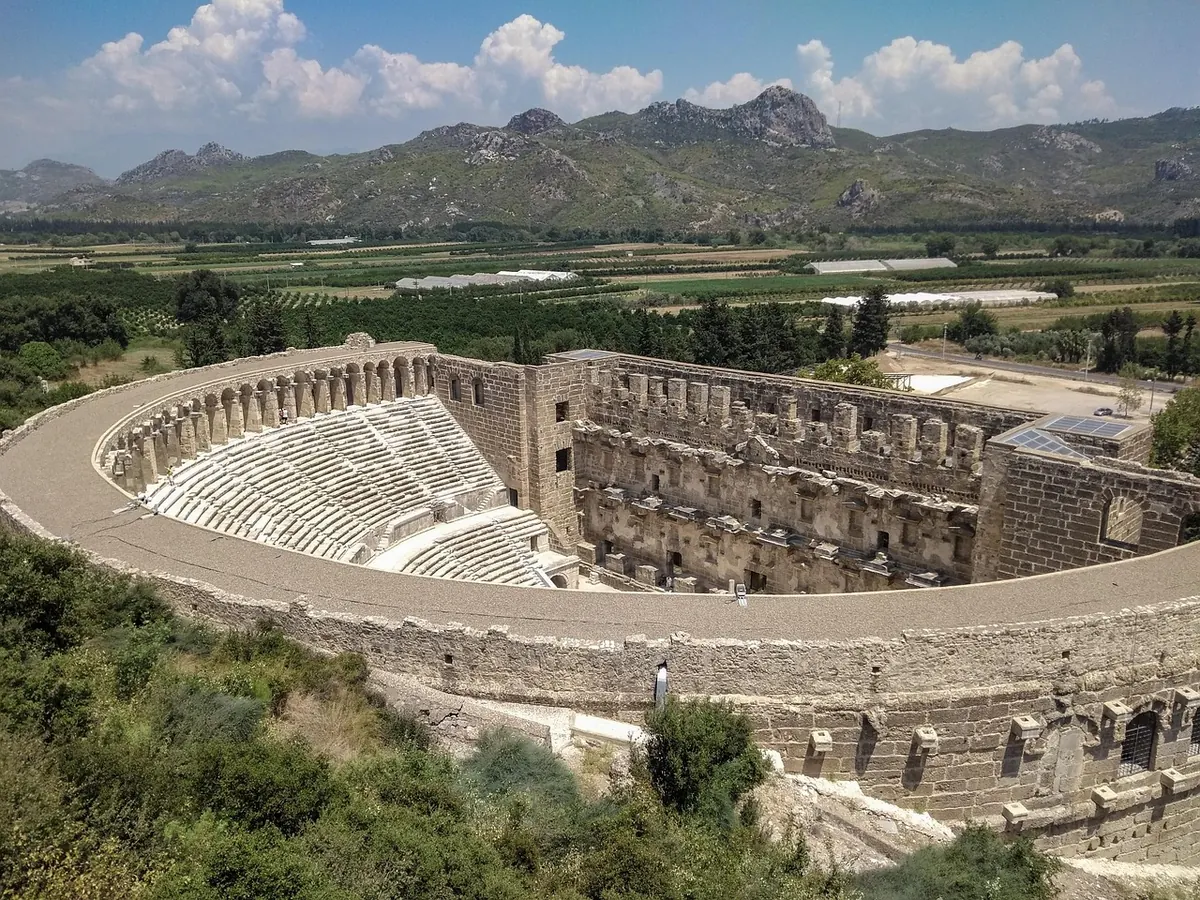
About 45 minutes east of Antalya, Aspendos has one of the best-preserved Roman theatres in the world, built in the 2nd century AD and still used for performances, including an opera and ballet festival. Its acoustics are remarkable. Nearby, the remains of a Roman aqueduct stretch across the plain.
Climb to the top rows of the Roman theatre and the size and perfect state of it are breathtaking – the stage building still standing, the stone seats warm in the sun. Whisper on the stage and it carries to the back. In summer, seeing an opera or ballet performance here under the stars is unforgettable.
9. Perge
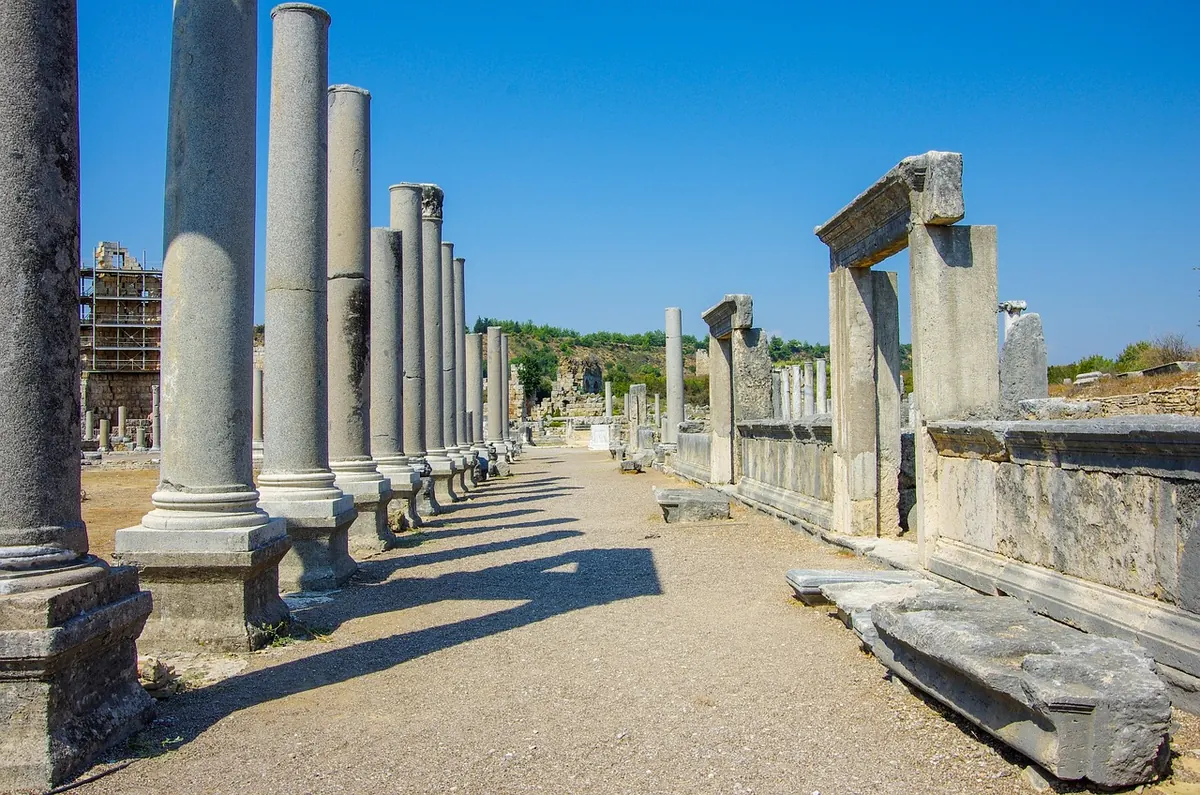
Just outside Antalya, Perge is a vast Greco-Roman city with a stadium, a theatre, baths, colonnaded streets with water channels and impressive Hellenistic city gates. Many of the statues in the Antalya Museum were found here. Visit early in the day – there's little shade – and combine it with Aspendos.
You walk along a long colonnaded street where water once ran down a channel in the centre, past baths, an agora and the remains of a huge stadium. There's little shade and the stone reflects the heat – go early, with a hat and plenty of water, and you'll often have whole streets to yourself.
10. Side
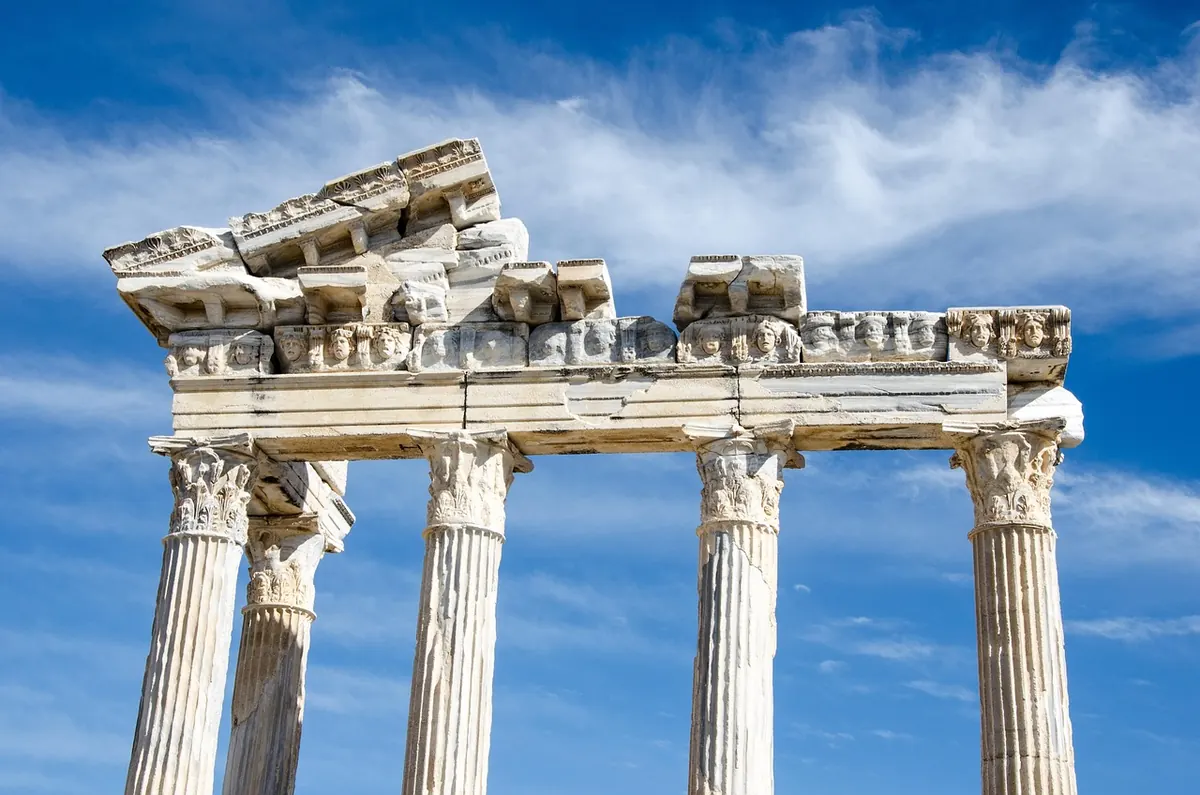
About an hour east of Antalya, Side is a resort town built among ancient ruins, with a Roman theatre, a museum and the Temple of Apollo on the waterfront – especially beautiful at sunset. Long sandy beaches stretch on either side. Read our full Side travel guide.
In Side, Roman columns stand between restaurants and souvenir shops, and the Temple of Apollo glows gold at sunset above the sea. It's busy and touristy in the day, magical in the evening.
11. Belek
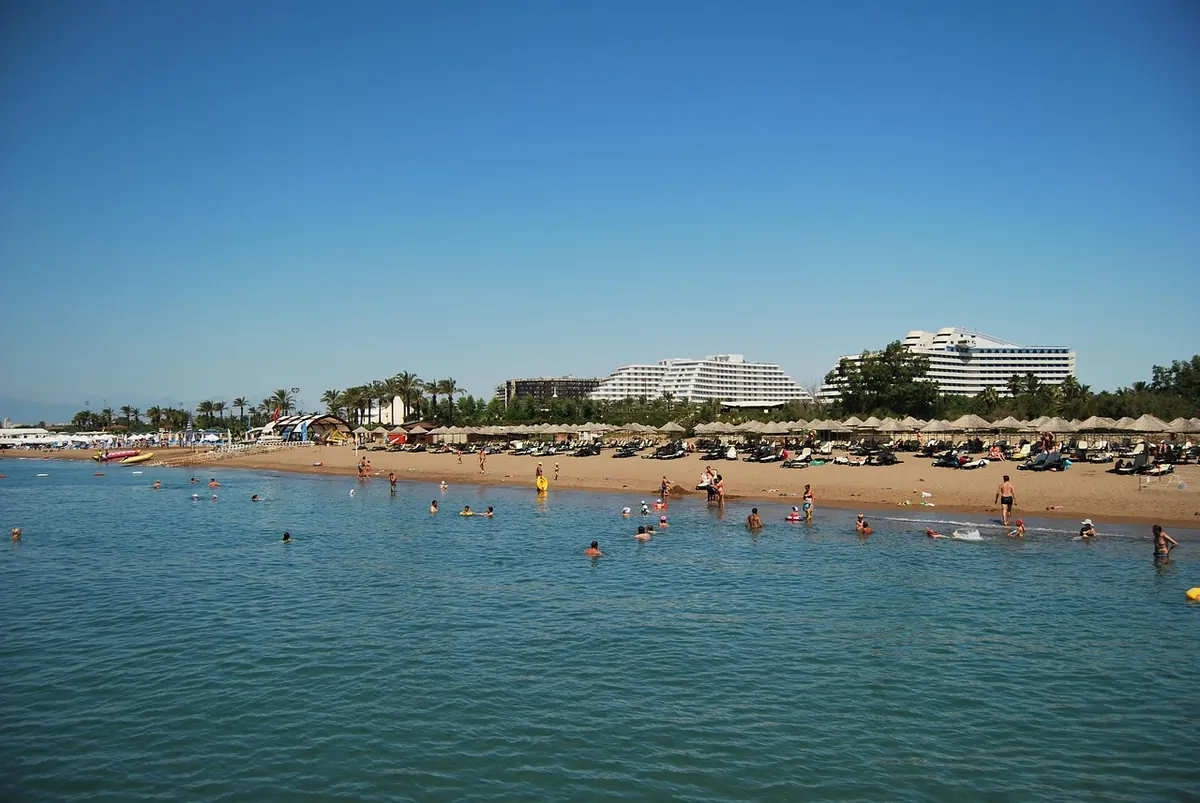
Turkey's golf capital, with more than a dozen courses, long sandy beaches and large all-inclusive resorts – many with water parks and kids' clubs. It's about 30–40 minutes from the airport and popular year-round with golfers, who come in spring, autumn and winter.
Belek is manicured golf courses, pine forests and long sandy beaches backed by vast resorts – green, quiet and very comfortable, with sea turtles nesting on the beaches in summer.
12. Kemer and Phaselis
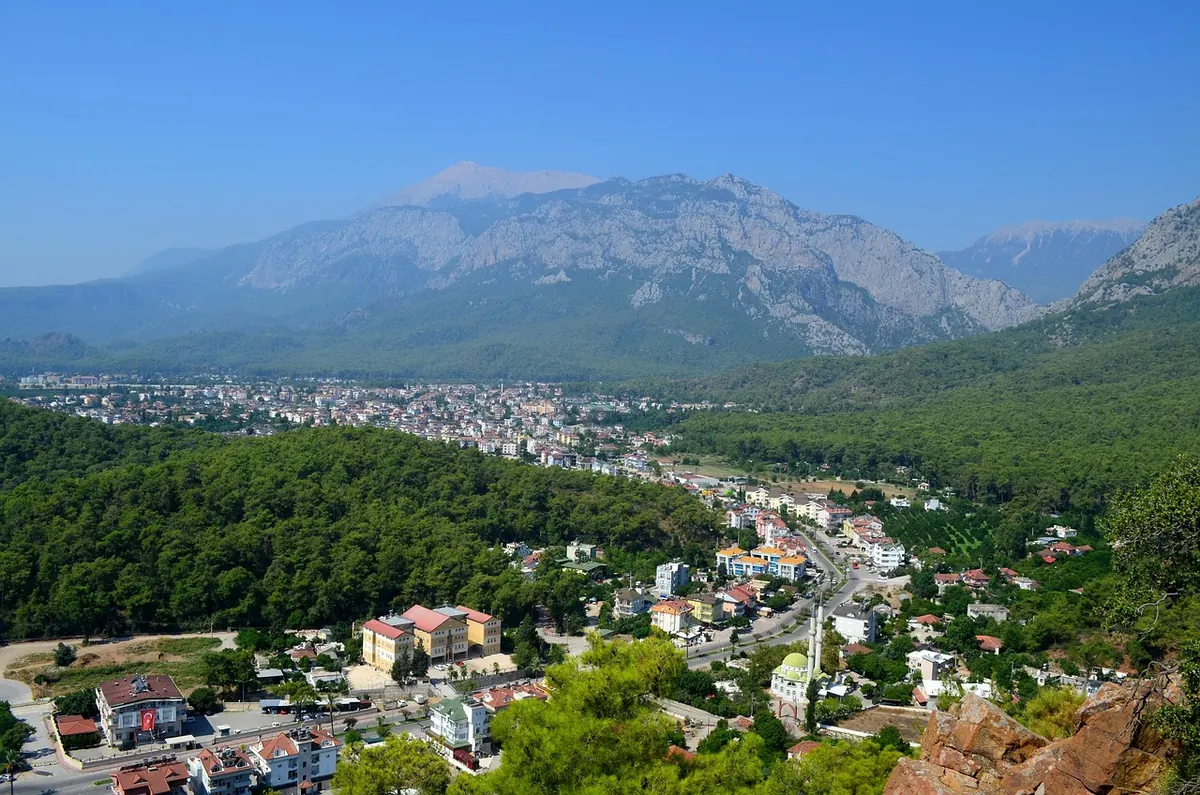
South-west of Antalya, Kemer has a marina, a lively town centre and pebble beaches backed by pine-covered mountains. Nearby, the ruins of ancient Phaselis sit among pine trees beside three small bays – one of the most beautiful swimming spots on the coast. Further south, Olympos and Çıralı are relaxed beach villages known for the Chimaera, natural gas flames burning from the rocks.
At Phaselis, ruined Roman streets run between pine trees down to three small bays of clear turquoise water. Swimming among the ruins with the smell of pine resin in the air is one of the loveliest experiences on this coast.
13. Olympos cable car
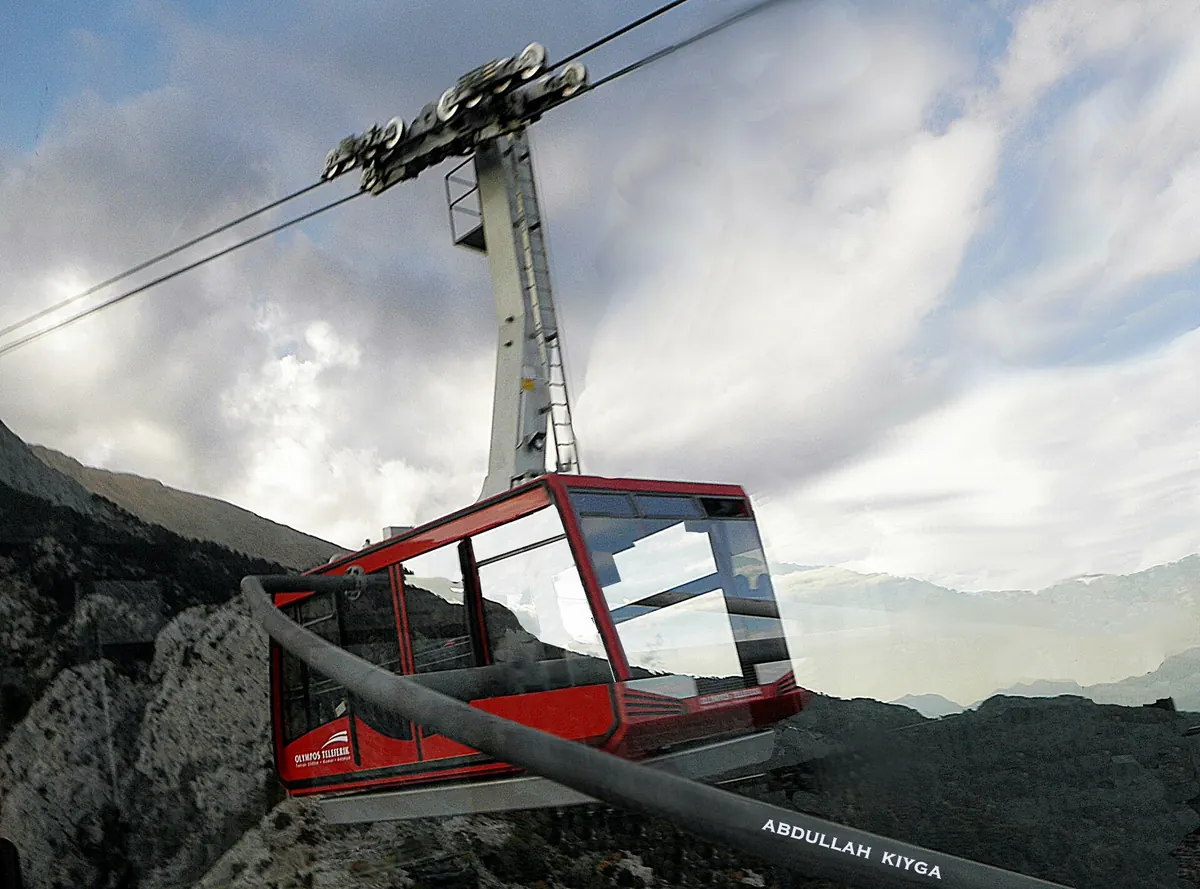
The Tahtalı cable car near Kemer climbs to the 2,365-metre summit of Tahtalı Mountain in about ten minutes, giving sweeping views over the coast and the Taurus Mountains. It can be cold and windy at the top, even in summer, and clouds can hide the view – check the weather before you go.
The cabin rises steeply over the forest and the air turns cooler with every metre. At the top of Tahtalı, more than 2,000 metres up, the whole coast lies below you, the sea glittering far down – and even in summer there can be a chill, so bring a layer.
14. Köprülü Canyon
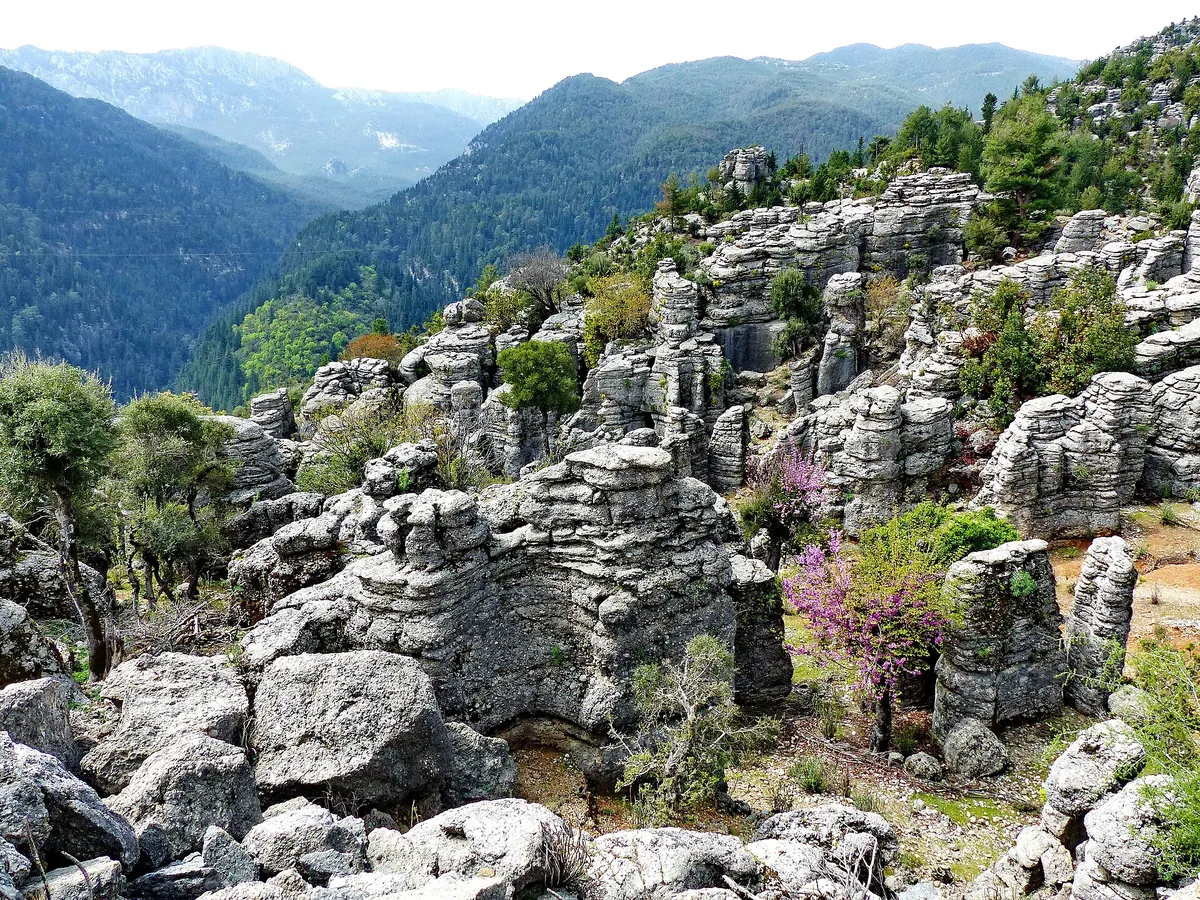
About an hour and a half from Antalya, Köprülü Canyon National Park is the region's adventure playground. White-water rafting trips on the river are suitable for beginners and families with older children. The park also has an ancient Roman bridge and the ruins of Selge in the mountains.
The raft lurches into the first rapid, ice-cold spray hits your face and everyone screams and laughs. Between the rapids the river runs clear and green beneath pine-covered cliffs. The water is cold even in August – wear swimwear and bring a change of clothes.
15. Alanya
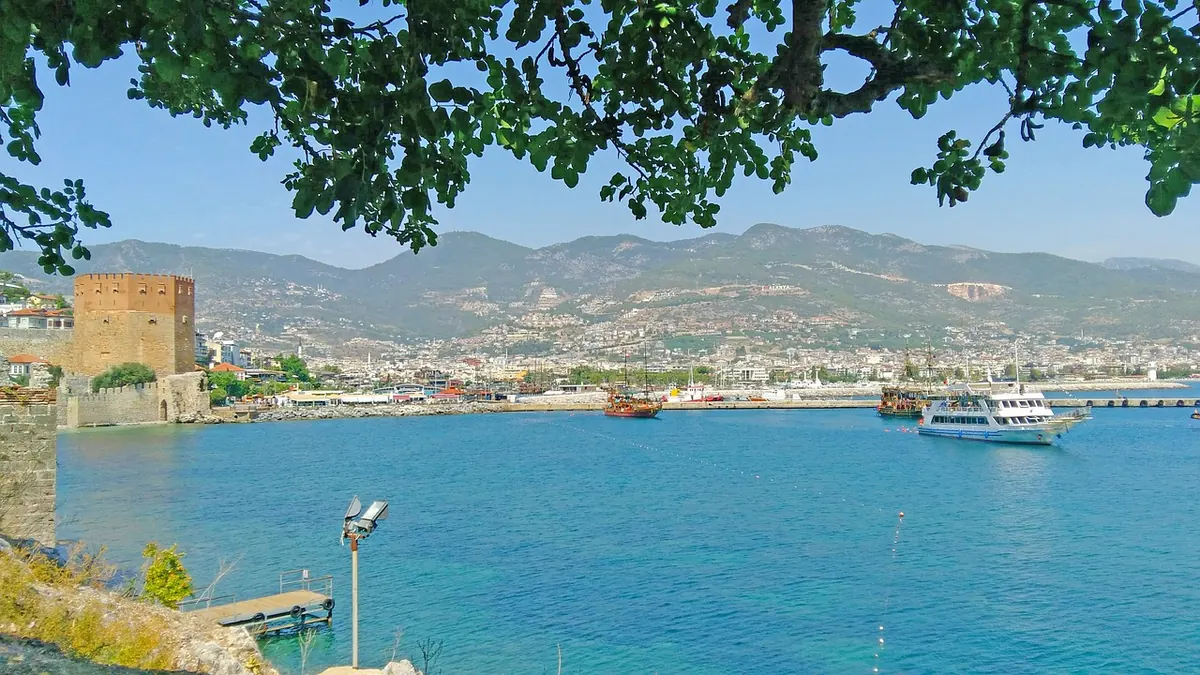
About two hours east of Antalya, Alanya has a Seljuk castle on a rocky peninsula, the Red Tower beside the harbour, Cleopatra Beach and the Damlataş Cave. It's a lively resort with long beaches and plenty of nightlife.
The red-brick Kızıl Kule tower stands at the harbour and the castle walls climb up the rocky headland above the sea. From the top, the view takes in the town, the beaches and the mountains. The climb is steep and hot – take the cable car up and walk down.
When to visit
- April to June: warm and green, with the sea warming up; ideal for sightseeing and beach time.
- July and August: very hot, often above 35°C; plan sightseeing early in the day.
- September and October: warm sea and comfortable temperatures – one of the best times.
- November to March: mild and quiet; ideal for the ancient sites, golf and city breaks, though it can rain.
Where to stay
| Area | Atmosphere | Best for | From the airport |
|---|---|---|---|
| Kaleiçi | Historic old town | Culture, couples | 20 min |
| Konyaaltı | City beach, mountain views | Beach plus city | 25–30 min |
| Lara | Sandy beach, big resorts | Families, short transfers | 15 min |
| Belek | Golf, all-inclusive | Families, golfers | 30–40 min |
| Side | Ancient town, sandy beaches | History plus beach | About 1 hour |
| Kemer | Mountains, marina | Nature, couples | About 1 hour |
| Alanya | Lively resort | Value, nightlife | About 2 hours |
A three-day Antalya itinerary
Day 1: explore Kaleiçi, Hadrian's Gate and the Yivli Minaret, take a boat to the Lower Düden Waterfall and watch the sunset from the old harbour. Day 2: visit Perge and Aspendos in the morning, then the Antalya Museum and an afternoon on Konyaaltı Beach. Day 3: head to Kemer and Phaselis for swimming, and take the Tahtalı cable car if the sky is clear.
Getting around
Antalya Airport is about 15–20 minutes from the city centre. Trams and buses connect the airport with the city, and the tram network links the centre with the beaches. For resorts such as Belek, Side, Kemer and Alanya, a pre-booked private or shared transfer is the easiest way to arrive – especially with children, luggage or a late flight, as the driver waits even if your flight is delayed. For a short hop to Lara or the city, a metered taxi is often cheaper.
In the city, trams, buses and taxis are easy to use. For day trips to the ancient sites, join a tour or hire a car.
Entry rules: citizens of many countries, including most EU countries and the UK, can visit Turkey visa-free for short stays; others need an e-visa. Check the rules for your passport and use only the official e-visa website.
Frequently asked questions
How far are the resorts from Antalya Airport?
Antalya city and Lara are about 15–30 minutes away, Belek around 30–40 minutes, Kemer about an hour, Side about an hour and Alanya around two hours, depending on traffic and your hotel.
When is the best time to visit Antalya?
May, June, September and October are ideal. July and August are very hot; winter is mild and quiet – good for sightseeing and golf.
Where should I stay near Antalya?
Kaleiçi for culture, Lara and Konyaaltı for city beaches, Belek for golf and all-inclusive resorts, Side for history and beaches, and Kemer for mountains and a pine-backed coast.
Is Antalya worth visiting or just the beach resorts?
The city itself is well worth two or three days, with its old town, museum, waterfalls and beaches, and the ancient sites of Perge and Aspendos nearby.
Is Konyaaltı or Lara Beach better?
Konyaaltı is a pebble beach with mountain views and a seafront park, close to the city; Lara has fine sand and big resort hotels near the airport.
Keep reading
The Turkish Riviera: 12 Best Beaches and Coastal Towns in Turkey
Ölüdeniz's Blue Lagoon, Kaputaş, Patara, İztuzu turtle beach, Kaş, Antalya and Bodrum – the best beaches and coastal towns on Turkey's Aegean and Mediterranean coasts.
15 Most Beautiful Places to Visit in Turkey
Istanbul, Cappadocia's balloons, Pamukkale's terraces, Ephesus, the Turquoise Coast and Mount Nemrut – the most beautiful places to visit in Turkey, with tips.
Bodrum Travel Guide: Castle, Coves and the Best of the Peninsula
Bodrum Castle, the marina, Gümüşlük, Yalıkavak, Türkbükü and boat trips to hidden coves – the best things to do on Turkey's Bodrum Peninsula.
Fethiye and Ölüdeniz Travel Guide: Lagoons, Paragliding and the Lycian Coast
The Blue Lagoon, paragliding from Babadağ, Butterfly Valley, the 12 Islands boat trip, Saklıkent Gorge and the Lycian Way – the best things to do around Fethiye.