Bath Travel Guide: Roman Baths, Georgian Crescents and Jane Austen
The Roman Baths, the Royal Crescent, Bath Abbey, Thermae Bath Spa, Pulteney Bridge and the Jane Austen Centre – how to spend a perfect weekend in Bath.

Some links in this guide are partner links: if you buy through them we may earn a small commission, at no extra cost to you. It never affects what we recommend. How we make money
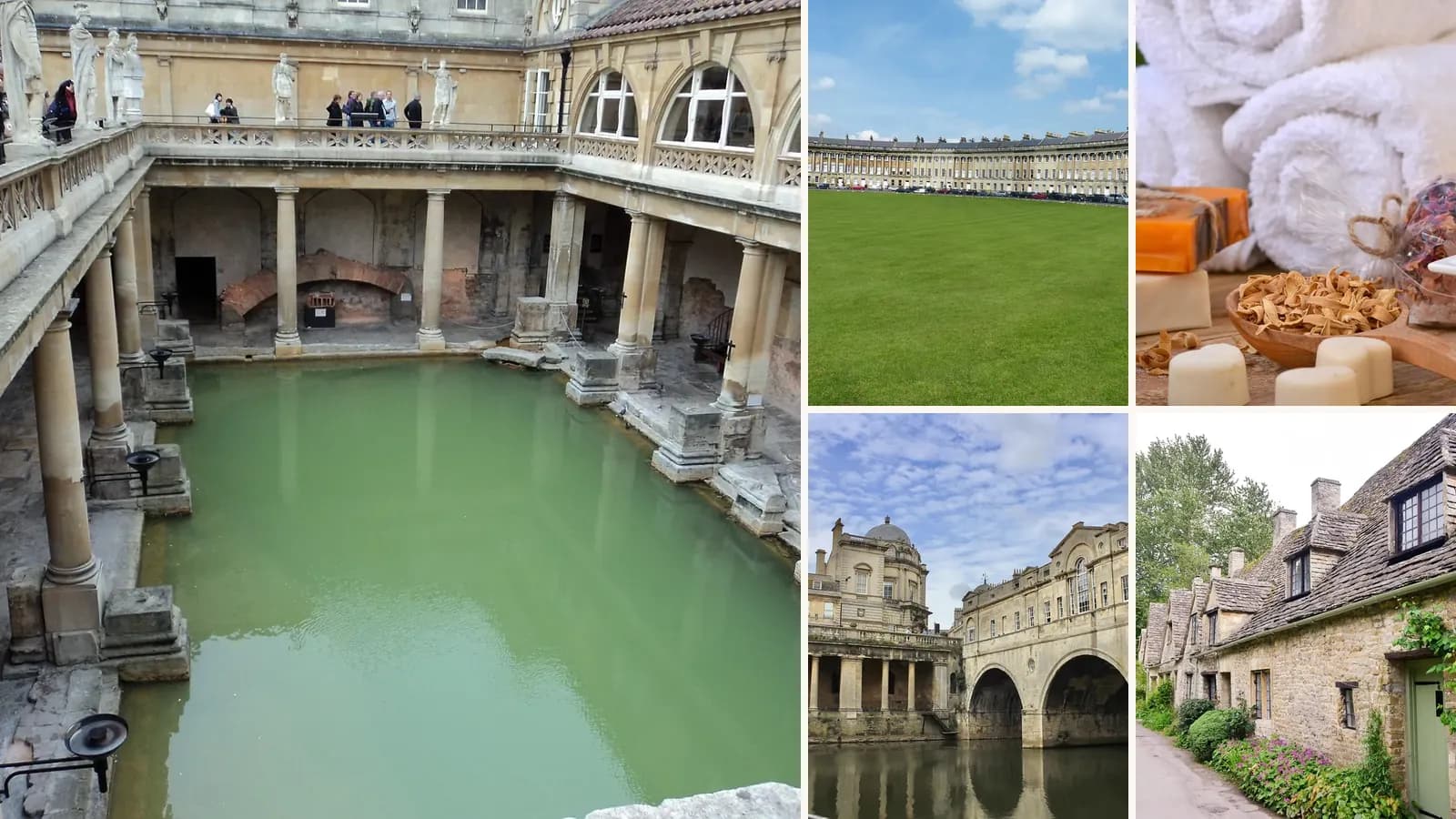
With honey-coloured Georgian terraces, Roman hot springs and a compact, walkable centre, Bath is one of England's most beautiful cities – and the whole city is a UNESCO World Heritage Site, recognised both for its Roman remains and its 18th-century architecture. It was a Roman spa town called Aquae Sulis, then the most fashionable resort in Georgian England, where high society came to "take the waters", dance at the Assembly Rooms and be seen.
Today it's a lively small city of independent shops, excellent restaurants, museums and one of Britain's best modern spas. This guide covers the ten best things to do, how to spend a weekend, when to visit and how to get there and around.
Bath at a glance
| Quick facts | |
|---|---|
| Best time to visit | Spring and September–October; December for the Christmas market |
| How long to stay | A weekend (2 nights) |
| Getting there | About 90 minutes by train from London Paddington |
| Getting around | On foot; park and ride for drivers |
| Best for | Couples, culture, history, spa breaks, food lovers |
1. The Roman Baths
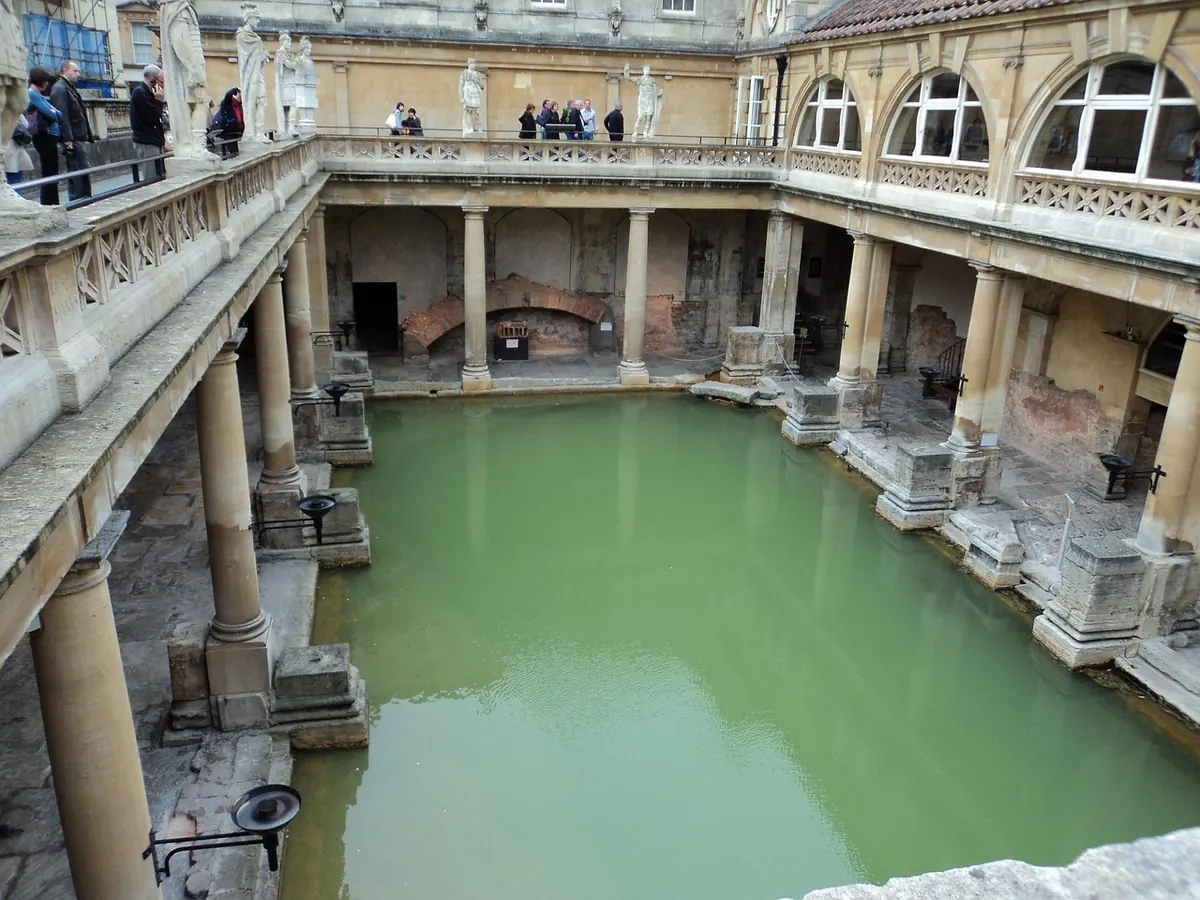
Britain's only natural hot springs fed a Roman bathing and temple complex nearly 2,000 years ago, and the water still rises at around 46°C. Walk around the steaming Great Bath, surrounded by statues of Roman emperors on the Victorian terrace above, then explore the museum below street level, with the temple pediment, the gilded bronze head of the goddess Sulis Minerva, curse tablets and the original drains.
The audio guide is excellent. Book a timed ticket online and go early or late to avoid crowds; on some summer evenings the baths stay open late and are lit by torches. Don't swim in the Great Bath – the water isn't treated – but you can taste the spa water in the Pump Room next door.
Steam rises from the green water of the Great Bath, Roman statues line the terrace above and torches flicker in the evening – book a timed ticket.
2. Bath Abbey
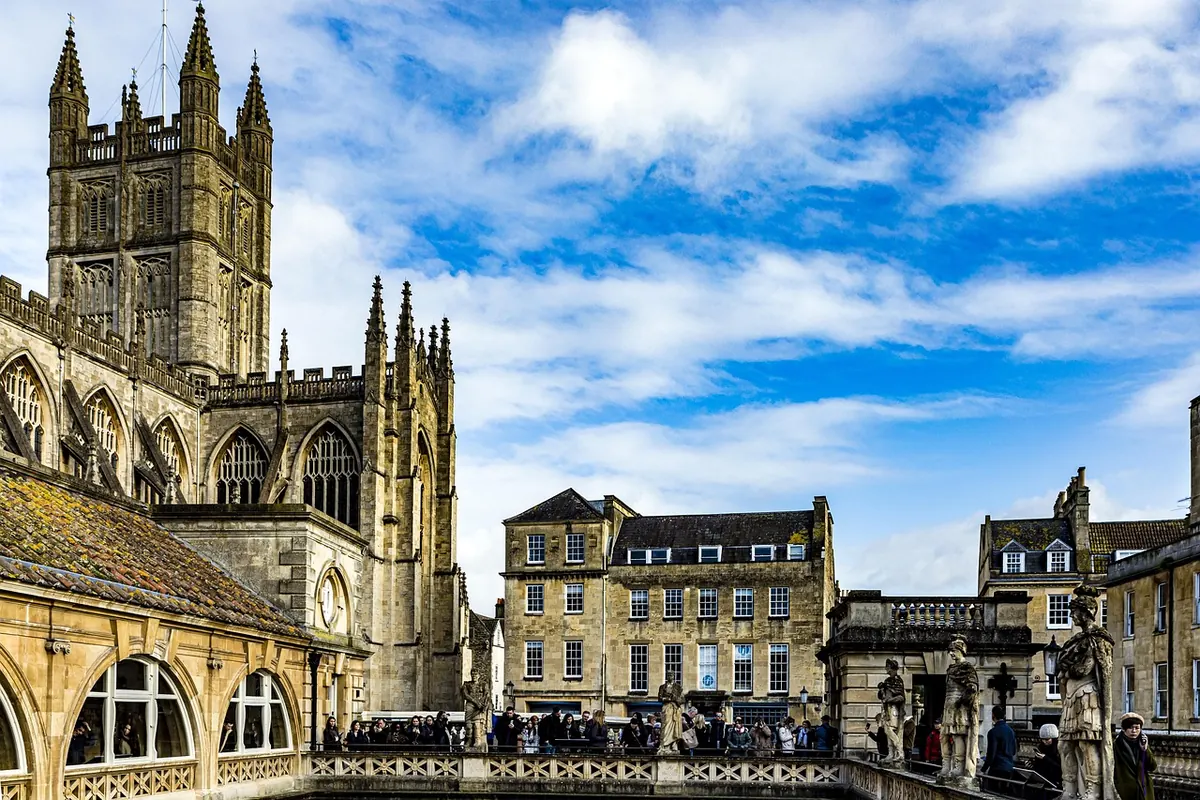
Next to the baths, the Abbey's fan-vaulted ceiling and huge windows are stunning – it's sometimes called the "lantern of the West" for its light. The current church was begun in 1499 on the site of earlier churches. Look out for the stone angels climbing ladders on the west front. Tower tours lead up more than 200 steps to the roof, past the bells and behind the clock face, for views over the city.
The fan-vaulted ceiling soars above you, and on the tower tour, you climb past the bells to the roof for views over the city.
3. The Royal Crescent and the Circus
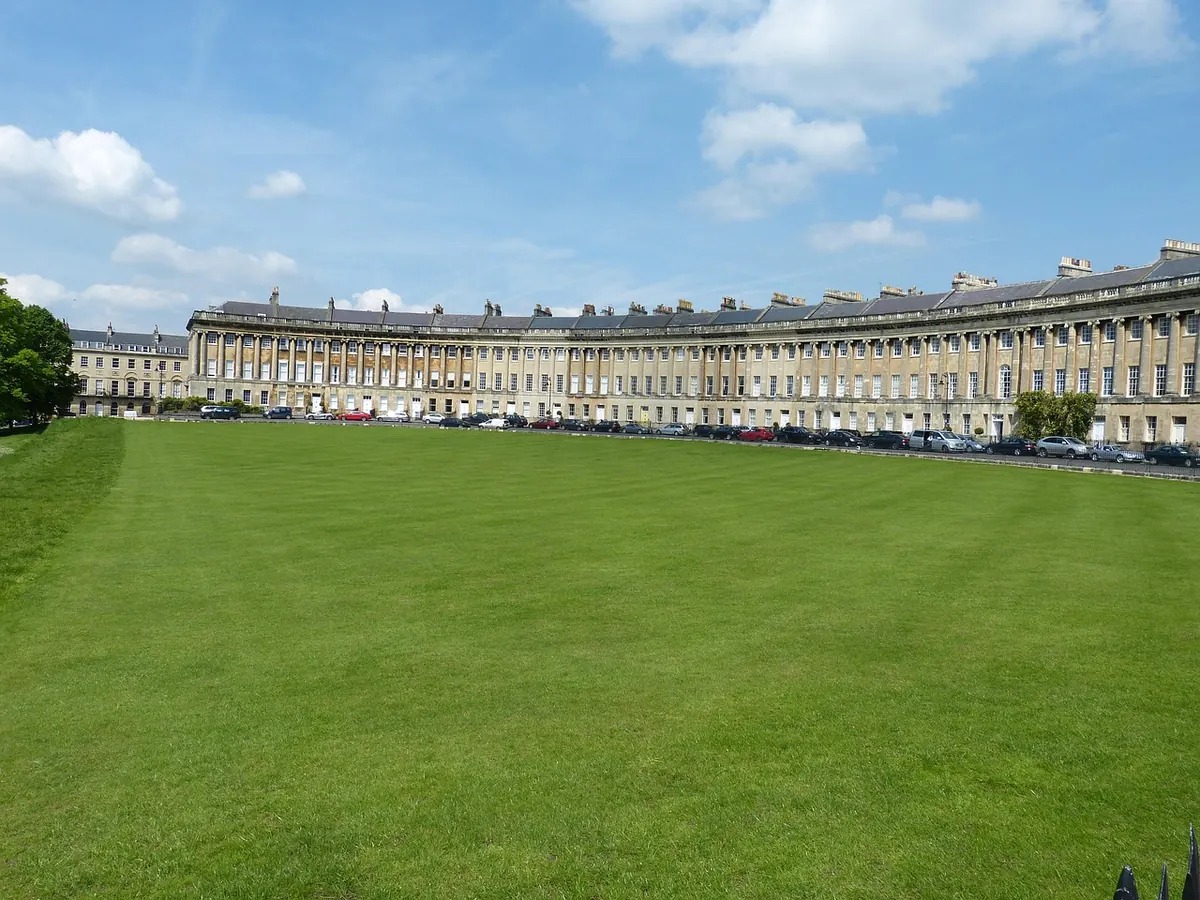
Bath's most famous Georgian architecture: the Royal Crescent, a sweeping curve of 30 houses built in the 1760s and 1770s overlooking Royal Victoria Park, and the Circus, a ring of grand townhouses nearby. No. 1 Royal Crescent is a museum showing how a wealthy family lived in Georgian times, from the elegant drawing room to the servants' kitchen. Walk along Gravel Walk and through the park for the best views.
The great sweep of Georgian houses curves around the lawn, golden in the afternoon sun.
4. Thermae Bath Spa
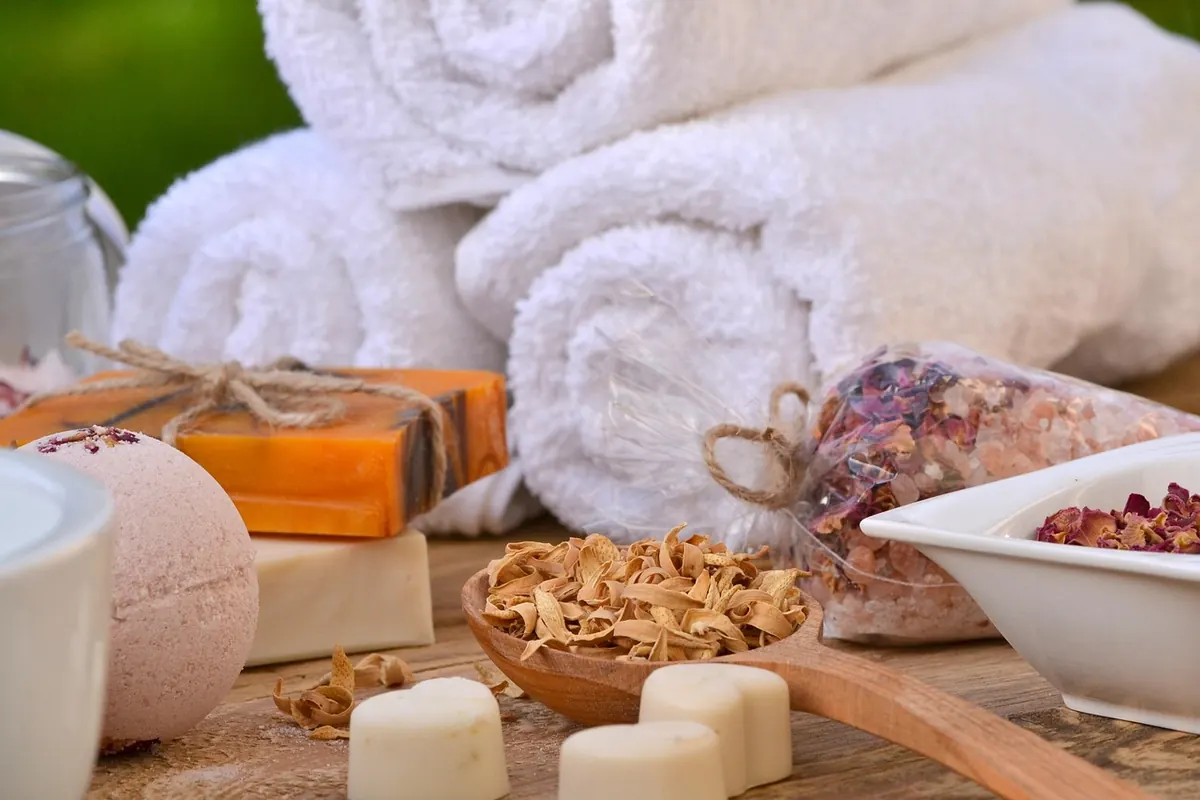
The only place in Britain where you can bathe in naturally warm spa water. The modern spa building contains the Minerva Bath, steam rooms and, best of all, a rooftop pool with views across the city's rooftops to the hills – magical at sunset or on a winter evening. Sessions are timed; book ahead, especially at weekends. The historic Cross Bath across the street offers a more intimate experience.
In the rooftop pool, warm mineral water steams around you as you look out over the abbey and the hills – magical at dusk.
5. Pulteney Bridge and the weir
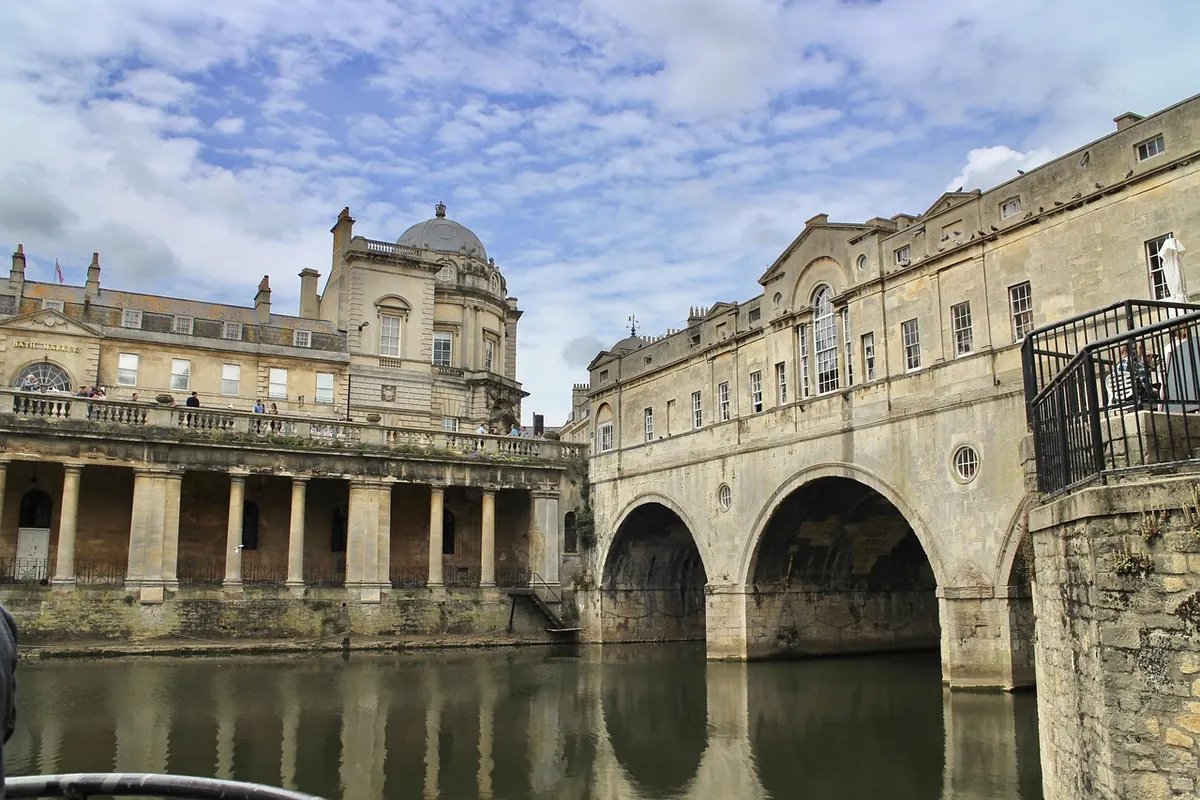
Designed by Robert Adam and completed in the 1770s, Pulteney Bridge is one of only a few bridges in the world lined with shops on both sides. The view from Grand Parade over the horseshoe-shaped weir on the River Avon is one of Bath's classic sights. River cruises leave from below the bridge in summer, and Parade Gardens is a pleasant spot for a picnic.
Shops line the little bridge, and the water tumbles over the horseshoe-shaped weir below.
6. The Jane Austen Centre
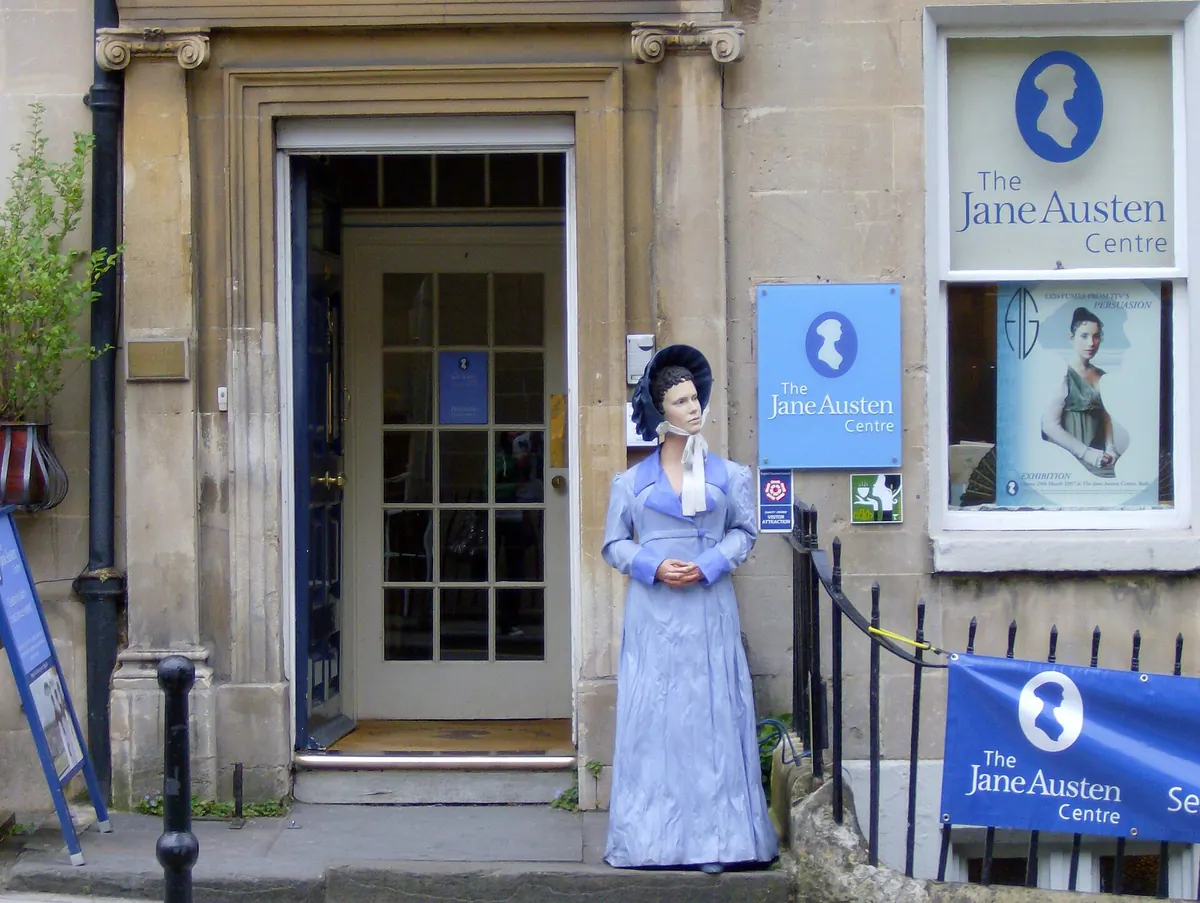
Jane Austen lived in Bath from 1801 to 1806 and set two novels, Northanger Abbey and Persuasion, partly in the city. The Jane Austen Centre explores her life here and the Regency fashions of her time, with costumed guides and a tearoom. Each September, the Jane Austen Festival brings a costumed promenade through the streets.
Costumed guides tell stories of Jane Austen's life in Bath, and tea is served upstairs in the Regency tea room.
7. The Assembly Rooms and Fashion Museum
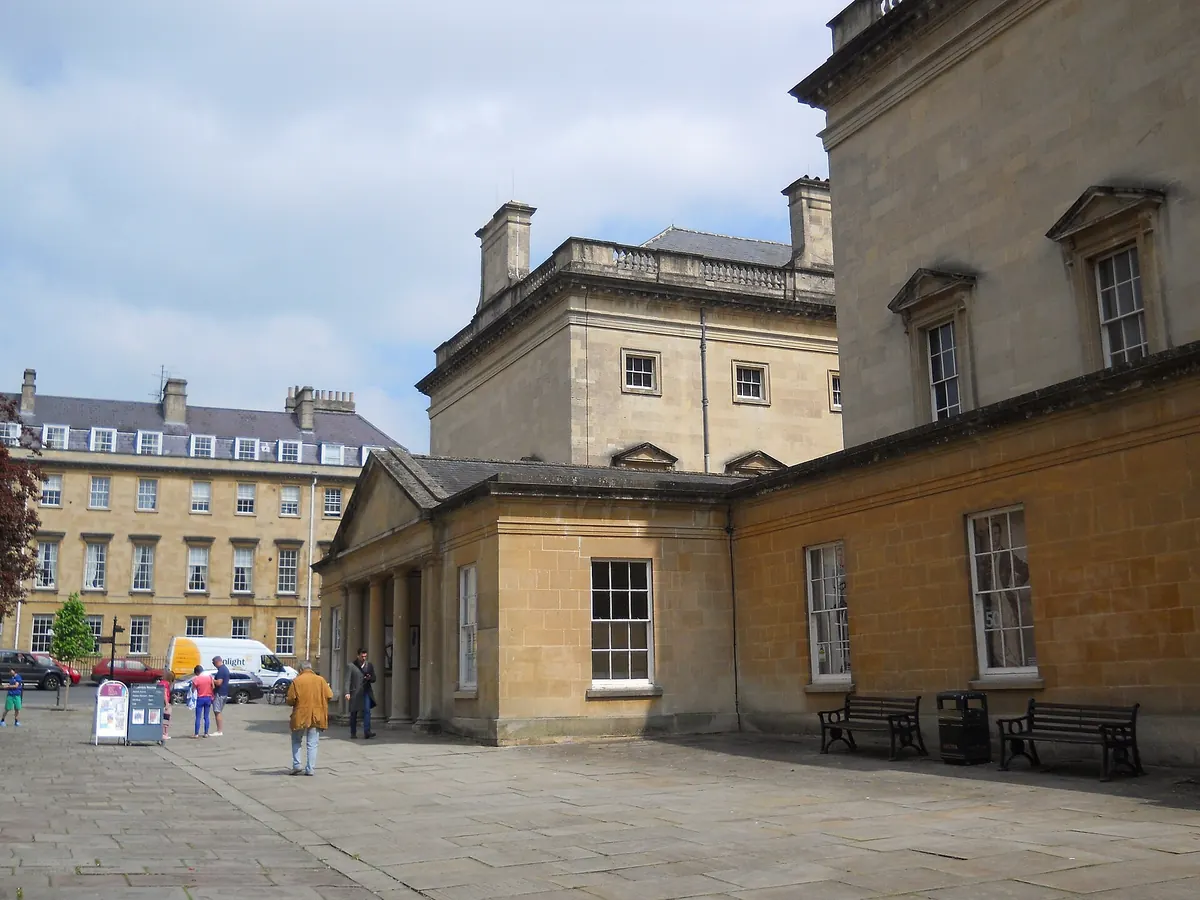
Georgian high society met at the elegant Assembly Rooms for balls, concerts and card games. The building is cared for by the National Trust. Bath's renowned Fashion Museum has been moving to a new home, so check its current location and opening plans before you go. The Holburne Museum, at the end of Great Pulteney Street, has fine art and decorative arts in a beautiful building.
8. Walk the Skyline
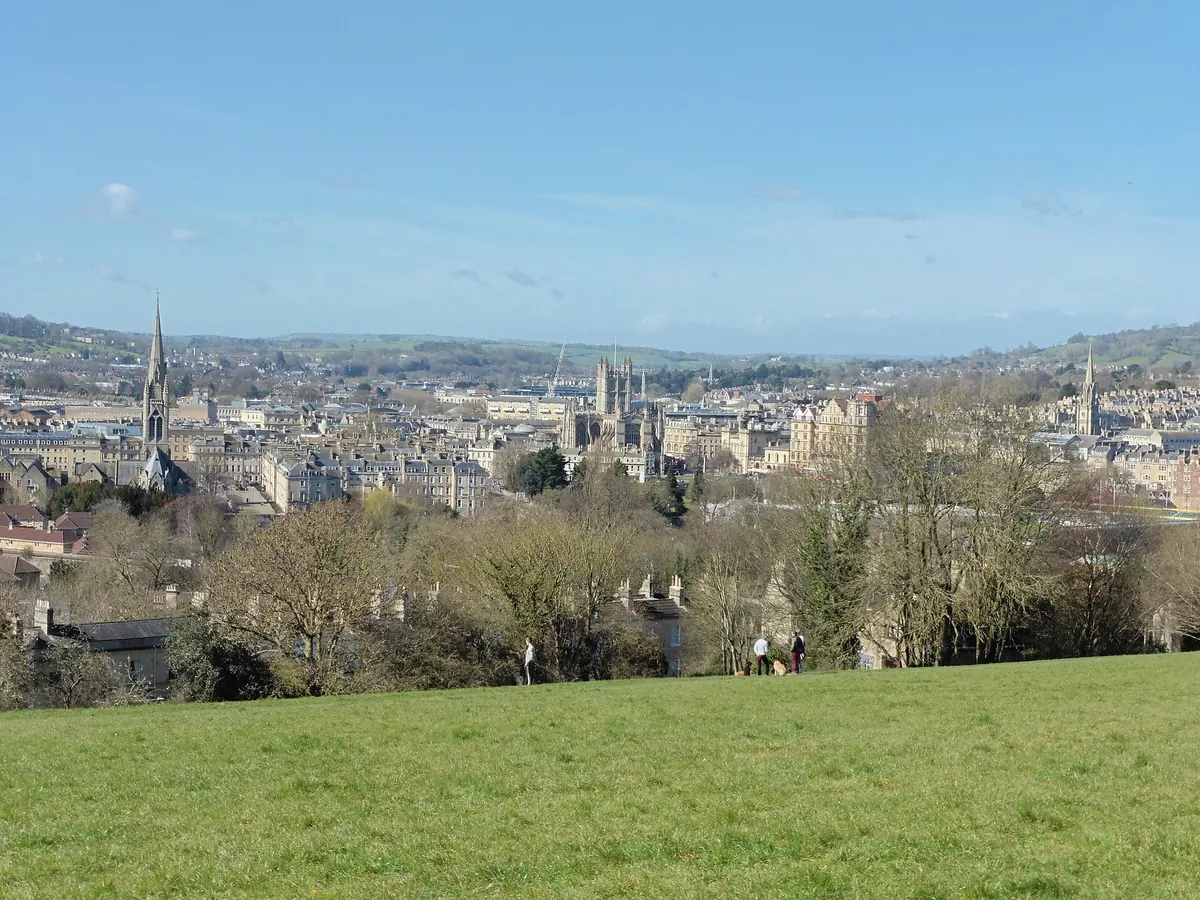
The National Trust's Bath Skyline walk is a waymarked circular route of around six miles through meadows, woodland and hidden valleys above the city, with sweeping views of the Georgian terraces below. You can also walk shorter sections, such as the climb to Prior Park Landscape Garden, with its Palladian bridge.
The path runs along the hills above the city, through meadows and woods, with views down to the golden rooftops.
9. Afternoon tea and Sally Lunn's
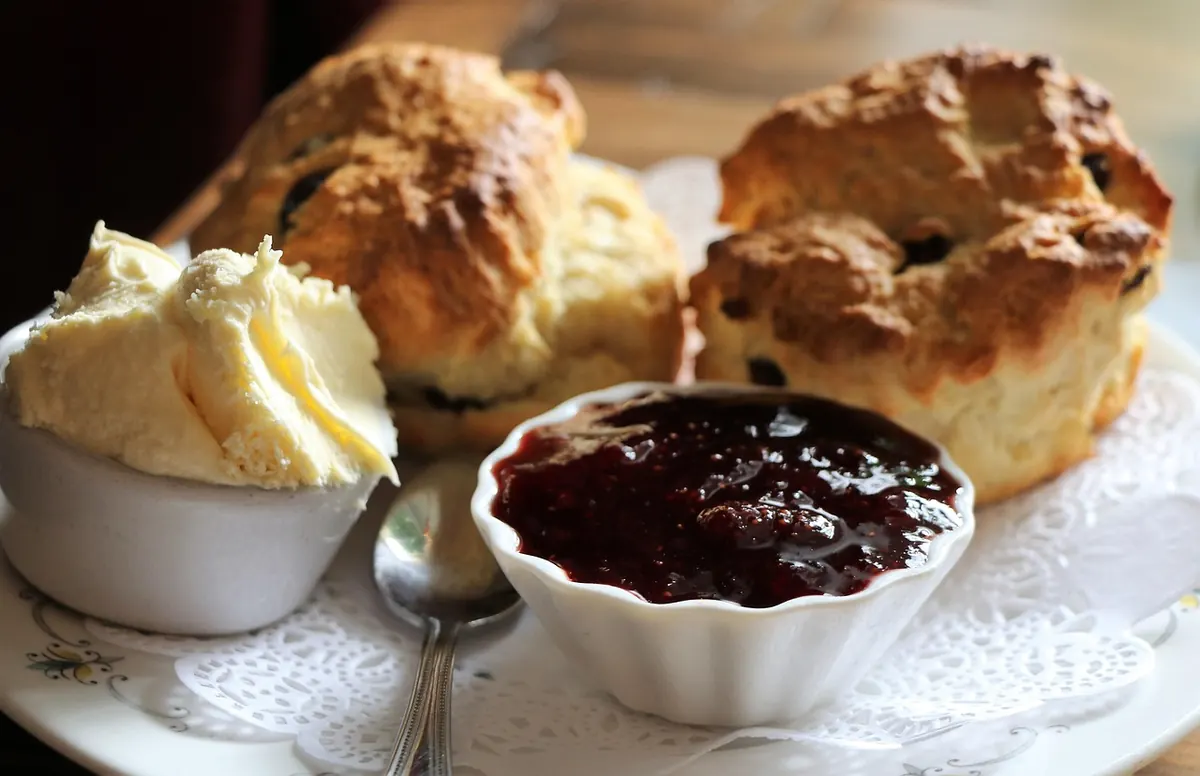
Bath is a wonderful place for afternoon tea – in the grand Pump Room, in a hotel or in one of the many tearooms. Sally Lunn's, in one of the city's oldest houses, is known for its large, light, brioche-style buns, served sweet or savoury, and has a small kitchen museum in the cellar.
In the old timber house, the soft, light Sally Lunn bun is served with butter or jam – a Bath tradition.
10. Day trips
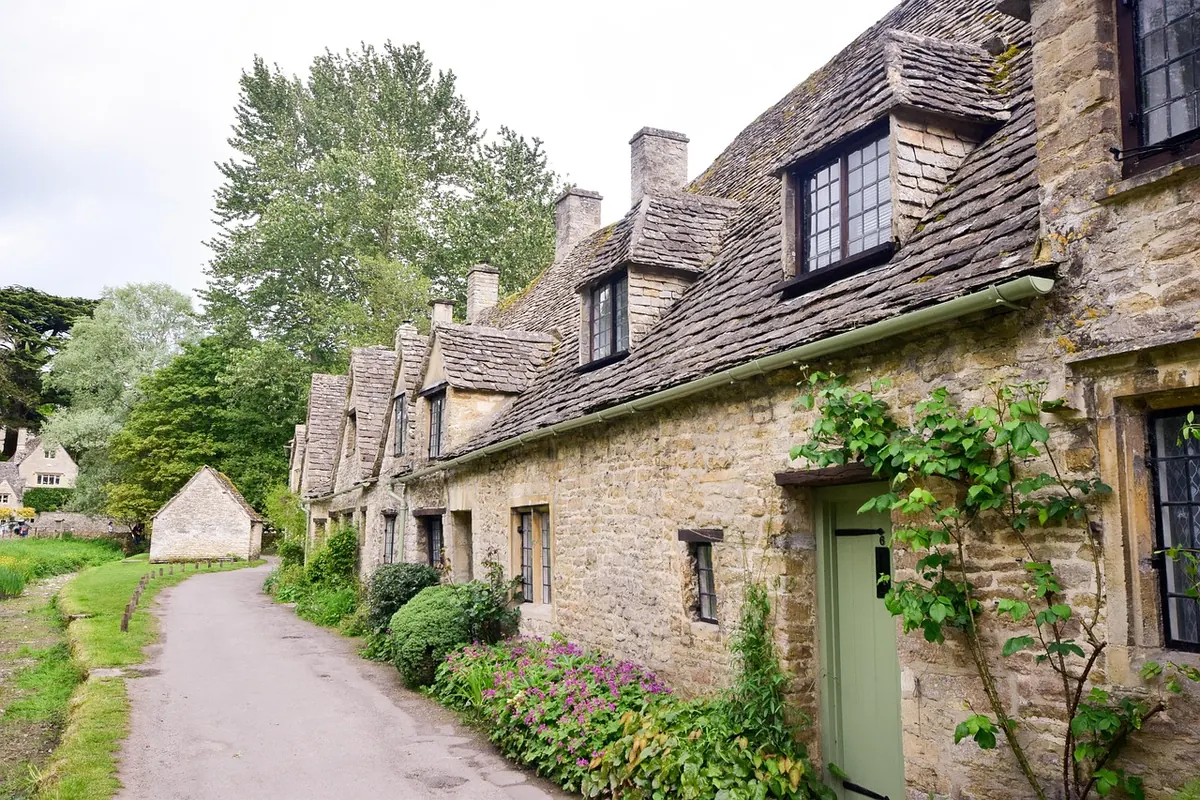
Bath is a perfect base for the southern Cotswolds. Castle Combe and Lacock are about 25–30 minutes away by car (see our Cotswolds villages guide), Wells – England's smallest city – has a magnificent cathedral, and Stonehenge is about an hour away. Bristol is just 15 minutes by train.
When to visit
Bath is lovely all year. Spring and early autumn bring pleasant weather and fewer crowds than summer. In late November and December, the Bath Christmas Market fills the streets around the Abbey with wooden chalets. Summer is busy, especially at weekends – book accommodation and timed tickets early.
A weekend in Bath
Day 1: the Roman Baths at opening time, Bath Abbey and the tower tour, lunch, then the Royal Crescent and No. 1 Royal Crescent. Finish with an evening session at Thermae Bath Spa's rooftop pool. Day 2: a morning walk on the Skyline or to Prior Park, Pulteney Bridge and the Holburne Museum, afternoon tea, and shopping in the independent shops around Milsom Street and Walcot Street.
Where to stay
Bath has elegant townhouse hotels and B&Bs in Georgian buildings, especially around the Royal Crescent, Great Pulteney Street and the centre. Prices are highest at summer weekends; midweek and winter stays are better value. See our guide to Britain's best small hotels and B&Bs.
Getting around
Bath's centre is compact and best explored on foot – most sights are within 15 minutes' walk of each other, though some streets are steep. Bath Spa station is right in the city centre, with direct trains from London Paddington in about 90 minutes and from Bristol in 15 minutes.
Driving into the centre is slow and parking is expensive; park and ride services operate from the edges of the city. Bristol Airport is about 45 minutes away by road.
Frequently asked questions
How many days do you need in Bath?
A weekend is ideal: one day for the Roman Baths, the Abbey and the Georgian streets, and another for the spa, museums or a trip to the Cotswolds.
How do you get to Bath from London?
Direct trains from London Paddington take around 90 minutes. Bath Spa station is in the city centre.
Can you swim in the Roman Baths?
No, but you can bathe in the same natural hot spring water at Thermae Bath Spa, including its rooftop pool.
Is Bath worth visiting for a day trip from London?
Yes – direct trains take about 90 minutes – but staying overnight lets you enjoy Thermae Bath Spa in the evening and see the city once the day-trippers leave.
Keep reading
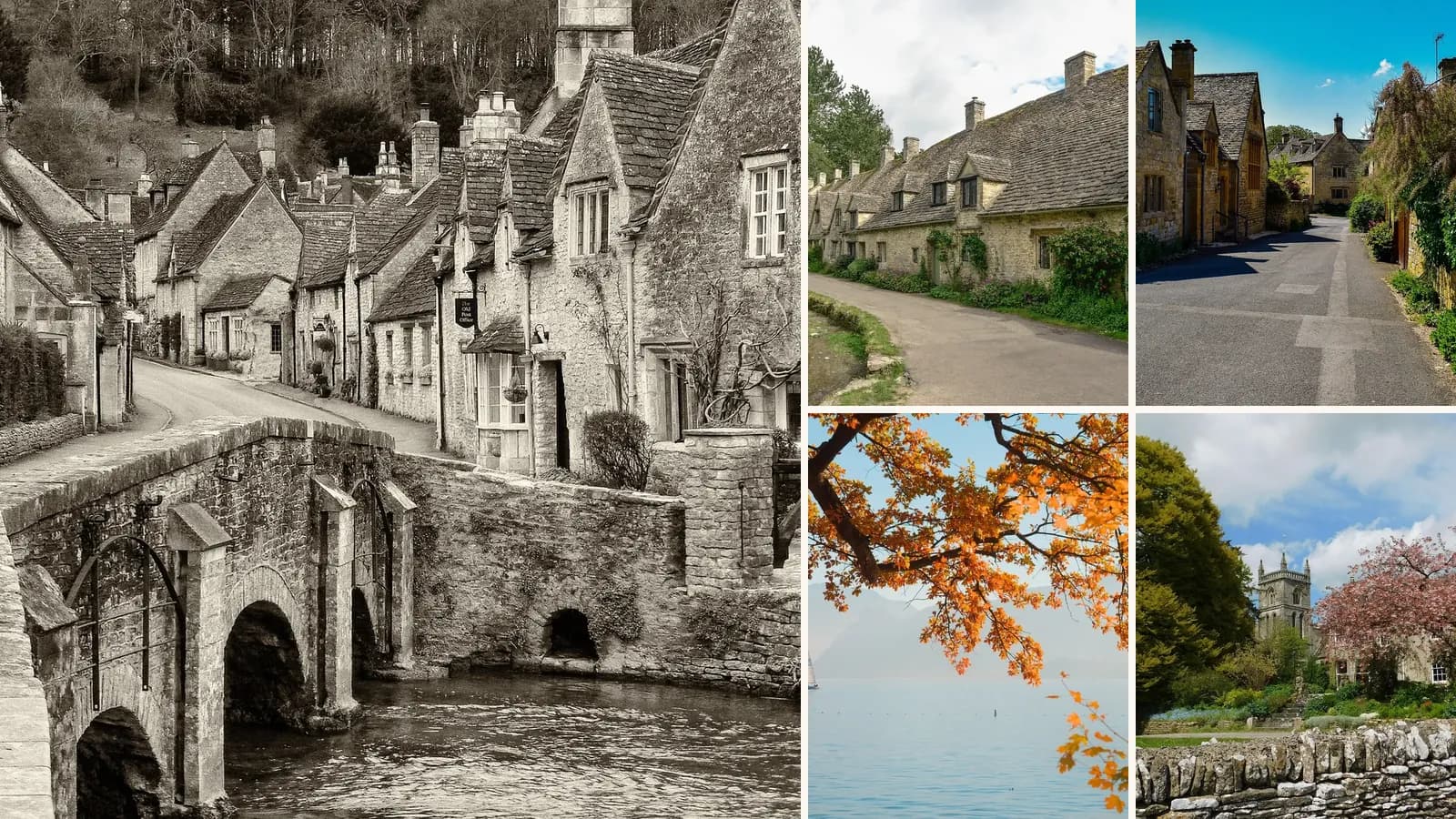
Castle Combe and the Prettiest Villages of the Cotswolds
Castle Combe, Bibury, Bourton-on-the-Water, the Slaughters, Lacock and Broadway – how to visit the Cotswolds' most beautiful villages, with tips for avoiding the crowds.
How to Find Britain's Best Small Hotels and B&Bs
Country houses, coastal inns and townhouse B&Bs – how to find characterful small hotels in Britain, where to look and what makes a stay special.
Canterbury Travel Guide: Cathedral, Medieval Streets and Kent's Best Pubs
Canterbury Cathedral, river punting, the medieval city walls, Chaucer's pilgrims and gastropubs in the Kent countryside – the best things to do in Canterbury.
Wadhurst and the High Weald: Sussex's Prettiest Corner
Wadhurst, Bewl Water, Bateman's, Bodiam Castle, Scotney Castle and the villages of the High Weald – a guide to one of England's most beautiful countryside areas.