Grand Egyptian Museum: A Complete Visitor's Guide
How to visit the Grand Egyptian Museum near the Pyramids: tickets, how long to stay, Tutankhamun's treasures, Khufu's boat and how to combine it with Giza.

Some links in this guide are partner links: if you buy through them we may earn a small commission, at no extra cost to you. It never affects what we recommend. How we make money
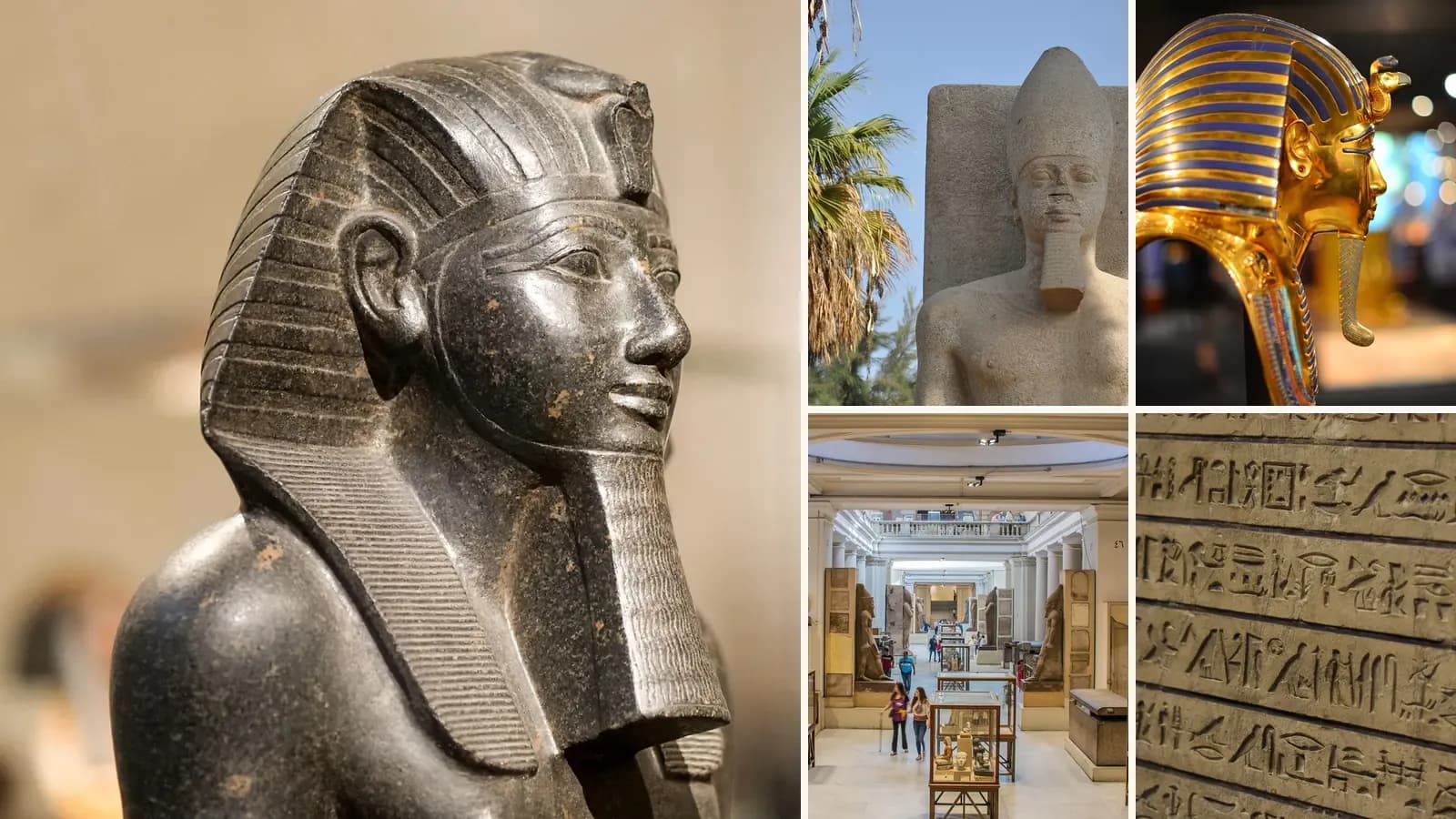
After two decades in the making, the Grand Egyptian Museum (GEM) beside the Giza Pyramids is the largest museum in the world devoted to a single civilisation. Its vast, light-filled galleries, with views of the pyramids through the glass, bring together treasures that were previously scattered across Egypt or kept in storage – most famously, the complete burial treasure of Tutankhamun, shown together for the first time since Howard Carter found it in 1922.
The museum covers more than 7,000 years of history, from prehistory to the Roman period, and it's designed for a full day, with gardens, restaurants, shops and a children's museum. This guide covers the highlights, how to plan your visit, how to combine it with the Pyramids and Cairo's other great museums.
The GEM at a glance
| Quick facts | |
|---|---|
| Location | On the Cairo–Alexandria desert road, about 2 km from the Giza Pyramids |
| Time needed | At least half a day; a full day for the Tutankhamun galleries and main galleries |
| Tickets | Timed tickets online on the official website |
| Best time | Weekday mornings; afternoons after visiting the Pyramids |
| Best for | Everyone visiting Cairo, families, history lovers |
Highlights
1. The Grand Staircase
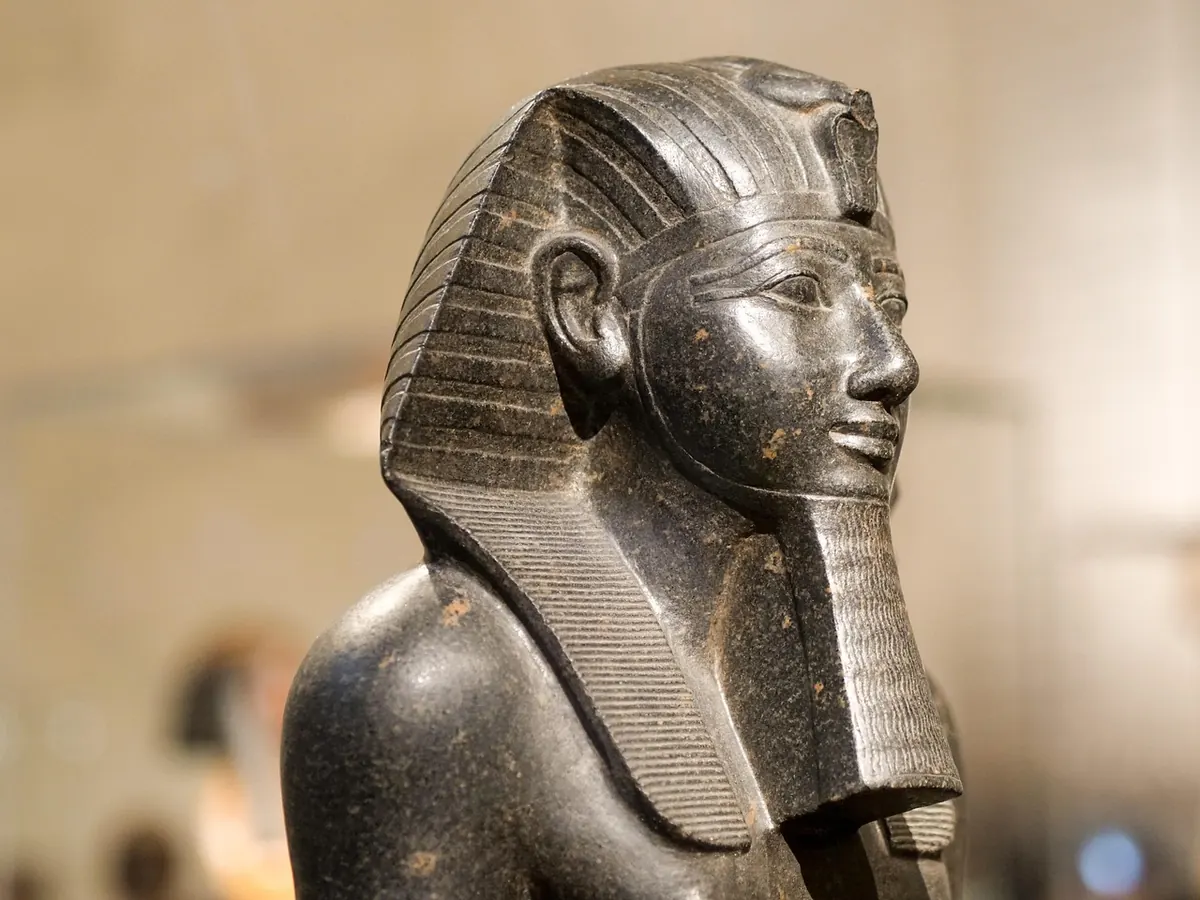
A six-storey staircase lined with dozens of colossal statues of kings, queens and gods leads up to the main galleries, arranged by theme as you climb. At the top, a huge window frames the Pyramids of Giza – one of the most dramatic views in any museum. Allow time to stop on the way up; this is a gallery in itself. Escalators run alongside if you prefer.
The staircase rises in front of you like a terraced hillside of history, lined with statues of kings and gods. As you climb, the crowd thins and the light changes, until at the top a great window frames the pyramids on the plateau outside – a view that makes people stop mid-sentence.
2. The statue of Ramesses II
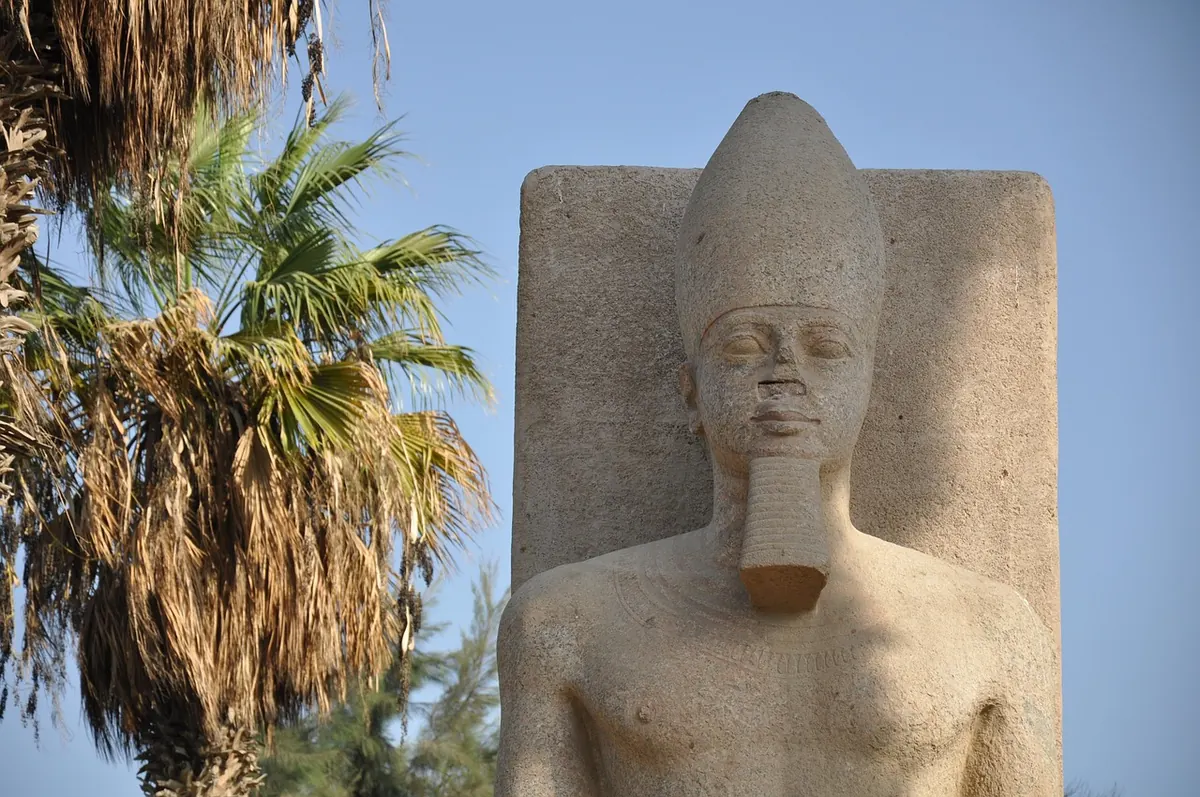
The 3,200-year-old, 11-metre statue of Ramesses II, which for decades stood in a busy Cairo square outside Ramses railway station, was moved to the museum in 2018 and now greets visitors in the soaring Grand Hall. Outside the entrance, a hanging obelisk of Ramesses II lets you walk underneath and see the cartouche carved on its base.
In the bright atrium, the colossal Ramesses II stands more than ten metres tall, one foot forward as if he's about to step off the plinth. People gather around his feet to take photos and look tiny beside him. Come early in the day, when the hall is quieter and the morning light pours in.
3. The Tutankhamun galleries
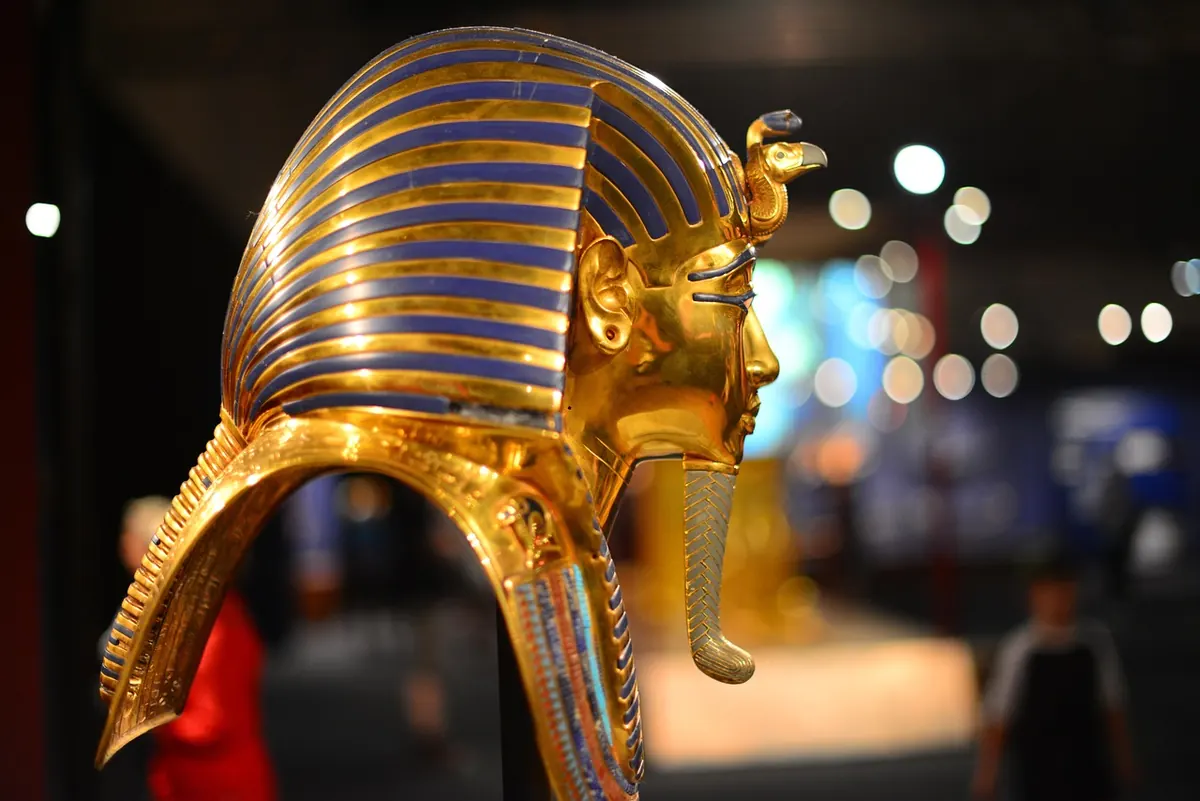
For the first time, the boy king's entire burial treasure – more than 5,000 objects – is displayed together, including his golden mask, the gilded shrines, chariots, thrones, beds, jewellery, weapons, clothing and even his sandals. The galleries tell the story of his life, death and burial, and of Carter's discovery of the tomb in the Valley of the Kings.
These galleries are the most popular part of the museum. Go early in your visit, before the crowds build, and allow at least two hours.
Here the lighting drops, the voices around you fall to a whisper and gold appears out of the darkness: chariots, beds, jewellery, sandals and shrines, all from one young king's tomb. Many visitors find it the emotional high point of a trip to Egypt. Expect queues at the most famous pieces – take your time and let the crowd flow past.
4. The main galleries
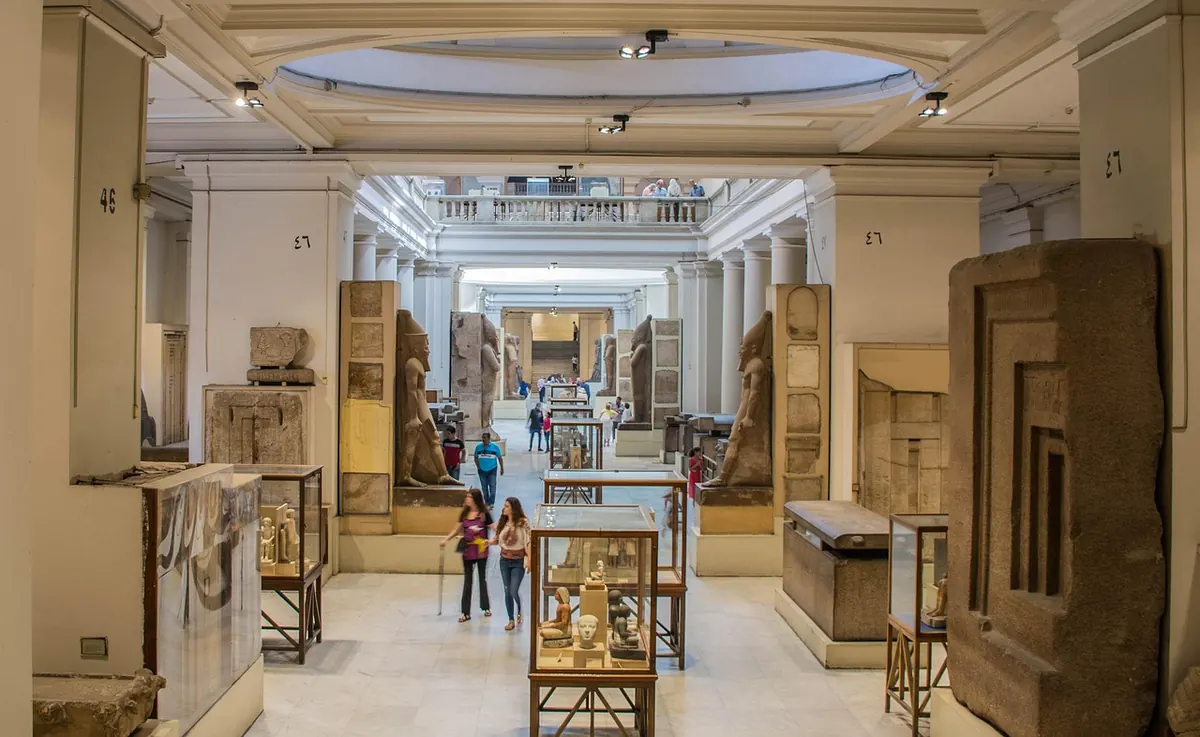
Twelve chronological galleries tell the story of ancient Egypt from prehistory to the Roman period through three themes: society, kingship and belief. Highlights include statues, coffins, jewellery, everyday objects and models showing life in ancient times. The galleries are spacious and well labelled in Arabic and English, with interactive displays.
The galleries are vast and airy, and the scale can be overwhelming – statues, coffins and everyday objects stretching away in long, well-lit halls. Choose a few themes or periods rather than trying to see everything, take breaks in the cafés and wear comfortable shoes.
5. Khufu's solar boat
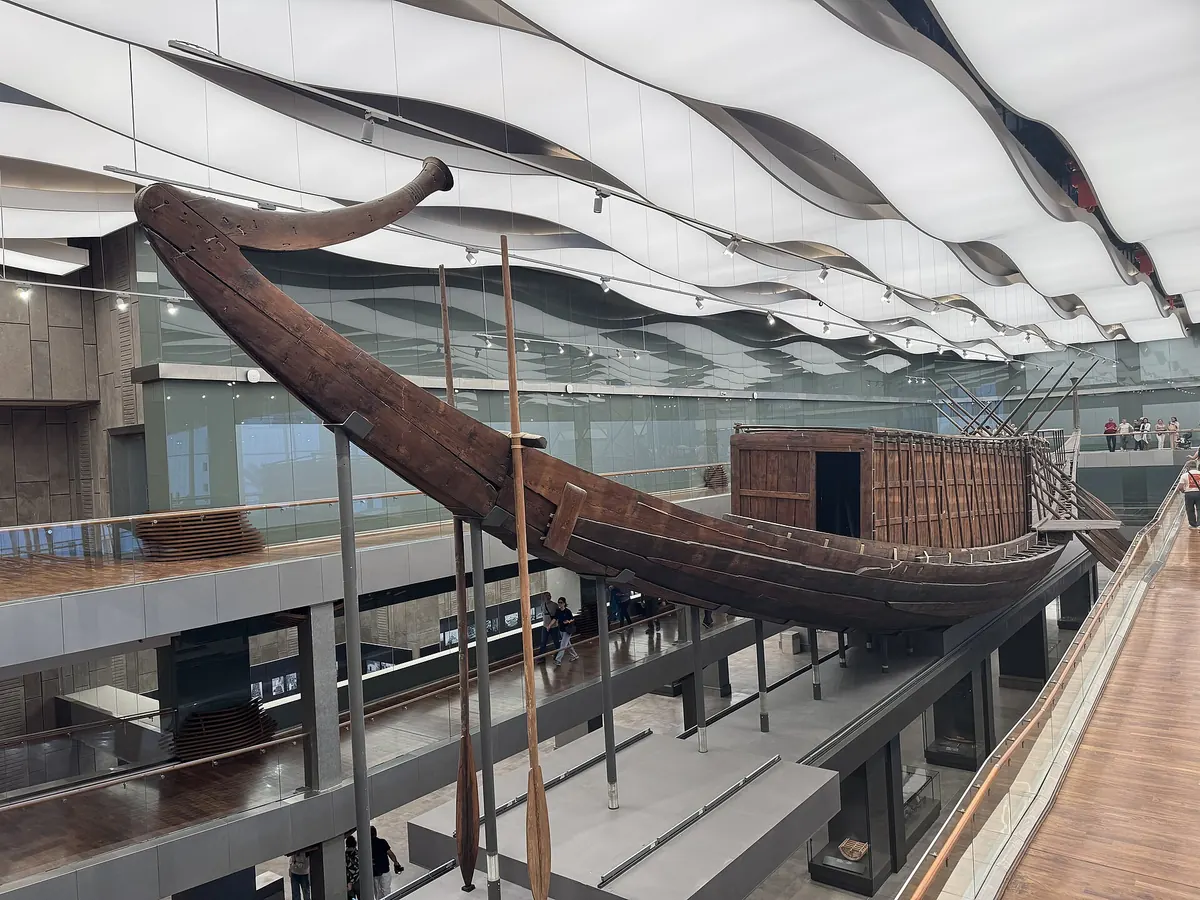
The 4,500-year-old cedarwood boat buried beside the Great Pyramid, discovered in 1954 and painstakingly reassembled, was moved to the museum in 2021 in a carefully planned overnight operation. It's displayed in its own dedicated hall, where you can see the remarkable carpentry of the ancient boat-builders up close. Check whether a separate ticket is needed.
The ancient boat is astonishingly long and elegant, its cedar planks and ropes preserved for more than 4,500 years. Standing beside it, you can almost imagine it gliding along the Nile on a king's final journey.
6. The children's museum
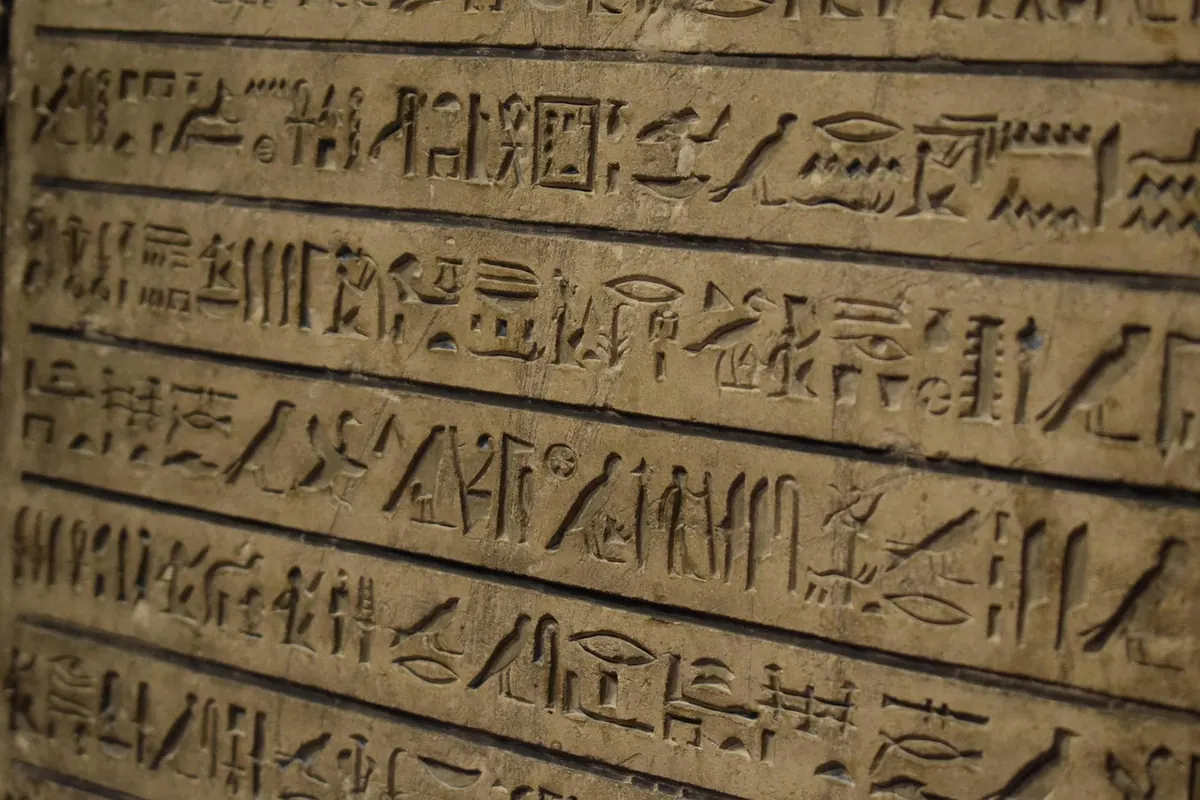
An interactive children's museum introduces younger visitors to ancient Egypt through games, hands-on activities and workshops – a good break for families during a long day.
It's colourful, hands-on and full of excited voices – children dressing up, writing their names in hieroglyphs and exploring models and games. A great break for families, especially after a long morning of statues and showcases.
Practical tips
- Book timed tickets online on the official ticketing website, and check which galleries and halls are included – some may need a separate ticket.
- Combine it with the Pyramids: visit the Giza Plateau at opening time, before the heat, then retreat to the museum's cool galleries for the afternoon. They're only a few minutes apart by car.
- Getting there: the museum is on the Cairo–Alexandria desert road near Giza. Taxis, ride-hailing apps or a private driver are the easiest options from central Cairo; allow plenty of time for traffic.
- Eat on site: cafés and restaurants inside the museum and in the gardens have views towards the pyramids.
- Bring: comfortable shoes, water and a light layer – the galleries are air-conditioned. Photography rules vary by gallery.
- Guided tours: a licensed Egyptologist guide adds a lot, especially in the Tutankhamun galleries.
Visiting from the Red Sea
From Hurghada, Cairo is about five to six hours by road or roughly an hour by plane. A two-day trip lets you see the Pyramids, the GEM and old Cairo without rushing; a long day trip by road is possible but tiring. See our Hurghada travel guide for options.
Cairo's other great museums
The historic Egyptian Museum on Tahrir Square remains open with thousands of objects, and the National Museum of Egyptian Civilization in Fustat is home to the Royal Mummies Hall, where the mummies of famous pharaohs are displayed.
Plan the rest of your trip with our 10-day Egypt itinerary and our guide to Cairo's quieter side.
Frequently asked questions
How long do you need at the Grand Egyptian Museum?
Allow at least three to four hours for the Grand Staircase, the Tutankhamun galleries and a selection of the main galleries. Enthusiasts can easily spend a full day.
How do I buy tickets for the Grand Egyptian Museum?
Buy timed tickets on the museum's official ticketing website. Some galleries and experiences need separate tickets, so check what's included when you book.
Can I visit the Pyramids and the Grand Egyptian Museum on the same day?
Yes. They're only a couple of kilometres apart. Visit the Pyramids early in the morning, then spend the hot afternoon inside the museum.
How long do you need at the Grand Egyptian Museum?
At least half a day; allow a full day if you want to see the Tutankhamun galleries, the main galleries and Khufu's boat without rushing.
Is the Tutankhamun mask at the Grand Egyptian Museum?
Yes. Tutankhamun's golden mask and his complete burial treasure are displayed together in the museum's Tutankhamun galleries.
Keep reading
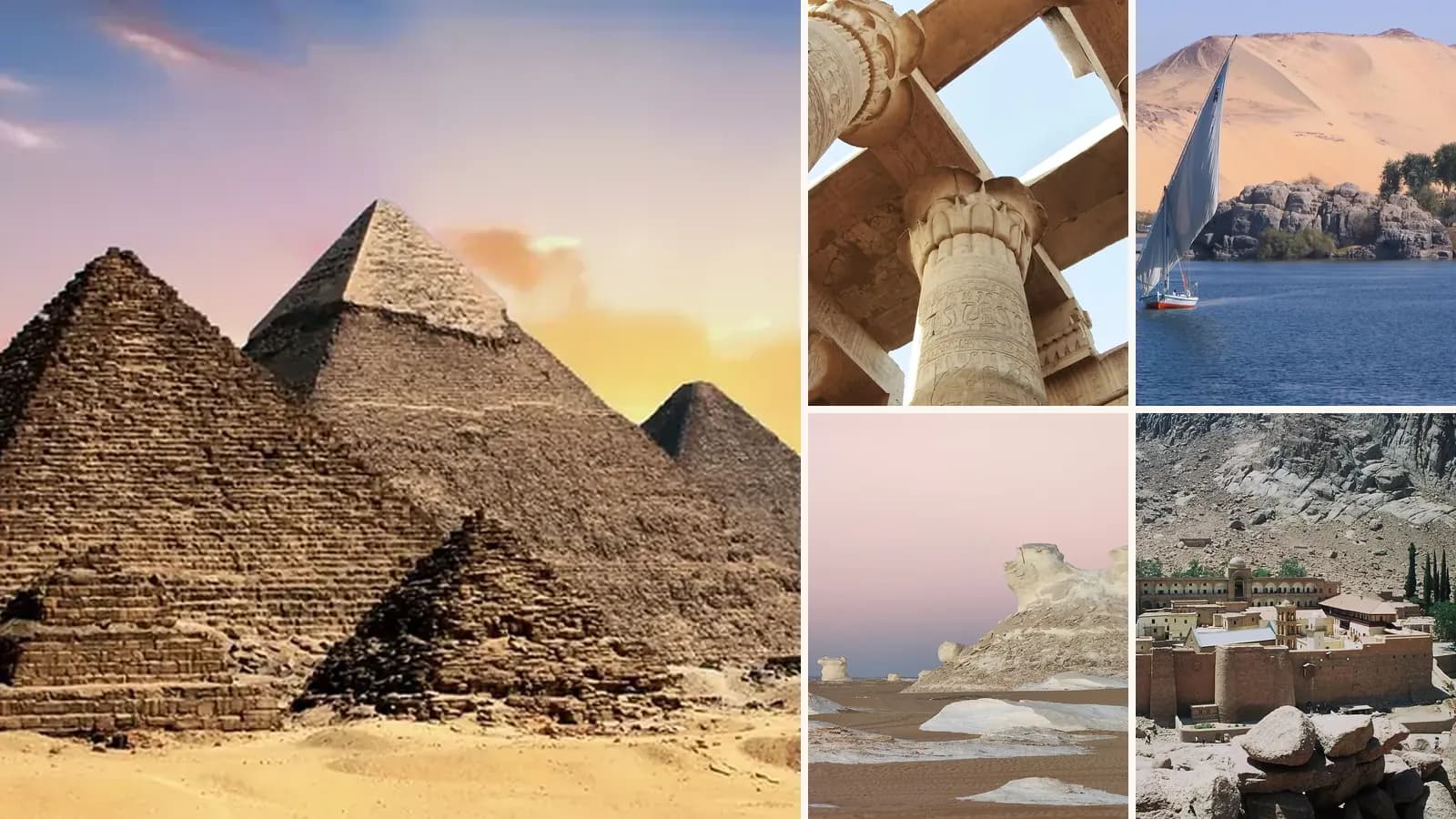
15 Best Places to Visit in Egypt
The Pyramids and the Grand Egyptian Museum, Luxor, Aswan, Abu Simbel, a Nile cruise, the Red Sea and the desert oases – the best places to visit in Egypt, with tips.
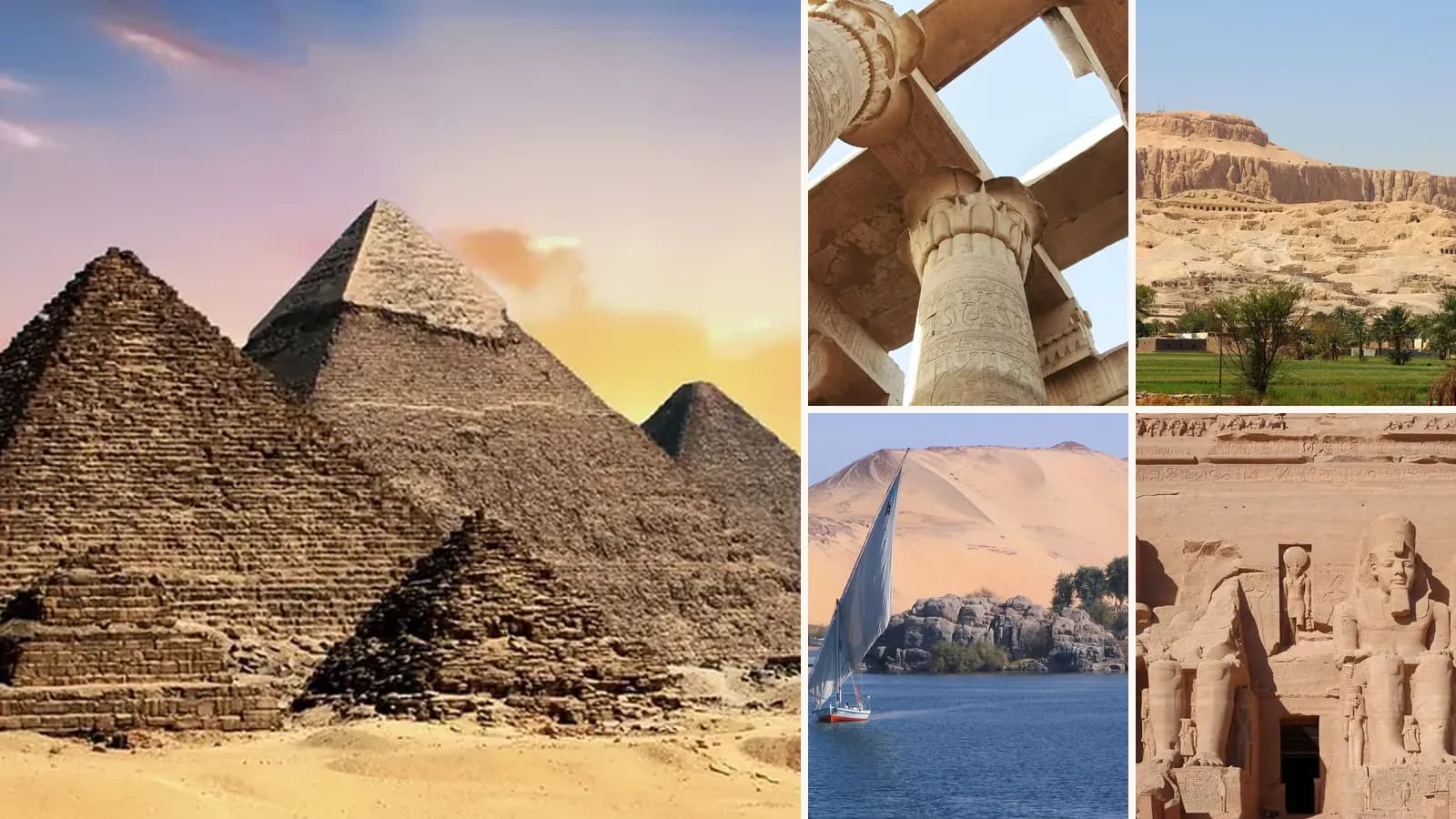
Egypt in 10 Days: A Classic Itinerary from Cairo to Abu Simbel
A day-by-day 10-day Egypt itinerary: the Pyramids and Grand Egyptian Museum, Luxor's temples and tombs, a Nile cruise, Aswan and Abu Simbel – plus how to add the Red Sea.
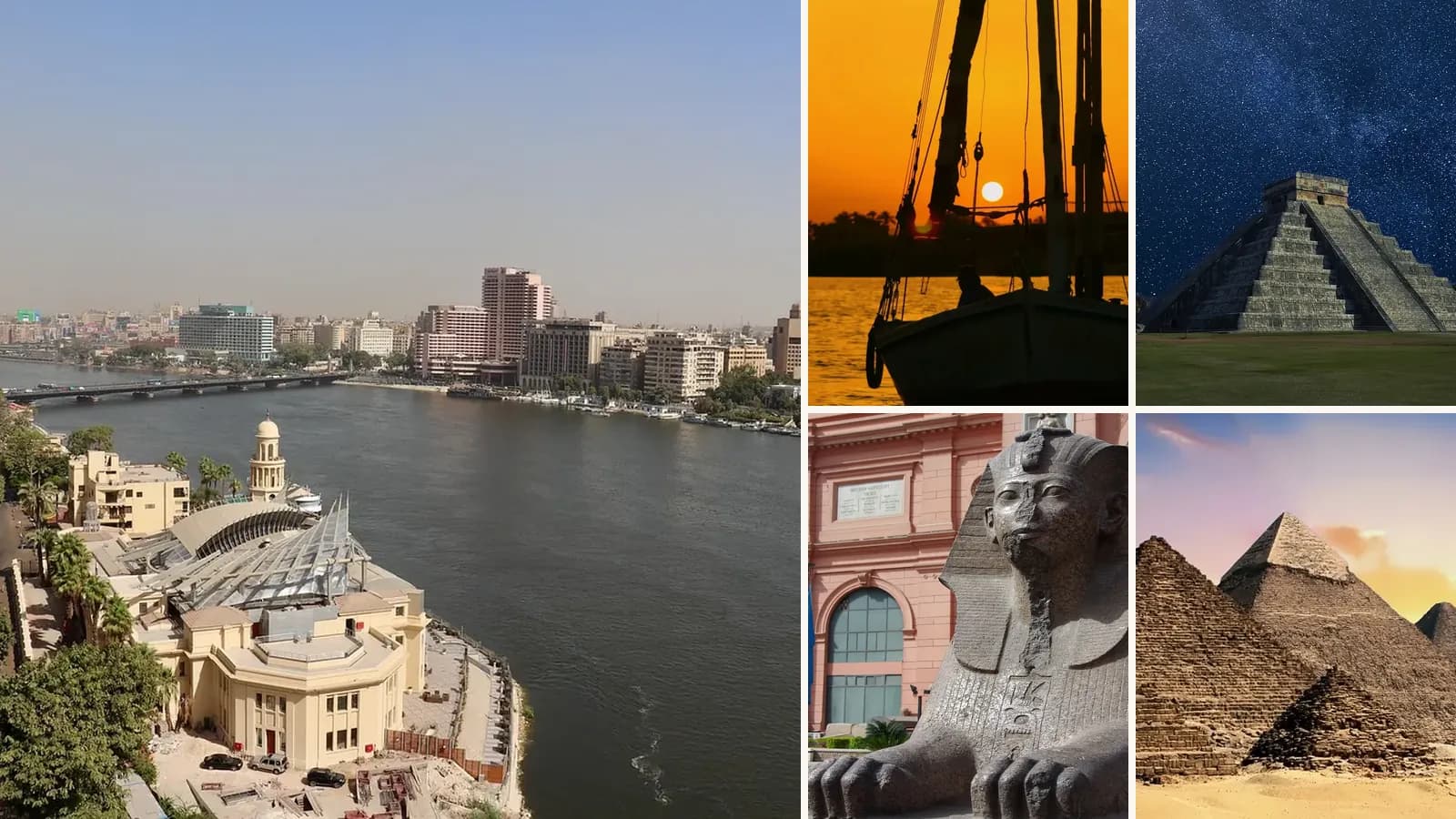
Cairo Travel Guide: 12 Best Things to Do, from Zamalek to Islamic Cairo
Escape to Zamalek and Gezira Island, sail a felucca at sunset, explore Islamic and Coptic Cairo, the Citadel and the city's great museums – a practical guide to Cairo.
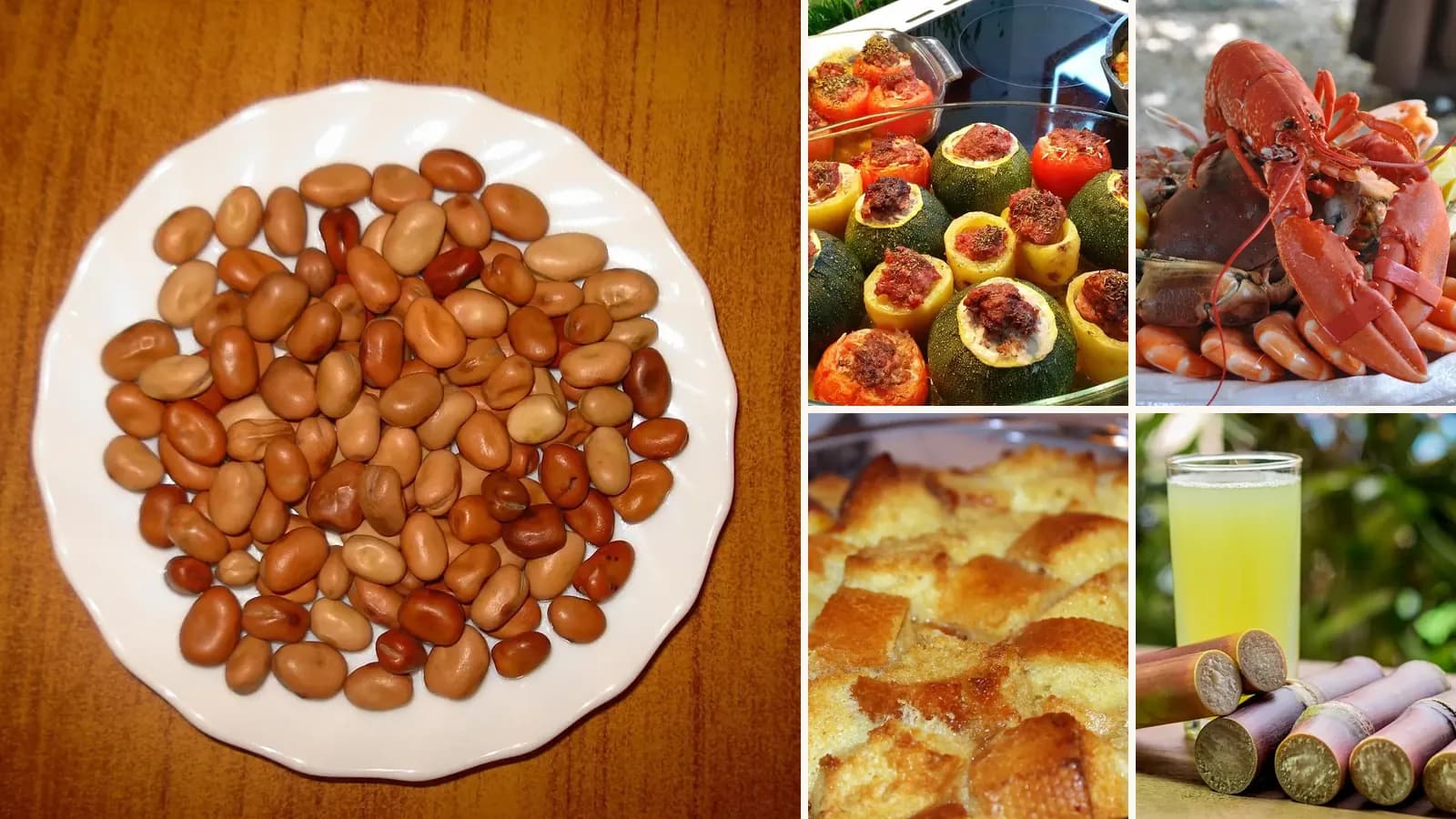
Egyptian Food: 12 Dishes You Have to Try in Egypt
Koshari, ful medames, ta'ameya, molokhia, feteer, Alexandrian seafood and om ali – the Egyptian dishes and drinks you should try, and tips for eating out in Egypt.